F
In the past few years, there has been a strong tendency towards tourism and recreation in contact with nature: more and more tourists wish to visit natural sites, and enjoy the peace that nature gives them.
This search to bond with nature in a more direct and active, but at the same time more responsible way, valuing and respecting the native natural and socio-cultural peculiarities of the destinations, gave life to Nature Tourism. This tourist modality looks to create a more direct relationship with nature, in which people worry for the preservation of the natural and cultural resources of the area where they practise recreational activities.

Within nature tourism, camping is one of the most practised and widely spread tourist recreational activities in the natural areas of the province, whether protected areas or not. One of the most distinctive offers of this type of spaces, and one that is on the increase, is the possibility to spend the night surrounded by nature.
With the aim of building the necessary infrastructure and facilities for the better attention of users of provincial camping areas, preserving the natural and cultural resources, and offering tourists a wide range of possibilities to enjoy a satisfying tourist recreational experience, the SubSecretary of Tourism is developing the Plan for the Strengthening of the Provincial Camping Areas of Neuquén.

What to do.
Meet people from different places, share a bonfire, go trekking, stare at the sky, go fishing, watch flora and fauna from the place, do some adventure activities, tour beautiful places on horseback or by bicycle or just sleep in touch with nature, in privileged places where camping can become the best lodging option. Those are some of the options that the camping areas of the province have to offer.

Where to camp.
Neuquén has a large amount of camping sites that offer different services depending on the tourist area and its development.
In general, the camping sites of the province are places of great scenic beauty located on the banks of lakes or mountain rivers. A high percentage of camping sites lie within the jurisdiction of national parks or natural protected areas. Besides, there are some administered by mapuche communities, which allow campers to interact with members of this interesting culture.

The greatest amount of camping sites is concentrated mostly in Patagonia of Lakes, a tourist area that is highly visited during summer by campers from different points of the country and from abroad, mainly by the seven lakes route.

However, in the rest of the tourist areas, you can find different types of camping sites, prepared to satisfy the needs of all kinds of visitors.


If you liked this article, subscribe to the feed by clicking the image below to keep informed about new contents of the blog:
Handicrafts include, basically, works and products done by hand or with little aid of machines. They are generally decorative or common use objects, in materials like wood, stone, and wool, among others.

Commercialization.
Since the year 1975, Artesanías Neuquinas, a Provincial State Company, plays a significant role in the recovery, development and promotion of the traditional artisan activity deeply rooted in the original culture of the province.
Its mission as a company is to strengthen the cultural value of the artisan job as the authentic expression of its people and to guarantee its continuity throughout the province of Neuquén by the creation of a permanent and profitable source of income for craftsmen.
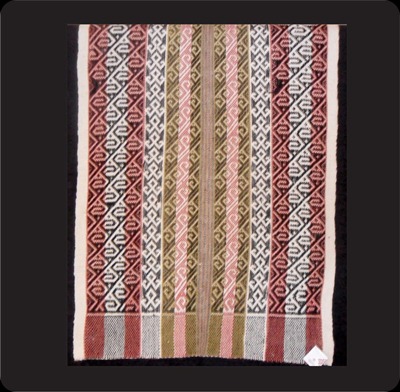
matra-tejido-en-telar-vertical-mapuche-artesanias-neuquinas
Textile works, wood and stone carvings, musical instruments, pottery and silver ornaments are the lines of products that the company promotes and commercializes. All these products are created from natural materials that come from the sustainable resources of the province, completely handmade by the craftsmen by means of tools assembled by them, and using methods to transform the raw materials that have been transmitted from generation to generation.

Products.
Mapuche vertical woven cloths occupy a very important place in the province. Almost exclusively fabricated by women, they symbolically represent the spirit of the mapuche people in its utmost expression. Women teach to weave orally and practically, mainly to other members of the family. Although there is a limited amount of symbols, the combinations among them are numerous, and the result is the creation of unique pieces. Weavers create a great amount of products using different techniques: peleras, suitcases, sashes, carpets, tablecloths, tapestry, matras, matrones, and ponchos, among others.
artesanias neuquinas
The upright loom used by the native people in our province consists of an arrangement of posts with crosspieces. They obtain the wool by sheering sheep or by removing hair out of pelt. They clean it, take strange elements out (thistles, hairs), and classify it by colour and quality. Then they do the threading, a task mainly done by women, with the aid of a wooden spindle with whorls that can be made of stone, ceramic, wood, or other material.

If they do not want to use the natural colour of the wool, they dye it in the traditional fashion, which shows the deep knowledge native people have on the dying properties of some vegetables and minerals.

Whereas weaving is mainly a task performed by women, wood carving is mainly done by men, although some women dare work on it too. The raw materials are obtained from the fallen trees on the near forests. The wood they carve is mainly lenga, and the most common objects they produce are pans, dishes, cutlery and other useful objects habitually used in the kitchen.
artesanias_body_240708
The production of musical instruments kept many of the elements of the traditional mapuche culture. The kultrún, the pifilka and the trutruka are made with different materials, especially wood and coigue cane.

Pottery work is the activity practised by the smallest proportion of artisans. Pottery elements are, mostly, of Creole origin and from the northern area. Clay is obtained in the surroundings of the craftsmen’s residence area, and the most common objects are pitchers and jugs.

Silver work is also made mainly by Creole craftsmen that use mapuche motifs in their productions. The traditional mapuche pieces are pectorales (a kind of breastplate), tupus (brooches), trariloncos (accessories that are put round the head like a headband) and rings. And as regards the Creole products, they create mates (containers to drink a traditional infusion), bombillas (small tube for sucking the infusion out of a mate), knives, pasapañuelos (neckerchief holders), etc.

Silver work is one of the most representative cultural expressions of the mapuche people. Their entire symbolic world is expressed in the shapes, the engravings on silver plates, the symbols, and the use they give to jewellery. During the pre-Hispanic period the mapuche knew how to work materials and they produced copper, and most probably gold and silver, ornaments.

After the Spanish conquest and until the 19th Century, the mapuche obtained silver trading with the Spanish. They exchanged manufactures or cattle for silver coins that they used as a raw material for silver work. These works of art helped create a commercial trade with other indigenous groups and with white men as well.

The objects that sell better are the ones made out of wood, both for domestic or ornamental use, and in the second place, tablecloths and tapestry woven in mapuche looms.

Their economical prices and their utility as ornamental objects make them attractive both for residents and tourists.
artesanias


If you liked this article, subscribe to the feed by clicking the image below to keep informed about new contents of the blog:
Neuquén province holds a wealth of palaeontological resources.
It is an extraordinary reservoir of extinct species of plants and animals, especially terrestrial vertebrates and marine invertebrates, belonging to different groups and with varied ecological characteristics.

In the past few years, palaeontology in the territory of Neuquén has turned into a scientific-cultural attraction, which at the same time is attractive for tourists who visit the area.

In the centre of Villa El Chocón town, Ernesto Bachmann Municipal Museum exhibits the palaeontological and archaeological material discovered in the nearby area.
The main attractions of the museum are the remains of Giganotosaurus carolinii, whose name means “great lizard of the south”, which was discovered in 1993, and is considered the largest carnivorous dinosaur of all times, even bigger than the Tyrannosaurus rex.

In Plaza Huincul, Carmen Funes Municipal Museum, located near the entrance of the town, is characterized by the restoration of its exhibition rooms and the development of its scientific research.

The most important discovery displayed in the museum is the Argentinosaurus huinculensis, the largest herbivorous dinosaur in the world. It belongs to the sauropods group, and to the titanosauridae family.
Its name means “Argentine reptile from Huincul”. This specimen was found in 1988, 5 miles east from the city of Plaza Huincul. Presently, Giganotosaurus carolinii and Argentinosaurus huinculensis are the most representative specimens of Neuquén’s fields, and they turn this region into one of the most important dinosaur areas in South America.
In the Palaeontological Centre Los Barreales Lake (CEPALB), located near the artificial lake Los Barreales, visitors can witness the extraction, preparation, scientific research and exhibition of the fossil remains discovered in the site, a rich 90 million-year-old palaeontological reservoir.
In Rincón de los Sauces, the Argentino Urquiza Palaeontological Museum exhibits the most complete Titanosaur in the world. This dinosaur is part of the Cretacic fauna of the region.

In an area next to Auca Mahuida volcano, palaeontologists discovered remains of dinosaurs’ nests and eggs. These are so extraordinary that they are considered a unique scientific phenomenon.

Near Añelo, there are two dinosaur replicas made by the artist Carlos Regazzoni with industrial waste from the oil activity, reason why they are called “Petrosaurios”.
In San Patricio del Chañar, during the building of Familia Schroeder Winery, an Aeolosaurus (wind lizzard), which belongs to the Titanosauridae family, was discovered, and it is currently on display in one of its rooms.


If you liked this article, subscribe to the feed by clicking the image below to keep informed about new contents of the blog:
 
Copyright © 2015 Argentina Photo Gallery
Distributed By Gooyaabi Templates
-->