The Los Alerces National Park is located in the west of the province of Chubut. It has an area of 259,570 hectares belonging to the Patagonian Forests ecoregion. Decree No. 1937 105 433 set for different areas in the Andean Patagonia status reserves bound for the subsequent creation of National Parks. One of these territories was the Reserve Larches. In April 1945, through Decree
1.- Cycling the Abra del Acay.
Weds 14 Nov: San Antonio de los Cobres – La Poma (c. 2830m) (92km, 1350m ascent). The big day. We set off early, retracing to Los Patos and turning right. The route follows a stream through a broad valley, with a few settlements off the road. At 18km is what looks to be a good campsite (presumably the one used by Stefan Roman). 7km later there is a sandy stretch with no habitation beyond.
1.- Route 40 explained section by section: southern section.
Route 40 extends over 5000 kilometers in Argentina and unites some of the most beautiful and famous country territories. The trail crosses the Cuyo, North and Patagonia. It passes through 11 provinces, twenty National Parks and Reserves, 13 large lakes and salt mines, and five areas declared Natural Heritage Site. Kilometer 0 of Route 40 is the Cabo Virgenes in Santa Cruz, and it reaches its
Naveira Castillo incredible architectural beauty based on Gothic structure. One of the most mysterious and eccentric places in Argentina as it is forbidden to the public. The Naveira Castle is located in the town of Lujan, Province of Buenos Aires. The structure of this castle is based in Gothic art and is one of the most mysterious and eccentric places in the area that is forbidden to the
1.- Copahue could be named World Natural Heritage by UNESCO (Part II).
Itineraries: The main attraction of the park are its hot springs. In Copahue are domesticated, they put at the service of health. But in Las Maquinitas, the Amphitheatre and the volcano crater, destination rides and guided walks, wild look in all its splendor. Also reach the border pillar Step Copahue 2013 mts., Where the Mapuche Chilean valley Trapa Trapa arrive daily to sell their crafts.
2.- Copahue could be named World Natural Heritage by UNESCO (Part I).
Exceptional features, it is one of the country's thermal havens Copahue Provincial Park, located northwest of the province of Neuquén, Patagonia Argentina, meets two criteria proposed for the assessment of outstanding universal value and to be declared a World Natural Heritage by the United Nations Organization. On the one hand, represent natural phenomena or areas of exceptional natural beauty
3.- The 10 Most Popular Posts on Argentina Photo Gallery in January 2014.
1.- Gualeguaychú Carnival The Carnival of the Country. As in previous years, during the next 2014 Summer months, on Saturdays (from January 4th to March 1st, and this Summer will also include March 2nd and 3rd -Sunday and Monday-), the city of Gualeguaychú will dress up to present one of the most expected shows in the area: the Gualeguaychu 2014 Carnival, which summons thousands of enthusiasts
4.- Gualeguaychú Carnival The Carnival of the Country.
As in previous years, during the next 2014 Summer months, on Saturdays (from January 4th to March 1st, and this Summer will also include March 2nd and 3rd -Sunday and Monday-), the city of Gualeguaychú will dress up to present one of the most expected shows in the area: the Gualeguaychu 2014 Carnival, which summons thousands of enthusiasts that enjoy the brightness, the joy, the thrill and the
5.- Lagunas de Yala, water mirrors in height with a stunning vegetation.
Surrounding environment, Lagoons and wing are located in the Capital Department, to 2.306msnm In total there are six access but this will only enable them to three bodies of water that are in high amid lush greenery and looks like a mirage in the mountains, a dream. They are known as: The Noques, Alizar, The Trough, Drainage, Rodeo, Long. The thick vegetation and flowers form in an attractive
6.- The 10 Most Popular Posts on Argentina Photo Gallery in December 2013.
1.- Progressive disappearance of missionary fauna. The fauna of the province of Misiones, notable for its wonderful variety, was highly assaulted: one by the irrational and uncontrolled hunting of species with economic value (for their fur or leather), on the other removing the forest as natural... More » 2.- Andresito Provincial Park great exponent of the missionary nature. Among extensive
7.- Progressive disappearance of missionary fauna.
The fauna of the province of Misiones, notable for its wonderful variety, was highly assaulted: one by the irrational and uncontrolled hunting of species with economic value (for their fur or leather), on the other removing the forest as natural habitat, which significantly decreased the chances of survival of the species. As a result several species at virtual extinction was implemented to
8.- Andresito Provincial Park great exponent of the missionary nature.
Among extensive plantations of yerba mate blend with the forest vegetation, Andresito is a quiet town in the Province of Misiones which is located 60 miles from Niagara Falls, in the Department of General Belgrano. Combining natural landscapes with activities for everyone but always retain the native environment, ecotourism is positioned as one of the best ways to immerse yourself in this
9.- International Exhibition Fair of Buenos Aires, The Book - From Author to Reader.
The International Fair Exhibition of Buenos Aires, The Book - From Author to Reader's creation and entrepreneurship of the Book Foundation, a nonprofit based in Hipólito Yrigoyen 1628, 5th Floor, (C1089AAF) Buenos Aires. The Foundation is made up of the Argentina Society of Writers (SADE), the Argentina Book Chamber (CAL), the Argentina Chamber of Publishing, Industry Books and Magazines Spanish
10.- The 10 Most Popular Posts on Argentina Photo Gallery in November 2013.
1.- Teyú Cuaré Provincial Park (Misiones), inspirational writer Horacio Quiroga. Teyú Cuaré Provincial Park (in Guarani: Teju lizard kuaré, cave, ie: Cave lizard) is a protected area of Argentina province of Misiones. It covers a coastal area on the Paraná River located in the department of San Ignacio. It has an area of 78 ha. The place has inspired the Uruguayan writer Horacio Quiroga, who
If you liked this article, subscribe to the feed by clicking the image below to keep informed about new contents of the blog:
Presently many mapuche communities live in Neuquén territory, especially in Patagonia of Lakes, and they give value to their vision of the world and their customs inviting people to visit their lands and share their traditions.
This tradition is reflected on each everyday life expression of these communities. Religion, music, handicrafts and cooking keep the tradition of these people alive.
Commercialization.
Since the year 1975, Artesanías Neuquinas, a Provincial State Company, plays a significant role in the recovery, development and promotion of the traditional artisan activity deeply rooted in the original culture of the province.
Its mission as a company is to strengthen the cultural value of the artisan job as the authentic expression of its people and to guarantee its continuity throughout the province of Neuquén by the creation of a permanent and profitable source of income for craftsmen.
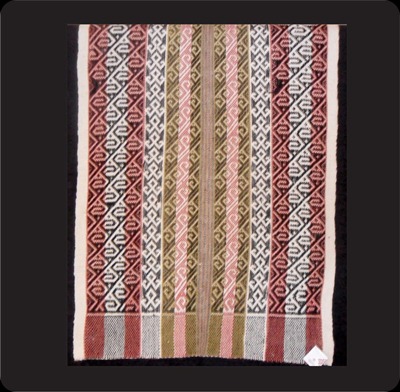
Textile works, wood and stone carvings, musical instruments, pottery and silver ornaments are the lines of products that the company promotes and commercializes. All these products are created from natural materials that come from the sustainable resources of the province, completely handmade by the craftsmen by means of tools assembled by them, and using methods to transform the raw materials that have been transmitted from generation to generation.
Products.
Mapuche vertical woven cloths occupy a very important place in the province. Almost exclusively fabricated by women, they symbolically represent the spirit of the mapuche people in its utmost expression. Women teach to weave orally and practically, mainly to other members of the family. Although there is a limited amount of symbols, the combinations among them are numerous, and the result is the creation of unique pieces. Weavers create a great amount of products using different techniques: peleras, suitcases, sashes, carpets, tablecloths, tapestry, matras, matrones, and ponchos, among others.
The upright loom used by the native people in our province consists of an arrangement of posts with crosspieces. They obtain the wool by sheering sheep or by removing hair out of pelt. They clean it, take strange elements out (thistles, hairs), and classify it by colour and quality. Then they do the threading, a task mainly done by women, with the aid of a wooden spindle with whorls that can be made of stone, ceramic, wood, or other material.
If they do not want to use the natural colour of the wool, they dye it in the traditional fashion, which shows the deep knowledge native people have on the dying properties of some vegetables and minerals.
Whereas weaving is mainly a task performed by women, wood carving is mainly done by men, although some women dare work on it too. The raw materials are obtained from the fallen trees on the near forests. The wood they carve is mainly lenga, and the most common objects they produce are pans, dishes, cutlery and other useful objects habitually used in the kitchen.
The production of musical instruments kept many of the elements of the traditional mapuche culture. The kultrún, the pifilka and the trutruka are made with different materials, especially wood and coigue cane.
Pottery work is the activity practised by the smallest proportion of artisans. Pottery elements are, mostly, of Creole origin and from the northern area. Clay is obtained in the surroundings of the craftsmen’s residence area, and the most common objects are pitchers and jugs.
Silver work is also made mainly by Creole craftsmen that use mapuche motifs in their productions. The traditional mapuche pieces are pectorales (a kind of breastplate), tupus (brooches), trariloncos (accessories that are put round the head like a headband) and rings. And as regards the Creole products, they create mates (containers to drink a traditional infusion), bombillas (small tube for sucking the infusion out of a mate), knives, pasapañuelos (neckerchief holders), etc.
Silver work is one of the most representative cultural expressions of the mapuche people. Their entire symbolic world is expressed in the shapes, the engravings on silver plates, the symbols, and the use they give to jewellery. During the pre-Hispanic period the mapuche knew how to work materials and they produced copper, and most probably gold and silver, ornaments.
After the Spanish conquest and until the 19th Century, the mapuche obtained silver trading with the Spanish. They exchanged manufactures or cattle for silver coins that they used as a raw material for silver work. These works of art helped create a commercial trade with other indigenous groups and with white men as well.
The objects that sell better are the ones made out of wood, both for domestic or ornamental use, and in the second place, tablecloths and tapestry woven in mapuche looms.
Their economical prices and their utility as ornamental objects make them attractive both for residents and tourists.