F
Showing posts with label Prehistoric Art. Show all posts
For the original peoples, rock art was a tool for communication, a way to transfer ideas, experiences and convictions, a way to reaffirm their own and to participate in other groups of that message put in the immensity of the landscape with the intention aware, that they will last in physical space and time.

In turn, it was a way of intervening territorially, especially when we understand the nomadic condition of its producers, making reference to its inter-related actions related to space: in territorial exploration, in the search for material resources and in ritualization in The geographical spaces.

Therefore, the human figure in rock art cannot be interpreted as an illustrative representation, it is much more than that. The worldview of the South American native peoples includes animated beings and inanimate elements, all of them forming part of an integrated whole that carries the character of sacred.

The human being was understood within that whole.

The representation of human figures in the rock art of the Cuyo region.


The human being was understood within that whole. That sacredness was rooted in the naturalistic and mystical thinking of the people that also hierarchized and deeply respected the characters of power within the community.

This hierarchy is evident in all rock art. Thus, certain human figures have the schematic simplicity and smaller sizes compared to those that show the attributes of power, differing both in the set.
Read also: The lonely Pucará de Hualco, a city of stone, more than a thousand years old.
But whatever its appearance, the human figure, in rock art, is always based on an idea conceived by the naturalistic thinking of the original peoples who considered those of their kind a part in nature and not the axis of the system; which is the most widespread conception in our western and contemporary thinking.

Cuyana region.


In Mendoza, they are chronologically attributed to the period between 400 and 600 years and are culturally associated with the Ovalle style of the Valley of Enchantment in Chile and the culture of El Molle (300 BC-700 AD). This, at later times, would be associated with the Aguada income and would result from an incorporation given by farming groups in the area, which allows us to propose a temporary projection until 900.


The rock manifestations have received different interpretations, predominantly those that emphasize the role associated with shamanic practices. In Mendoza, within the anthropic manifestations, those that refer to heads and mascariforms stand out, which by stylistic association allowed them to be linked culturally and chronologically, but that at the interpretative level led to postulate the representation of experiential experiences of ceremonies where the human head stood out as the center of power and possessor of special forces.

These images would be enhanced as a result of experiences derived from the use of hallucinogenic substances, which, by altering the senses, would favor images in a trance state.
Human figure: hierarchical attributes.

Representation of the human figure.


The human figure is more frequent in the north of the region. In almost all cases they are recorded although we also see it painted, as in the peach eaves in San Rafael.

The representation of some parts of the body is very frequent. In Malargüe the body appears but without head or heads without the body and also the imprint of the human foot.

Other figures move away from a realism and become a different scheme in which the human figure is transformed into a symbolic element, for example the drawing of the head with upper and lower limbs - without the torso - with appendages that start from the same in radial form or with ornamentations in the superior part, as it is the case of the paintings of Los Morrillos and in the Colorados of San Juan and Tundunqueral, in the north of Mendoza.

With variants, the head alone is presented with cephalic attributes or the head with ornamentations and the lower limbs (Tundunqueral, Mendoza and Los Colorados, San Juan). These designs were linked to the tiaras or mascariform heads of the Northern Chilean Boy.

Frequently the characters in rock art are accompanied by birds, felines, snakes and other animals that occupy primary places in the graphic set makes us think that they played an important role in their lives and were part of their rituals. The characters are also seen carrying camelids on a rope, or their stumps or pregnant females, which shows their status as hunter gatherers and the preponderance of these animals in obtaining resources.

The rock, in many cases, is part of the composition and the landscape participates as the setting for the unifying mother earth of "everything." This can be seen in some creations in which engraving and support make up the design, as is the case of the mascariform figure of Painted Stones in San Juan in which the oval shape of rock constitutes the contour of the mascariform.

Argentina has proven to be, through the paleontological findings of Argentine dinosaurs, the promised land of scientists, paleontologists and lovers of the great saurians who once, more than 65 million years ago, absolutely dominated the planet for a period of time of more than 160 million years.

Argentina was in prehistory, a site heavily populated by dinosaurs. At present, the discovery of fossil remains has aroused the attention of paleontologists from around the world, as well as tourists from the country and abroad.

Parallel to the changes in living species, there were also great geographical and climatic changes.

There was, at that time, a unique continent on the planet, known as Pangea.

The Andes Mountains had not yet formed, allowing the sea to reach the current province of Neuquén.

Argentina was in prehistory, a site heavily populated by dinosaurs.


Prehistoric Argentina, land of dinosaurs.


Later, the waters receded leaving large lakes and lush vegetation in their path, constituting an ideal habitat for the development of dinosaur life.

Over the course of the Jurassic period, the giants lived peacefully feeding on coniferous forests and large trees such as araucarias. With the formation of the Cordillera de los Andes, in the tertiary, there was a second invasion of the waters coming from the Atlantic Ocean.

Read also: Cueva de las Manos, a Cultural Heritage Unesco in Santa Cruz province.

This was particularly important for the paleontologists' current work, since the sedimentation processes, after these two seawater invasions, contributed to fostering fossil remains. It is believed that sedimentation processes would be the key to the conservation of fossil remains.

100 million years ago, the Patagonian territory consisted of meadows populated by forests cut by rivers and streams. 


The Andes Mountains did not exist, although there were active volcanoes. The Pacific Ocean reached this territory.

With this soil and geographical features, the climate that presented itself was tropical or humid subtropical.

With the formation of the Cordillera de los Andes, in the tertiary, there was a second invasion of the waters coming from the Atlantic Ocean.


Among the Cretaceous vegetation, there were species of araucarias, ginkos and other primitive oddities.

There were ferns under the trees, cicas and the first flowering plants made their appearance. In that period lived the largest carnivore found so far, the Giganotosaurus Carolini, whose dimensions were about 14 meters in length.


In the same environment, he lived with smaller carnivores and herbivores, highlighting the Andesaurus Delgadoi.

The aquatic turtles, predecessors of the current ones, and primitive small mammals, as well as flying reptiles, an example of this was the pterosaur, and insects like dragonflies, although larger than those existing today alongside invertebrates, they were part of the prevailing ecosystem .

About 30 sites with fossil remains were found in the Neuquén province.


Some 40 species of dinosaurs distributed in the provinces of Salta, San Juan have been identified, especially in the Valley of the Moon (Ischigualasto), San Luis, Mendoza, La Rioja, Chubut, Neuquén, Río Negro, Santa Cruz and even in the antartida.

Read also: Argentavis is the largest flying bird ever discovered.

This would represent approximately 10% of the total species found around the world, so far. Which, gives us the pattern of paleontological relevance worldwide accredited by Argentina, in terms of prehistoric findings and as a cradle and primitive dinosaur ecosystem.

Throughout Patagonia, there are numerous frolil, "stone bones"; denomination that the indigenous people of the Mapuches gave to the fossil remains.

In the province of Neuquén, for example, some 30 sites with fossil remains were found over the past three decades.

The Intihuasi Caves are located in the Coronel Pringles Department integrating the Comechingones mountain system.

The importance of this location helps us to understand the culture of Ayampintín, because it is located between the agro-pottery cultures of the Northwest and those of hunters of the Pampa-Patagonia.
Lnti huasi means in Quechua "house of the sun".

A large arcade served as a defense against the summer sun and the winter rains .

This arcade being the driest and most luminous place of the whole cavern, should have been the meeting place of the inhabitants who had settled it in the different times.

The man came to these places when temperatures had reached such extremes that they generated a process of desertification and the Lakes Basin was greatly diminished.

The INTI HUASI disappeared to reappear 300 years later, in 5,900 BC , when the region had acquired its current physiognomy, to dedicate itself to the hunting and harvesting of fruits, such as those of the algarrobo.

From that moment, the life in the territory puntano was transformed and was reduced to the margins of the Sierras de San Luis.


Read also: Guide of spas and streams in Merlo, Sun and beautiful landscapes.


If you liked this article, subscribe to the feed by clicking the image below to keep informed about new contents of the blog:
rss-icon-feed1
Surrounded by hundreds of kilometers only by the constant sound of the Patagonian wind, Pinturas River Canyon opens.

There, in the folds of its high walls, the rock art of Cuevas de las Manos, where settlers 9,000 years ago sealed their art and their witness of life is discovered.

His fame is not for nothing. Those hands, guanacos and geometrical figures stamped on the stone of the cave are the oldest expression, knowledge of South American peoples have.

This was understood by Unesco in 1999 when he was named Cultural Heritage.
cueva de las manos
Its location, lonely, amid the northwestern Santa Cruz steppe enables you kept almost intact.

The nearby as people, Perito Moreno, is 163 kilometers away. And beyond, and near the Cordilera, it is the ancients, who was the resting place of the elders of the missing Indian tribes.

This whole area and not just the cave, including NacionalPerito Moreno Park (not to be confused with the Glacier National Park, which preserves the Perito Moreno Glacier.

La Cueva de las Manos is a rich archaeological and paleontological site. The valleys, canyons, lakes and rivers that make up rock shelter celosamentepinturas and different types of archaeological sites in their fields men who walked 14,000 years BC.

And in the grass, sea fossils testify that this region was long before that old man dwell.
In fact, the town of Perito Moreno is called the archaeological capital of the Province of Santa Cruz.
If you liked this article, subscribe to the feed by clicking the image below to keep informed about new contents of the blog:
rss-icon-feed1

With a wingspan estimated at seven meters across,‭ ‬Argentavis was roughly twice the size of the largest flying bird today‭ (‬Wandering Albatross‭)‬,‭ ‬and only the long extinct pterosaurs could have rivalled and exceeded it for size.‭ ‬

How such a large bird like Argentavis could fly has been the key area of study associated with this bird,‭ ‬something that has resulted in some interesting conclusions.‭ ‬The first is that the keel of the breastbone is quite small which suggests the main flight muscles were reduced when compared to other flying birds.‭ ‬This means that even though the wings were huge,‭ ‬Argentavis did not have the stamina to continuously flap them.‭

Argentavis-Magnificens-comparison-with-human


The Quilmes ruins are located in the Calchaquí Valle, Tucumán, Argentina. They are the remains of the largest pre-Columbian settlement in that country.

They occupy about thirty acres and are located near Cerro Alto del Rey.

The place was first owned by the original people, the provincial government then later a private dealer and finally, descendants of the people Quilmes.

These ruins have been rebuilt, so that today can be visited by tourists.

Ruinas_Quilmes2

1.- Mordillo's world.

Son of Spanish parents, his childhood was spent in Villa Pueyrredón (Buenos Aires) where he had a precocious interest in drawing. In 1948 he was certified as Illustrator at the School of Journalism. Two years later part of the studio's animation team bruche Burone while doing illustrations for children's stories (Perrault's Tales, Tales of Schmid, The Bremen Town Musicians and The Three Little Pigs) edited by Codex. For 1952 Mordillo Galas Studies co-founded, dedicated to the production of animations. Meanwhile, still developing his career as an illustrator and publishing some strips in local magazines.


2.- The 10 Most Popular Posts on Argentina Photo Gallery in June 2013.
laguna-brava mapNational Reserve Laguna Brava, unique for its rugged beauty and landscape framework of the Andes.

It is a unique place for its rugged beauty and landscape framework offered by the Andes. The most impressive mountains in the vicinity of the lagoon are the Veladero and hills and Bonnet Large Cap Chico.It is 4200 meters and vicuña reserve (can be seen in many a few meters from the road) and has recently been named a Ramsar site.


3.- 8 Great Places to Visit in Argentina.

People come from all over the world to see what is perhaps Argentina’s star natural attraction: the mighty Iguazú Falls. Made up of some 275 individual waterfalls and cascades, the park in which they’re located has an amazingly comprehensive and well-maintained set of catwalks that allow you get right up close and personal with the vast sprays of water.At the heart of the site is a semicircular waterfall called ‘the Devil’s Throat.’ These falls are 80 meters high and a massive 2,700 meters in diameter, and because of the excellent catwalks, you can stand right over their edge in perfect safety.


4.- National Reserve Laguna Brava, unique for its rugged beauty and landscape framework of the Andes.

laguna-brava map It is a unique place for its rugged beauty and landscape framework offered by the Andes. The most impressive mountains in the vicinity of the lagoon are the Veladero and hills and Bonnet Large Cap C hico.It is 4200 meters and vicuña reserve (can be seen in many a few meters from the road) and has recently been named a Ramsar site.


5.- The Andes mountain range shows its beauty in the Patagonian provinces.


The Andes mountain range shows its beauty in the Patagonian provinces. Millennial silent forests with native vegetable species are extended along the shores of glistening waters.
On top of the mountains, nature overflows with granite peaks and ice fields spreading their glacier tongues into lakes of unsurpassable beauty.
Imposing mammals and sea birds, half-way between real life and fantasy, spend certain seasons on the rough coasts of Patagonia where they complete part of their life cycle. Seals colonies play on the islets and sandbanks.


6.- Biodiversity in Patagonia Argentina.

animales patagonia mara At present the existing biodiversity in the Patagonia Argentina, we are referring not only to the particular characteristics of each of the species that inhabit this region, wildlife humble glance, but try to give a global picture of the immense wealth totalizing underlying this ground, across the spectrum.
In other words, we want to make come to understand that since the immeasurable beauty of the ocean, through the rigorous but captivating arid steppe, to the stunning charm of the Cordillera de Los Andes, from the solitude of the hills in the plains to the majesty of the lakes with its glaciers, Patagonia Argentina hosts, even in its apparent simplicity, "THE MIRACLE OF LIFE."


7.- From Uritorco water flows down, many in underground, coming to form springs.

uritorco The Uritorco is a hill of 1949 m in the center of Argentina, located in the north Punilla Valley, close to Capilla del Monte, in the province of Cordoba , accessible routes provincial RN 38 and 17. Its summit is the highest point of the Sierras Chicas, formerly called Viarava. It is considered the sixth Córdoba Natural Wonder.


8.- The 10 Most Popular Posts on Argentina Photo Gallery in March 2013.
nunca masThe nine sites of memory.

From now until Tuesday, the Human Rights Secretariat ran signaled spaces where detention and torture during the dictatorship, in Buenos Aires, Córdoba, Santa Fe, San Juan, and Mendoza Misiones.
The Federal Network of Sites of Memory signaled from today until next Tuesday nine former clandestine detention centers in the provinces of Buenos Aires, Córdoba, Santa Fe, Mission, San Juan and Mendoza.


9.- Carnival of Humahuaca, popular celebration introduced by the Spanish and merged with native rituals intended to celebrate the fertility of the land.


Carnavalito_en_Humahuaca The Carnival of Humahuaca is a popular celebration, held at the beginning of Lent (40 days before Easter), in the area of the Quebrada de Humahuaca, Province of Jujuy , Argentina.
Introduced by the Spanish in America merged with Carnival native rituals intended to celebrate the fertility of the earth and honor the deity of Mother Earth, Pachamama, for goods received. This is a short version of the festival adapted Kapaj Peruvian Inti Rami, which began in December and ended in March, where they drank, sang, ate and danced to the limit.


10.- The 10 Most Popular Posts on Argentina Photo Gallery in May 2013.
dinosaurios1Prehistoric Argentina, the promised land of scientists, paleontologists and lovers of the great lizards.

Argentina has proved, through the dinosaur paleontological Argentines, the promised land of scientists, paleontologists and lovers of the great dinosaurs that once, more than 65 million years, absolutely dominated the planet for a period of time over 160 million years.Argentina was in prehistoric times, a very populated by dinosaurs. At present, the finding of fossils has aroused the attention of paleontologists from around the world, as well as tourists from home and abroad.


If you liked this article, subscribe to the feed by clicking the image below to keep informed about new contents of the blog:
Neuquén province holds a wealth of palaeontological resources.
It is an extraordinary reservoir of extinct species of plants and animals, especially terrestrial vertebrates and marine invertebrates, belonging to different groups and with varied ecological characteristics.

In the past few years, palaeontology in the territory of Neuquén has turned into a scientific-cultural attraction, which at the same time is attractive for tourists who visit the area.

In the centre of Villa El Chocón town, Ernesto Bachmann Municipal Museum exhibits the palaeontological and archaeological material discovered in the nearby area.
The main attractions of the museum are the remains of Giganotosaurus carolinii, whose name means “great lizard of the south”, which was discovered in 1993, and is considered the largest carnivorous dinosaur of all times, even bigger than the Tyrannosaurus rex.

In Plaza Huincul, Carmen Funes Municipal Museum, located near the entrance of the town, is characterized by the restoration of its exhibition rooms and the development of its scientific research.

The most important discovery displayed in the museum is the Argentinosaurus huinculensis, the largest herbivorous dinosaur in the world. It belongs to the sauropods group, and to the titanosauridae family.
Its name means “Argentine reptile from Huincul”. This specimen was found in 1988, 5 miles east from the city of Plaza Huincul. Presently, Giganotosaurus carolinii and Argentinosaurus huinculensis are the most representative specimens of Neuquén’s fields, and they turn this region into one of the most important dinosaur areas in South America.
In the Palaeontological Centre Los Barreales Lake (CEPALB), located near the artificial lake Los Barreales, visitors can witness the extraction, preparation, scientific research and exhibition of the fossil remains discovered in the site, a rich 90 million-year-old palaeontological reservoir.
In Rincón de los Sauces, the Argentino Urquiza Palaeontological Museum exhibits the most complete Titanosaur in the world. This dinosaur is part of the Cretacic fauna of the region.

In an area next to Auca Mahuida volcano, palaeontologists discovered remains of dinosaurs’ nests and eggs. These are so extraordinary that they are considered a unique scientific phenomenon.

Near Añelo, there are two dinosaur replicas made by the artist Carlos Regazzoni with industrial waste from the oil activity, reason why they are called “Petrosaurios”.
In San Patricio del Chañar, during the building of Familia Schroeder Winery, an Aeolosaurus (wind lizzard), which belongs to the Titanosauridae family, was discovered, and it is currently on display in one of its rooms.


If you liked this article, subscribe to the feed by clicking the image below to keep informed about new contents of the blog:
1.- The Andes mountain range shows its beauty in the Patagonian provinces.


The Andes mountain range shows its beauty in the Patagonian provinces. Millennial silent forests with native vegetable species are extended along the shores of glistening waters.
On top of the mountains, nature overflows with granite peaks and ice fields spreading their glacier tongues into lakes of unsurpassable beauty.
Imposing mammals and sea birds, half-way between real life and fantasy, spend certain seasons on the rough coasts of Patagonia where they complete part of their life cycle. Seals colonies play on the islets and sandbanks.


2.- 8 Great Places to Visit in Argentina.


Buenos Aires is a great city, but Argentina is a great country, and it would be a shame if you lived here and didn’t see all that it has to offer. And so without further ado, here are 8 places in Argentina you absolutely must visit. People come from all over the world to see what is perhaps Argentina’s star natural attraction: the mighty Iguazú Falls. Made up of some 275 individual waterfalls and cascades, the park in which they’re located has an amazingly comprehensive and well-maintained set of catwalks that allow you get right up close and personal with the vast sprays of water.


3.- Prehistoric Argentina, the promised land of scientists, paleontologists and lovers of the great lizards.

dinosaurios1 Argentina has proved, through the dinosaur paleontological Argentines, the promised land of scientists, paleontologists and lovers of the great dinosaurs that once, more than 65 million years, absolutely dominated the planet for a period of time over 160 million years.Argentina was in prehistoric times, a very populated by dinosaurs. At present, the finding of fossils has aroused the attention of paleontologists from around the world, as well as tourists from home and abroad.


4.- Mordillo's world.

Son of Spanish parents, his childhood was spent in Villa Pueyrredón (Buenos Aires) where he had a precocious interest in drawing. In 1948 he was certified as Illustrator at the School of Journalism. Two years later part of the studio's animation team bruche Burone while doing illustrations for children's stories (Perrault's Tales, Tales of Schmid, The Bremen Town Musicians and The Three Little Pigs) edited by Codex. For 1952 Mordillo Galas Studies co-founded, dedicated to the production of animations. Meanwhile, still developing his career as an illustrator and publishing some strips in local magazines.


5.- The 10 Most Popular Posts on Argentina Photo Gallery in April 2013.
The most common birds in parks and gardens in and around Buenos Aires.
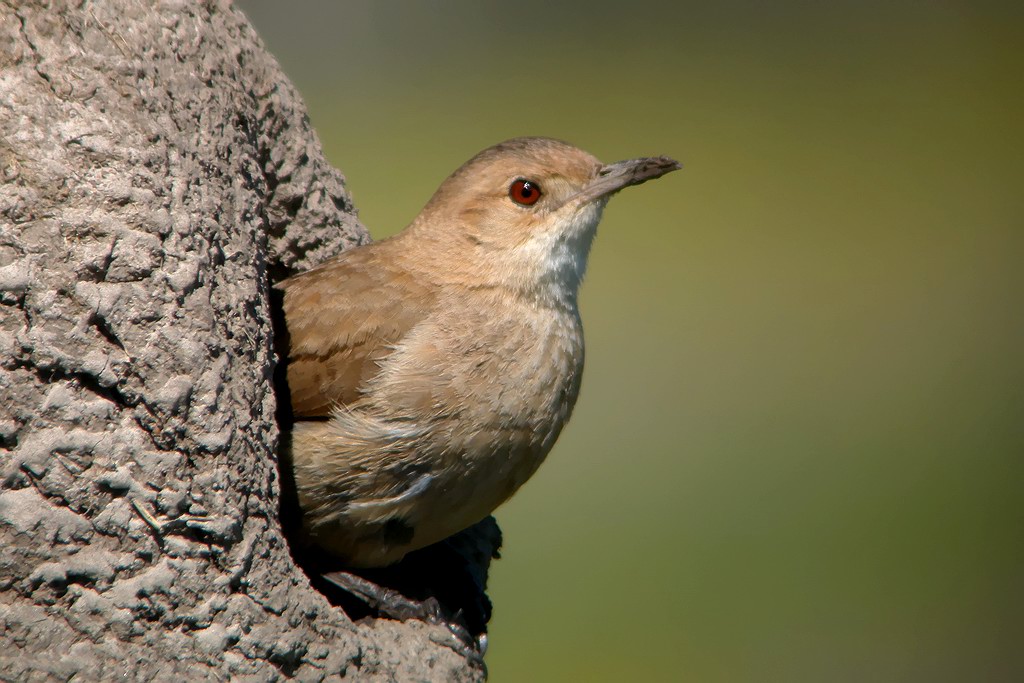
Hornero.
Abundant. It is seen in open areas, parks, fields and gardens of the suburbs, and various natural environments such as forests, etc. She is seen on the ground, on poles and tree branches. Sing to pair. Build this amazing nest of mud. It is the national bird of Argentina.


6.- Biodiversity in Patagonia Argentina.

animales patagonia mara At present the existing biodiversity in the Patagonia Argentina, we are referring not only to the particular characteristics of each of the species that inhabit this region, wildlife humble glance, but try to give a global picture of the immense wealth totalizing underlying this ground, across the spectrum.
In other words, we want to make come to understand that since the immeasurable beauty of the ocean, through the rigorous but captivating arid steppe, to the stunning charm of the Cordillera de Los Andes, from the solitude of the hills in the plains to the majesty of the lakes with its glaciers, Patagonia Argentina hosts, even in its apparent simplicity, "THE MIRACLE OF LIFE."


7.- Nahuel Huapi National Park is the oldest Argentine national park, in Patagonia in the foothills of the Andes mountains.

Nahuel Huapi National Park is the oldest Argentine national park, in Patagonia in the foothills of the Andes mountains. It was established in 1934, but the nucleus of the park is the land donated to the federal government by Perito Moreno in 1903.
The park covers approximately 7050 km² and is located in the southwest of the Neuquén and northwest of the Río Negro provinces bordering with Chile. The largest city within the park and a base for tourism is the city of San Carlos de Bariloche. Villa La Angostura is another lakeside resort also within the boundaries of the park.


8.- The Giant Armadillo (Priodontes maximus), colloquially Tatou, Ocarro, Tatu-canastra or Tatú Carreta, is the largest living species of armadillo.

The Giant Armadillo (Priodontes maximus), colloquially Tatou, Ocarro, Tatu-canastra or Tatú Carreta, is the largest living species of armadillo. It was once found widely throughout the tropical forests of eastern South America and now ranges throughout varied habitat as far south as northern Argentina. This species is considered vulnerable to extinction.


9.- Cabo Blanco Nature Reserve a pocket full of wildlife.

cabo blanco map The Cabo Blanco Nature Reserve was created by Decree of the Province of Santa Cruz N ° 1561 of 1977. It was declared as "Intangible Natural Reserve".
The purpose of it was to create a reserve for the one area for breeding and fur seal (Arctocephalus australis) in the province of Santa Cruz. In turn, there is also a colony of sea lions (Otaria flavescens), and a significant diversity of seabirds.


10.- Argentine gastronomic dictionary.


comidas criollas
Aji de Chicha. Northwest
Food that is prepared with broth, tummy, peppers and potatoes
Alcuco.
Central and northwest
Made from wheat trodden without cuticle, boiled in salted water, to which is added onion, squash, diced goat meat and finish seasoning with saffron, and chili fried fat.
Alfajor. Candy consisting of two small pieces of dough more or less circular, joined together with different types of sweets.


If you liked this article, subscribe to the feed by clicking the image below to keep informed about new contents of the blog:
 
Copyright © 2015 Argentina Photo Gallery
Distributed By Gooyaabi Templates
-->