We have placed cookies on your computer to help make this website better. We use a Google Analytics script which sets cookies.OK | More details can be found in our privacy policy
The Malvinas Islands (Falklands) host a unique ecosystem shaped by their cold, windy climate and isolation. The fauna is dominated by marine mammals and seabirds, while the flora consists mainly of grasses, shrubs, and peat bog vegetation, with no native trees.
Flora of the Malvinas Islands
Grasslands and Shrubs: The islands are largely covered by tussac grass (Festuca flabellata), which can grow up to 2 meters tall and provides shelter for birds and sea lions.
Peat Bogs: Extensive peatlands support mosses and small herbaceous plants.
Heathlands: Areas with dwarf shrubs and hardy plants adapted to poor soils and strong winds.
Endemic Plants: Species such as Malvinas Daisy (Perezia recurvata) and Malvinas Violet (Viola maculata) are unique to the islands.
Absence of Native Trees: No native arboreal vegetation exists today, though fossil records show ancient cypress and araucaria forests.
Fauna of the Malvinas Islands
Marine Mammals
Seals and Sea Lions: Southern sea lions, elephant seals, and fur seals are common along the coasts.
Cetaceans: Orcas, dolphins, and several whale species migrate through surrounding waters.
Birds
Penguins: Five species breed here: King, Gentoo, Rockhopper, Macaroni, and Magellanic penguins.
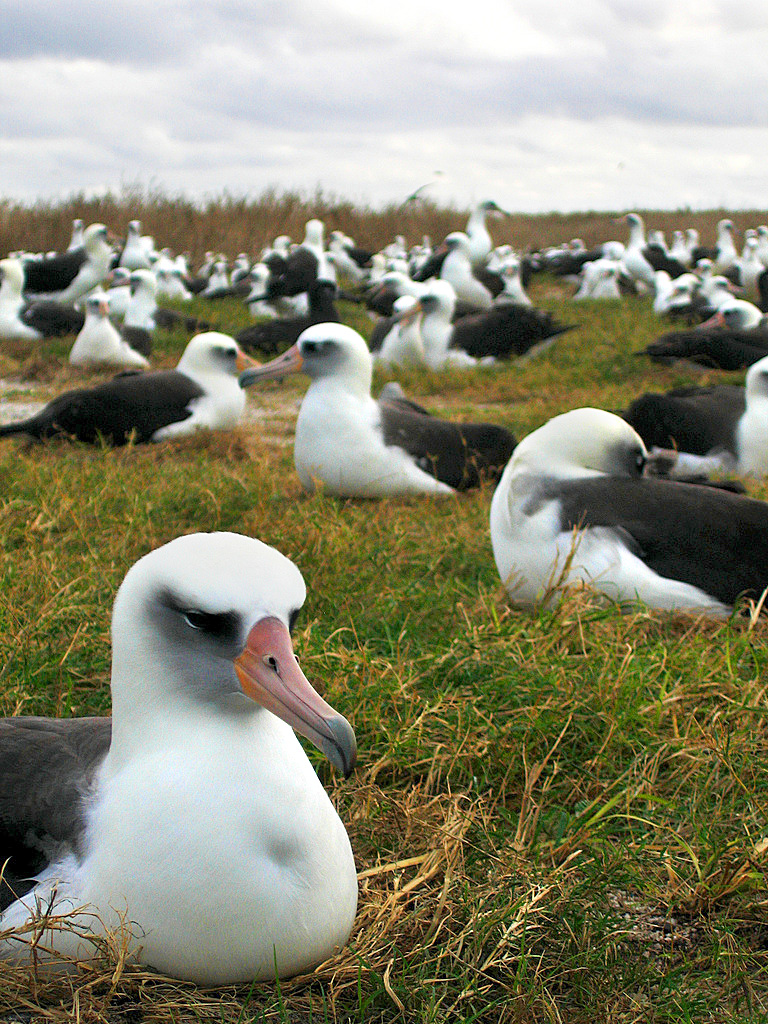
Seabirds: Albatrosses, petrels, cormorants, and skuas thrive in the nutrient-rich waters.
Land Birds: The Falkland steamer duck (flightless), upland goose, and the endemic Cobb’s wren are notable.
Invertebrates
Endemic Beetles: Several species of ground beetles and weevils are unique to the islands, such as Malvinius compressiventris.
Conservation Notes
Fragile Ecosystem: The harsh climate limits biodiversity, making species highly specialized and vulnerable.
Threats: Introduced species (rats, cats) have impacted native bird populations.
Protection Efforts: Conservation programs focus on seabird colonies and restoring tussac grass habitats.
Quick Comparison Table
Category Key Species/Features Notes
Flora Tussac grass, peat bog mosses, endemic daisies No native trees; vegetation adapted to wind/cold
Birds Penguins (5 species), albatrosses, Cobb’s wren Major global seabird colonies
Invertebrates Endemic beetles, weevils High endemism despite low diversity
In short: the Malvinas Islands are a haven for seabirds and marine mammals, with vegetation dominated by tussac grass and peat bogs. Their isolation has fostered unique endemic species, but conservation is crucial to protect this fragile ecosystem.
Argentine Patagonia hosts a remarkable diversity of native flora adapted to extreme cold, strong winds, and poor soils. Key species include coihue, ñire, lenga, ciprés de la cordillera, calafate, jarilla, and cushion plants like viola auricolo, each thriving in different ecological zones from Andean forests to Patagonian steppe.
Major Native Flora of Argentine Patagonia
Native Trees
Coihue (Nothofagus dombeyi): Tall evergreen tree found in humid Andean forests.
Ñire (Nothofagus antarctica): Deciduous tree adapted to colder, drier areas.
Lenga (Nothofagus pumilio): Dominant in high-altitude forests, tolerates snow and frost.
Ciprés de la Cordillera (Austrocedrus chilensis): Conifer native to the Andes, resistant to poor soils.
Native Shrubs
Calafate (Berberis microphylla): Thorny shrub with edible blue berries, iconic in Patagonian culture.
Jarilla (Larrea spp.): Hardy shrub typical of the Patagonian steppe.
Mata negra (Verbena tridens): Common in arid zones, adapted to wind and drought.
Mata guanaco (Anarthrophyllum rigidum): Cushion-like shrub with bright red flowers.
Herbaceous & Cushion Plants
Viola auricolo: Endemic cushion plant of Santa Cruz, adapted to rocky soils.
Steppe Jarilla, Mata negra, Coirón Drought resistance, wind protection
Shrublands Calafate, Mata guanaco Thorny defenses, edible fruits
High Andes Cushion plants (Viola auricolo) Compact growth, frost resistance
⚠️ Challenges & Conservation
Overgrazing by sheep and goats has degraded native shrublands, especially jarilla and coirón pastures.
Deforestation threatens lenga and ciprés forests.
Climate change alters snow and rainfall patterns, impacting species distribution.
Conservation efforts in national parks (e.g., Los Glaciares, Nahuel Huapi) protect endemic species and restore degraded ecosystems.
Patagonia’s flora is not only ecologically vital but also culturally symbolic—calafate berries are tied to local legends, and lenga forests form the backbone of Andean landscapes.
It is one of the little explored places in the country, but it is worth knowing. The new park, of 128 thousand hectares, now represents the largest reserve in northern Argentina.
It is very difficult to find a degree of biodiversity as pure as that seen in El Impenetrable National Park.
The national park is part of what Estancia La Fidelidad used to be and extends between the provinces of Chaco and Formosa, covering an area of 250,000 hectares, divided by the Bermejo river.
The origin of its name lies in the difficulty of entering the area. Nature is diverse.
Lush forests. Ancient trees and mammals of exuberant beauty form the recent El Impenetrable National Park, the largest in northern Argentina.
Its 128,000 hectares make it the largest national park in northern Argentina.
The Impenetrable is a must-see for lovers of hiking and nature.
Under the premise of preserving the Chaco forest and the diverse species of flora and fauna that inhabit it, National Parks protects its 130,000 hectares from times prior to its creation, in 2017.
Why should we know this place?
The Impenetrable today constitutes one of the few, best preserved and largest green lungs in Latin America.
For many years, the site was used as a sports hunting ground. Domestic animals, indiscriminate logging and hunting put their biodiversity and ecological sustainability in check, causing the extinction of many species and the decrease of others, such as the jaguar, anteater, tapir and crowned eagle, among others.
Entering the park implies observing the life of the forest and the interaction between its inhabitants, as well as finding out about the importance of its preservation, both for the species and for the health of the planet.
Location.
The Impenetrable is located within the Gran Chaco ecoregion, which also extends to the Northwest of Córdoba and in the countries of Bolivia and Paraguay.
It is the third largest forest area in South America, after the Amazon and the Cerrado, in Brazil.
The brand new National Park protects the last redoubt of virgin forest, the third in importance in South America.
Tourist promotion of the park is presented as an alternative to traditional economic activities in the area. An example is the replacement of livestock with the sustainable creation of non-wood products, such as bush honey, carob flour and crafts in chaguar.
It is very clear that preserving and producing is possible.
The National Parks constitute the most important protected natural areas in Argentina.
They conserve biodiversity and ecosystems; they protect paleontological and archaeological sites; they promote environmental education, scientific research and nature tourism.
We start touring the El Impenetrable National Park.
Fauna.
The Impenetrable, thanks to its recovery, became the ideal habitat for many critically endangered species and others threatened with extinction, such as the yaguareté, the carreta tatú, three types of peccaries, the anteater, the crowned eagle and the boa rainbow.
The yarará is a poisonous snake native to South America.
The high biodiversity and native forest of this nature reserve, which is in a very good state of conservation, is home to hundreds of species of birds, including the yabiré, the talking parrot, the black woodpecker, the charata, the rayador and the espinero fron reddish.
The Impenetrable houses endangered fauna such as the jaguar, the anteater, the tapir.
Flora.
In the El Impenetrable National Park there are carob forests. The quebrachos white and red from Santiago stand out.
Other species of the tree canopy are the palo santo, mistol, viraró, itín, moradillo, saucillo, molle, talas, chañar, Capparis, the drunk palo de flor blanca or yuchán and large cactus.
A specimen of drunk stick round tree top and beautiful flowers.
The albardones that border the Bermejo river abound with forests of river alder, Creole willow, and yellowwood. Somewhat farther from the river there are examples of soap stick and stone stick.
The carob tree is the most widespread tree in El Impenetrable and the most subject to illegal logging.
The quimilero peccary is the largest in the country and an exclusive species in the Chaco region that is in serious danger of extinction, mainly due to hunting and the disappearance of its habitat.
The Chaco land tortoise inhabits semi-arid chaco forests.
The Chaco region is the second largest block of forests in South America after the best-known Amazon region.
Snakes, tapirs, peccaries, corzuelas (fawns), rheas and all kinds of animals walk in herds still elusive
The trips to the center of the Argentine jungle were the inspiration for the famous storyteller Horacio Quiroga to write his successful anthology "Tales from the jungle", a work that realistically shows the variety of animals that populate the impenetrable missionary and Chaco forest.
There are around 40 national parks, and there are hundreds of protected properties, at least in theory, under provincial, municipal and even privately managed jurisdictions.
The magic of the Iguazú National Park is often eclipsed by the magnificence of the eponymous Falls.
It is that one of the 7 Wonders of the World attracts so much attention that it diverts, in many cases, people's interest to know one of the most beautiful National Parks in Argentina.
As anecdotal data it is worth remembering that the Iguazú Falls, the undisputed star of this park were officially discovered by man 50 years after Christopher Columbus discovered America.
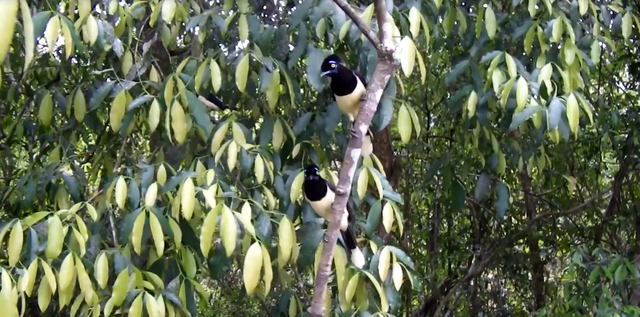
The Blue Dancer typical and extremely beautiful representative of the birds in the Iguazu National Park.
It was Alvar Núnez Cabeza de Vaca who in 1542 discovered them by giving it the name "Saltos de Santa Maria"
Today I will focus on highlighting the benefits of the Iguazú National Park, beyond the Falls, which in themselves are the reason for more than one article alone.
We agreed on the Argentine side. It can be accessed by bus or car, although many tourism agencies offer services that facilitate transportation to the park and provide additional services.
Iguazú National Park: World Heritage.
In 1984 the Iguazú National Park was declared a World Heritage Site by the United Nations Educational, Scientific and Cultural Organization (UNESCO) with the aim of its preservation and universal diffusion, given its exceptional natural and cultural importance for the common heritage of humanity.
27 years later in 2011 the Iguazú Falls were declared selected as one of the New Natural Wonders of the World, in a worldwide vote organized by the Swiss foundation New Seven Wonders, a rating that it shares with six other destinations in the world.
The red earth.
What will catch your attention in the first place is the color of the earth: red. As a consequence of the high concentration of iron oxide present in the soil.
It mixes with the intense green color of its vegetation. The color of the Paranaense jungle, within which is the national park.
Macuco Trail.
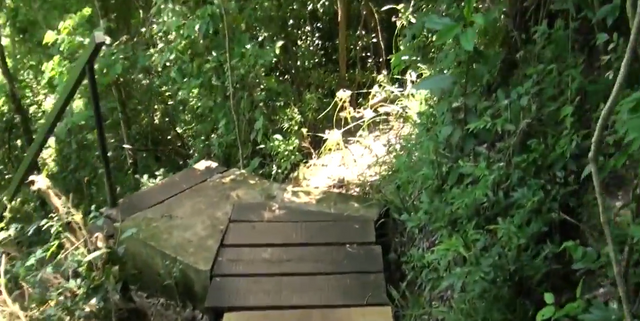
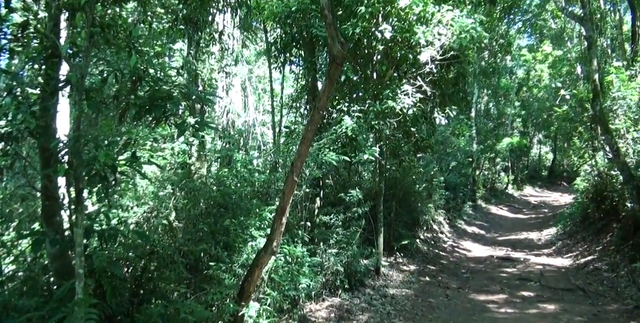
The Macuco Trail is the wildest and most natural of the Iguazú National Park trails.
It is a dirt road in the middle of the jungle that culminates in the beautiful Salto Arrechea.
This trail crosses the territory of the Monkey Caí, which allows one to often find the pleasant surprise of seeing groups of them in the treetops.
The entrance to the Macuco Trail is allowed from 08:00 to 15:00, its opening is conditioned to the weather and the approval of National Parks.
Please remember that it is important not to feed the animals so as not to harm them, they get their own natural food in their habitat, in addition to not touching them. Let's respect wild animals.
Flora.
Whether on the banks of the Iguazú river or on the numerous delta islands that form, several species of trees grow that are characterized by their humidity requirement.
Among them we find the curupay, the white laurel, the barayú or cedar from Paraná, the aguay, the ceibo, the palm heart and the rosewood or perobá del cuúl we already talked about in this post.
More than 90 species make up the tree flora of the Iguazú National Park.
There is a great variety of some plants that live in a humid ecosystem. Different types of climates can also be found.
Fauna.
Among the main species of birds that inhabit the place, we must mention the waterfall swifts, which fly through the interstices of the water columns to perch on the rocky wall, where they generally nest.
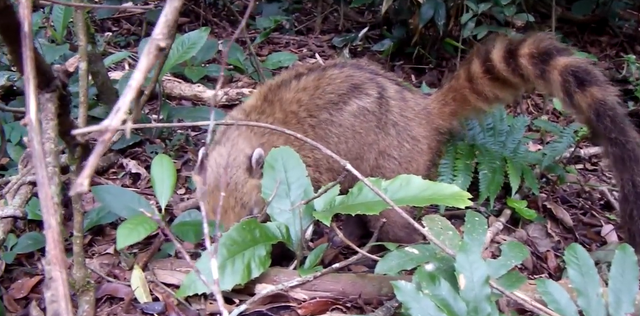
In the sector of the catwalks and mixed among the public it is not strange to find coatis (do not feed them!)
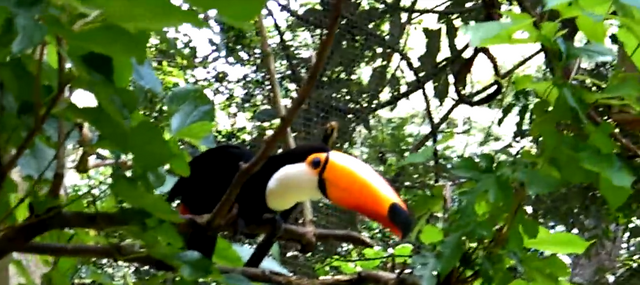
And specimens of the large toucan, one of the 5 species of toucans that live in the park. The harpy eagle also stands out.
In the sunny parts of the trails, especially towards noon, you can see specimens of lizards, climbing trunks and stones.
Among the endangered species covered by the park, the yaguareté, the tapir, the ocelot, the yaguarundí, the large anteater, the tamandúa, the jungle eagles, and the yacaré overo should be mentioned.
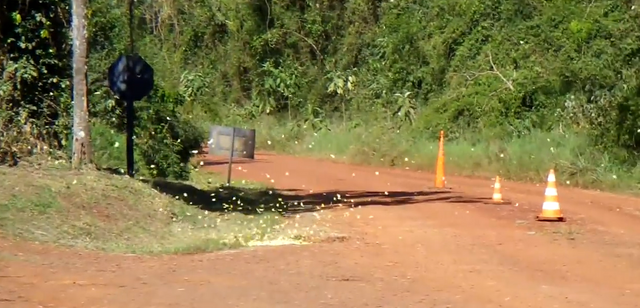
Among the insects that abound in the park's trails can be found butterflies of different types with spectacular colors.
For those who cannot see the birds in their natural habitat, I recommend visiting the Bird Park, a very beautiful natural environment.
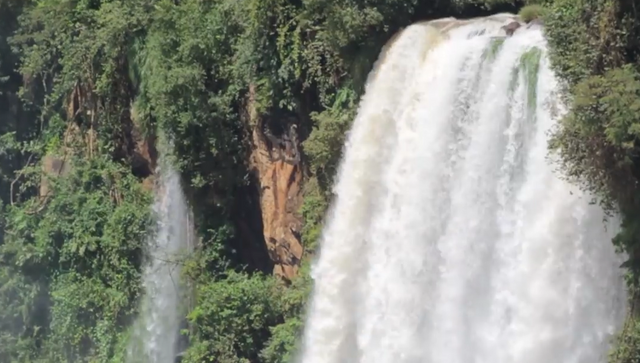
The formation of these waterfalls comprises about 270 falls that are found one after the other along about 4 kilometers in length, most of which are within Argentina, the largest being known as the "Devil's Throat".
That reaches 80 meters high, which is also one of the most visited for the beauty and majesty of the fall.
The Iguazú Falls, one of the Seven Wonders of the World, are made up of 275 waterfalls that fall from the most diverse heights. The highest, 80 meters, is known as the Devil's Throat.
Each side, or in this case countries, has perfectly placed walkways that allow you to get as deep as possible into the natural charm of the Iguazú Falls and thus enjoy different perspectives of each one of the falls of the falls.
The Iguazú National Park, where the famous Iguazú Falls are located, is located in one of the largest eco-regions on the continent, the Paraná jungle.
There is no predetermined order for the tour, since for both sides it is the same, it starts walking from the north of the falls, which allows you to enjoy the native flora and fauna, as well as many viewpoints where you can take great photos, in order to reach the end point that is the already mentioned Devil's Throat.
A rich biodiversity in the Iguazú National Park.
The Iguazú National Park, where the famous Iguazú Falls are located, is located in one of the largest eco-regions on the continent, the Paraná jungle.
The Iguazú National Park was created in 1934 in order to conserve the environment and the biodiversity of the Iguazú Falls.
The flora and fauna that inhabit the Iguazú National Park represents one of the most biodiverse areas of Argentina, so majestic is the flora that the first Guarani who settled in the missionary jungle called it "The Country of Trees" or "Ibirá Retá ”In Guaraní.
La Aripuca is a theme park that aims to raise awareness among its visitors about the effects of indiscriminate felling of trees and care for the environment, as well as showing how the missionary jungle was once shaped.
Wildlife thrives thanks to the humid subtropical climate, the Paraná jungle occupies only 1% of Argentina and half of all the species of plants and animals in the country are concentrated there.
Iguazú National Park is a protected area that preserves one of the most biologically rich sites in Argentina.
Flora of the Iguazú National Park.
The native flora of the Iguazú National Park, understanding plants and flowers as such, has more than 2000 species.
Among them are beautiful orchids, ferns, palm trees, bromeliads and huge trees.
Do not forget that it is the land of the ceibo, the tree whose striking red flower is the national flower of Argentina.
The arboreal flora of the park has more than 90 species, the majestic "Palo Rosa" stands out, the largest tree in the Parana jungle, which reaches 45 meters in height and can live for centuries. Its name is due to the color of its wood, which is more noticeable when the cut is recent.
This superb tree is the one that reaches its greatest size in the missionary jungle, with 42 m specimens. high and 1.60 m. diameter.
Due to the fact that its number is scarce, it is declared a National Monument.
The bud of this plant is edible and very tasty, but its extraction causes the death of the plant, making it also an endangered species.
Other typical plants of the tropical regions found in the area are tree ferns, orchids, guatambú, palm, pindó and carnation from the air.
Currently the missionary araucaria, a giant of the jungle, was declared "critically endangered" by the International Union for Conservation of Nature (IUCN), due to overexploitation that has reduced and fragmented its natural distribution area.
And we must not forget that it is the land of the ceibo, the tree whose striking red flower is the national flower of Argentina.
The flora produces the fruits that constantly feed the animals of the park such as toucans, monkeys and coatis, among other members of the fauna of the national park.
In the missionary jungle you can see huge softwood ficus and fruits edible by monkeys during the day and bats at night, giant nettles, yellow ground orchids (highly prized for being one of the few that grow on land) and ferns of more than 80 years.
The main characteristic of jungle flora is the multiplicity of strata in which it develops, which occupy from the ground to the canopy of the tallest trees, forming a true green spider web of vines, lianas and hanging plants.
Fauna of the Iguazú National Park.
The visitor who enters the trails with an attentive spirit will have the sure opportunity to observe numerous species in their natural habitat.
Like the flora, we could not mention each of the species that make up the fauna of the Iguazú National Park because the list would be very extensive, for example, in the case of birds in the Iguazú National Park, there are more than 450 species.
Small, colorful, with extraordinary bridal behavior, the dancers are true treasures hidden in the jungles of South America.
Many of the mammals have habits determined by the jungle environment they inhabit: they are arboreal and communal.
One of the most striking adaptations to life in the treetops is the development of a prehensile tail, which functions as a fifth hand.
Monkeys, such as the red carayá - known for emitting strong sounds that can be heard at a great distance - and monkey caí are highly appreciated when looking to photograph animals in the jungle.
If you pay attention, especially when you walk the Macuco Trail, and look up, you can see the Caí or Capuchin monkey, who moves with agile movements that look like a dance, high up in the trees.
Other animals that share this characteristic are the great bear, the weasels or opossums and the coendú, a rodent covered with thorns.
The large toucan is a characteristic bird of both the missionary jungle and the Chaco forest and the Yungas
The coatis, with their tail full of rings, are a very frequent spectacle for visitors who walk the catwalks.
He is mischievous and always moves in groups, delighting the boys, who play with them.
The cats, agile, silent and cunning hunters, are another wonder of the park.
The most important is the yaguareté, declared a National Natural Monument in 2001.
Other smaller cats are the puma, the ocelot and the yaguarundí.
It consumes a wide variety of prey, including larger mammals.
A show apart is the enormous variety of insects that populate the park.
Butterflies are huge, with bright colors and strange shapes, a festival of natural design!
The Argentine researcher Ezequiel Núñez Bustos has cataloged 653 species for the Iguazú National Park, in Argentina.
Among the bird species that can be seen the most within the park is the famous large toucan (5 types of toucans inhabit), magpies, terres, parrots and swifts, the latter species that we mentioned fly through the water columns from the waterfalls and can be easily seen from the balcony of the devil's throat.
There are at least 18,682 species of butterflies in the world. Of these, 3,280 species are found in Brazil. The Iguazú National Park serves as a refuge for some 800 species, of which only 257 have been adequately identified.
We continue our journey through the National Parks of Argentina.
It is noteworthy that, as is customary in most of the parks and natural reserves of Argentina, admission is free and free, every day of the year.
Sunset in the Rio Pilcomayo National Park.
The Río Pilcomayo National Park.
The Río Pilcomayo National Park preserves a representative sample of the Eastern District of the Gran Chaco, characterized by a large plain covered with estuaries and lagoons, palm savannahs, mountain islands and riverside jungle.
The climate is temperate subtropical, with an average of 1,200 mm per year of rainfall that floods the extensive grasslands with the exception of the highlands.
The average temperature is 23º C. In summer it exceeds 40º C and in winter with several days of frost, temperatures drop below zero.
The total number of birds registered for the Río Pilcomayo National Park reaches 331 confirmed species.
Fauna.
The fauna is adapted to this climate and stands out for its great diversity: about 322 bird species, 80 fish species, 32 amphibian species, 50 reptile species and 90 mammal species.
The emblem animal of the park is the aguara guazu, in danger of extinction. No more than 900 copies have been surveyed.
The aguará guazú is the largest of the South American foxes.
The Rio Pilcomayo National Park has the task, not only of protecting the vegetation that grows there, but also of the fauna that inhabits and feeds on it.
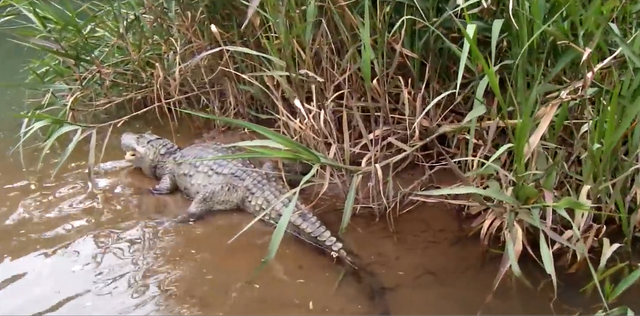
We find throughout the park yacarés, the boa curiyú, the monkey carayá, fishing bats, capybara, aguara popé, aguará guazú, coati, tapir, puma, mountain fox, river wolf, ocelot, the big anteater, and other difficult figurines.
The Río Pilcomayo National Park presents a very rich fauna.
We can also count (eye to the photographers) more than 300 species of birds, storks, herons, roseate spoonbills, ducks, straw-headed woodpecker, ñenday parrot, tuyuyú, the yabirú, ñandúes, groups of red-legged chuñas and many more.
The collared yetapá was declared an animal of provincial interest to protect it.
Flora.
The great environmental diversity supports a varied flora, which, favored by the subtropical climate and abundance of water, develops exuberantly.
In the open areas covered with Palmares de Palma Blanca, we will find a dense and continuous herbaceous cover forming beautiful grasslands.
Basketry with palm leaves is one of the artisan activities of the park.
Adapted to withstand floods, they are made up of grasses such as Espartillo, which grows to 50 cm in height, the Yellow Straw and the Boba Straw.
The latter generally grows in fields covered with termite nests, known locally as "tacurúes". The high mount islets are made up of stout trees.
Between 2005 and 2015, seven new species have been registered for the National Park: male Black-bellied Hummingbird, Osprey, Scaled Torcacita, Anambe Grande, Yasyyaterè Chico and Milano Tijera.
Examples worth mentioning are Lapacho, with beautiful pink flowers, Quebracho Colorado Chaqueño, Guayacán, Urunday and Espina Corona, among many others. Bordering the course of the Pilcomayo River, we find the Forest in Gallery.
Densely covered with vines, lianas and epiphytes we will observe enormous trees, up to 20 meters high, such as the Tarumá and the Higuerón, accompanied by Sauces Criollos, Alisos de Río and the Ingá, which vegetate on the banks.
The great environmental diversity supports a varied flora, which, favored by the subtropical climate and abundance of water, develops exuberantly.
Aquatic environments support an abundant flora, which varies in terms of its composition in spices, as we move away from the shore towards the center of the body of water.
We will first meet dense communities of Guajó, (the Guajozales) and Pirí (the Pirizales), which cover the edges of the lagoons, sometimes reaching two meters in height.
They are accompanied by Totora, Achira and Paja Brava. Towards the center of the lagoon we will find an enormous variety of floating plants such as the well-known Camalote or Aguapey, Repollitos, Helechitos and Lentejitas de Agua.
In the lowlands the estuaries extend and in the highest points, the mountain islands.
The National Park has two areas of public use for the visitor, Estero Poí and Laguna Blanca. Both have ideal conditions for recreation and recreation throughout the year. It is recommended as the best time of year to visit it from March to October.
We visited the two and we went on to tell them the most salient aspects of each.
Highlight "Estero Poí".
The most characteristic environment of the National Park is the savanna with palm trees, here the view is lost in the immense plain of green pastures dotted with caranday palms and the large termite mounds where anteaters find their food.
Its landscape is shaped by the alternation of fires and floods, from where the mountain islets emerge, patches of forest that you can enter through the trails and observe the plant species of these environments such as the red quebracho, the urunday and the guayacán, among others.
The more than 300 species of birds that the protected area houses make up one of the main attractions of the Park. They coexist with other, somewhat more elusive mammals, such as hoopoons, fur bears, bush foxes, lipped and collared peccaries, carayá monkeys and mirikiná monkeys.
The mirikiná monkey is a typical species of the Argentine northwest.
Highlight "Laguna Blanca".
Another point of great scenic beauty is the Laguna Blanca, a large 700-hectare water mirror, which is accessed through a system of walkways, from where you can enjoy spectacular sunsets that color a landscape featuring guajós, camalotes, pirís, and some yacarés that appear from the water.
Location: 8 km from the town of Laguna Naineck.
Services: Information office. Camping with electric light and plugs. Bathrooms with showers enabled for people with disabilities. Picnic tables. Steakhouses. Wash basins. Catwalks. Supply of treated water (non-potable).
By the beginning of the 20th century, virtually all forests suitable for the bird had disappeared.
How to access.
By vehicle: from the city of Formosa on the RN 11 to the city of Clorinda. From there, take RN 86 and travel 50 km to the town of Laguna Naineck or 60 km to Laguna Blanca. From the RN 86, which joins the two towns, 6 km and 8 km local roads depart, respectively, to the entrance gates to the National Park.
Public transport service: from anywhere in the country to the city of Formosa or Clorinda. In both places, a combination can be made towards the towns of Laguna Naineck and Laguna Blanca by the Godoy Company, Norte Bis and Flecha Bus. The buses do not reach the protected area but to the closest towns (Laguna Naineck and Laguna Blanca); Once there, you can take a taxi to reach the protected area.
The cougar is a large feline, almost like the Yaguareté (Panthera onca), even surpassing it in some external measures, although it does not reach its corpulence.