F
Showing posts with label Animals. Show all posts

From top to bottom Argentina is a bird lovers paradise. Recently Heidi and I traveled across Argentina searching for beautiful views, hikes, and of course wildlife. We knew that incredible hikes to glaciers, mountain vistas, lakes, and waterfalls existed across the country but we were surprised at the amazing birdwatching opportunities.

image.png
Austral Parakeet near Ushuaia

The same places you travel for amazing views; Ushuaia, El Calafate, El Chalten, and Iguazu are the same places that birders 'in the know' travel for big time bird watching. The different environments change from cold ocean in Ushuai, to desert and freshwater lakes in Patagonia, to tropical jungle in Iguazu. Because of this the opportunities to see very different bird species change as well, from penguins down south to toucans up north.

image.png
Tern hovering over the water

Ushuaia and Tierra del Fuego National Park: We will start down south in Ushuaia, the southernmost city in the world. Here a boat trip out into the famous Beagle Canal gives you chances to see comorants, penguins, skuas, albatross, and terns, among other deep south ocean birds. Then a trip into Tierra del Fuego provides a wonderful chance for forest birds, like the Magellanic woodpecker, austral parakeet, and southern caracara as well as freshwater species like the spectacled duck and steamer duck.

image.png
Chilean Flamingos, Reserva Laguna Nimez

El Calafate and El Chalten: A 17 hour bus ride or couple hour flight to the north takes you deep into the heart of Patagonia. Here the snow capped peaks of the Andes Mountains send glacial fed rivers out into the desert-like landscape of Patagonian ranchlands. This uncommon environments is home to some amazing birdlife. Ostrich-like landbirds called rhea run amongst the prickly calfate shrubs, while caracara, condors, and eagles line the fence post and circle the sky looking for their next meal.

image.png
Upland Goose, El Calafate

In El Calafate the edge of the glacial lake a quaint nature reserve called the Reserva Laguna Nimez plays host to a multitude of exotic species like the Chilean flamingo, upland goose, southern lapwings, and nesting harriers. Also if you get a chance to drive towards Perito Moreno Glacier on some of the back roads you increase your opportunities for condor, eagle, caracara, and rhea
sightings.

image.png
Toco Toucan at Iguazu Falls

![image.png](
Scarlet Macaw, Iguazu

Iguazu Falls: All the way on the north eastern border of Argentina and Brazil you will find a totally different environment housing new species of birds. It almost feels like you are descending into the Amazon basin as you walk around the miles of boardwalks set up for sightseeing inside the Iguazu Falls National Park. The trick here is to come early in the morning before the crowds. This will give you your best shot for seeing rare toucan species that call this area home. Great dusky swifts are seen near the waterfalls, their nest actually hidden in the cliffs behind the falling water. Another can't miss are the plush-crested jays. These beautiful birds frequent the boardwalks, especially where visitors tend to stop for picnic style snacks.

image.png
Plush-Crested Jay, Iguazu Falls

image.png
Eagle near Iguazu Falls

It turns out that South America is one of the best places in the world for birding. Thousands of species exists on the continent leaving you all kinds of options. Argentina is such a birding hot spot because the country stretches across so many different ecosystems. Just another reason to add it to your travel list.

image.png
Austral Pygmy Owl at Perito Moreno Glacier
image.png

Austral Pygmy Owl, Patagonia

source

In a future post I will comment on my impressions lived when visiting the impressive Iguazú National Park within which are the famous Falls considered one of the 7 Wonders of the World, located on the border between Argentina and Brazil, as Travel Memories.

I am grouping this collection of Travel Memories delving into the depths of my memory, to try to take out of each trip the most salient, most curious, most impressive aspects.
I stayed for several days and had the opportunity to see several specimens of the native fauna and flora of that region up close.

The Blue Dancer a true treasure hidden in the missionary jungle.


I stayed for several days and had the opportunity to see several specimens of the native fauna and flora of that region up close.

And, specifically regarding fauna, I was struck by the dazzling colors of many birds.

Today I am going to refer to one of them that I had the possibility of photographing, however it is quite difficult to do so because it is not seen closely. Its habitat is the deep interior of the missionary jungle.
It is the Blue Dancer, a bird of very beautiful colors and that receives this name for the bridal dance that he practices when trying to conquer his partner.

The Blue Dancer hides deep in the missionary jungle.


It is a true treasure hidden in the missionary jungle. Her bridal dance is of extraordinary beauty.
Read also: Travel Memories #1: the amazing and varied fauna and flora in the Iguazu Falls.
As in many species of tropical and subtropical birds, the most striking colors are worn by the male.

The female has much more modest colors.

The male has a very striking coloration, with a light blue body and a bright red hood, in contrast to black wings.
The female has a much more modest plumage, being entirely olive green, lighter in the ventral area. Juvenile males are also green, albeit with the small red cap.

The Blue Dancer has long been proposed as a provincial bird of Misiones. Its approval is still pending.

The beginning of the bridal dance.

The Blue Dancers announce, with their singing, the beginning of the love procession.
Other pretenders join at once.
There is a very particular dance fashion to attract your partner.
The female will incline her preferences towards the best dancer.
The males begin the dance displaying the best of their technique.
A juvenile male observes the choreography to see how it is done.
For generations they dance on the same branch.
The dance continues uninterrupted.
Finally the female appears, the true reason for so much histrionic unfolding.
But nevertheless all the "artistic" demonstrations remain indifferent. Obviously he is not interested in either of the two adult candidates.
You will have to keep testing.
The disappointment of one of the candidates.
It is one of the little explored places in the country, but it is worth knowing. The new park, of 128 thousand hectares, now represents the largest reserve in northern Argentina.

It is very difficult to find a degree of biodiversity as pure as that seen in El Impenetrable National Park.

The national park is part of what Estancia La Fidelidad used to be and extends between the provinces of Chaco and Formosa, covering an area of ​​250,000 hectares, divided by the Bermejo river.

The origin of its name lies in the difficulty of entering the area. Nature is diverse.

Lush forests. Ancient trees and mammals of exuberant beauty form the recent El Impenetrable National Park, the largest in northern Argentina.
Its 128,000 hectares make it the largest national park in northern Argentina.

The Impenetrable is a must-see for lovers of hiking and nature.

Under the premise of preserving the Chaco forest and the diverse species of flora and fauna that inhabit it, National Parks protects its 130,000 hectares from times prior to its creation, in 2017.

Why should we know this place?

The Impenetrable today constitutes one of the few, best preserved and largest green lungs in Latin America.
For many years, the site was used as a sports hunting ground. Domestic animals, indiscriminate logging and hunting put their biodiversity and ecological sustainability in check, causing the extinction of many species and the decrease of others, such as the jaguar, anteater, tapir and crowned eagle, among others.

Entering the park implies observing the life of the forest and the interaction between its inhabitants, as well as finding out about the importance of its preservation, both for the species and for the health of the planet.

Location.

The Impenetrable is located within the Gran Chaco ecoregion, which also extends to the Northwest of Córdoba and in the countries of Bolivia and Paraguay.
It is the third largest forest area in South America, after the Amazon and the Cerrado, in Brazil.
The brand new National Park protects the last redoubt of virgin forest, the third in importance in South America.
Tourist promotion of the park is presented as an alternative to traditional economic activities in the area. An example is the replacement of livestock with the sustainable creation of non-wood products, such as bush honey, carob flour and crafts in chaguar.
It is very clear that preserving and producing is possible.

The National Parks constitute the most important protected natural areas in Argentina.

They conserve biodiversity and ecosystems; they protect paleontological and archaeological sites; they promote environmental education, scientific research and nature tourism.
We start touring the El Impenetrable National Park.

Fauna.

The Impenetrable, thanks to its recovery, became the ideal habitat for many critically endangered species and others threatened with extinction, such as the yaguareté, the carreta tatú, three types of peccaries, the anteater, the crowned eagle and the boa rainbow.
The yarará is a poisonous snake native to South America.
The high biodiversity and native forest of this nature reserve, which is in a very good state of conservation, is home to hundreds of species of birds, including the yabiré, the talking parrot, the black woodpecker, the charata, the rayador and the espinero fron reddish.
The Impenetrable houses endangered fauna such as the jaguar, the anteater, the tapir.

Flora.

In the El Impenetrable National Park there are carob forests. The quebrachos white and red from Santiago stand out.

Other species of the tree canopy are the palo santo, mistol, viraró, itín, moradillo, saucillo, molle, talas, chañar, Capparis, the drunk palo de flor blanca or yuchán and large cactus.
A specimen of drunk stick round tree top and beautiful flowers.
The albardones that border the Bermejo river abound with forests of river alder, Creole willow, and yellowwood. Somewhat farther from the river there are examples of soap stick and stone stick.
The carob tree is the most widespread tree in El Impenetrable and the most subject to illegal logging.
The quimilero peccary is the largest in the country and an exclusive species in the Chaco region that is in serious danger of extinction, mainly due to hunting and the disappearance of its habitat.
The Chaco land tortoise inhabits semi-arid chaco forests.
The Chaco region is the second largest block of forests in South America after the best-known Amazon region.
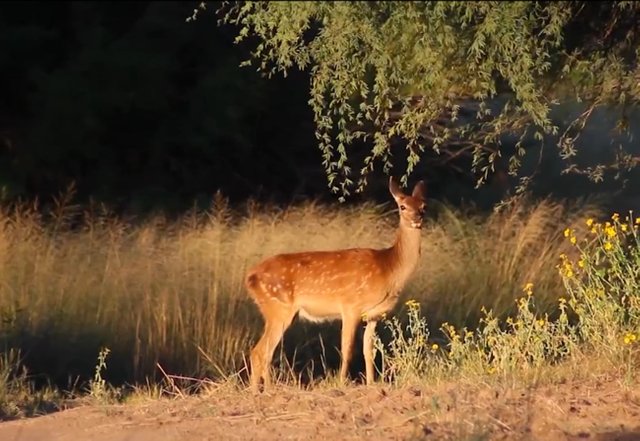
Snakes, tapirs, peccaries, corzuelas (fawns), rheas and all kinds of animals walk in herds still elusive
The trips to the center of the Argentine jungle were the inspiration for the famous storyteller Horacio Quiroga to write his successful anthology "Tales from the jungle", a work that realistically shows the variety of animals that populate the impenetrable missionary and Chaco forest.
There are around 40 national parks, and there are hundreds of protected properties, at least in theory, under provincial, municipal and even privately managed jurisdictions.
In my introduction post in the Argentine #HIVE Community I made reference to my home province, La Pampa, which I have seen again after several years of living in Europe.

When talking about La Pampa, we not only refer to the gateway to Patagonia but also to other features that characterize this province.

A little strange to tell the truth. The West begins to resemble true Patagonia. Aridity of the soil, scarcity of rains, large uncultivated areas, nonexistence of cattle.

10.-La-brama-de-los-ciervos-colorados-12.jpg
The North of the province, on the other hand, represents the best of the humid Pampa. Excellent soils, intensive crops, intensive livestock farming, etc.

But there are also some specific details.

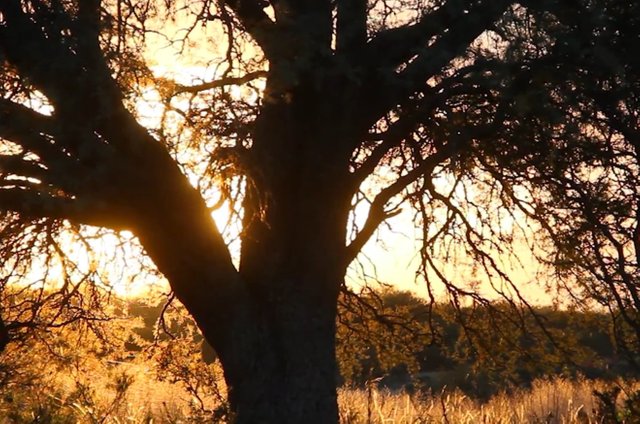
The Parque Luro Provincial Reserve is a landmark. As well as Casa de Piedra, the Caldenal, the Utracán lagoon and other lesser-known places.

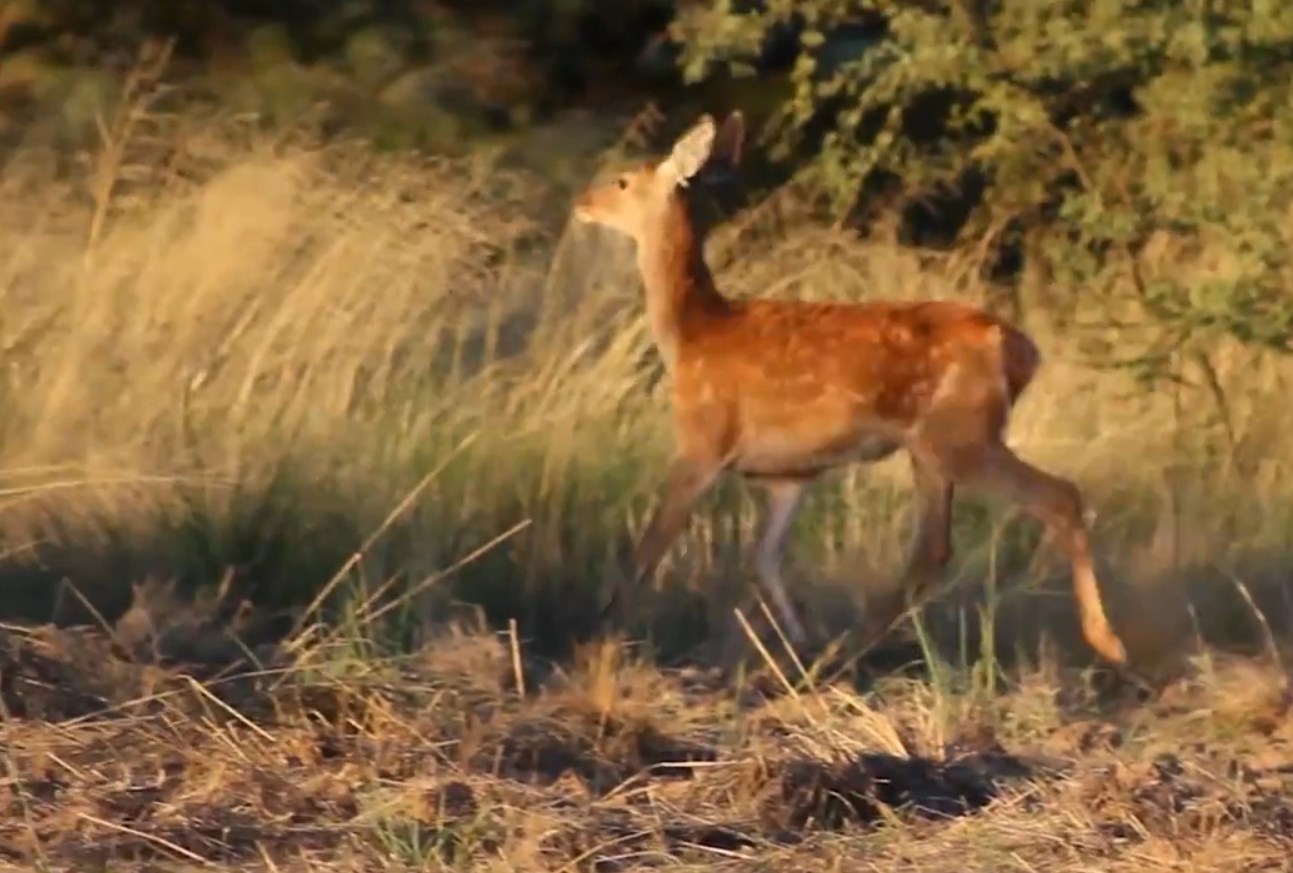
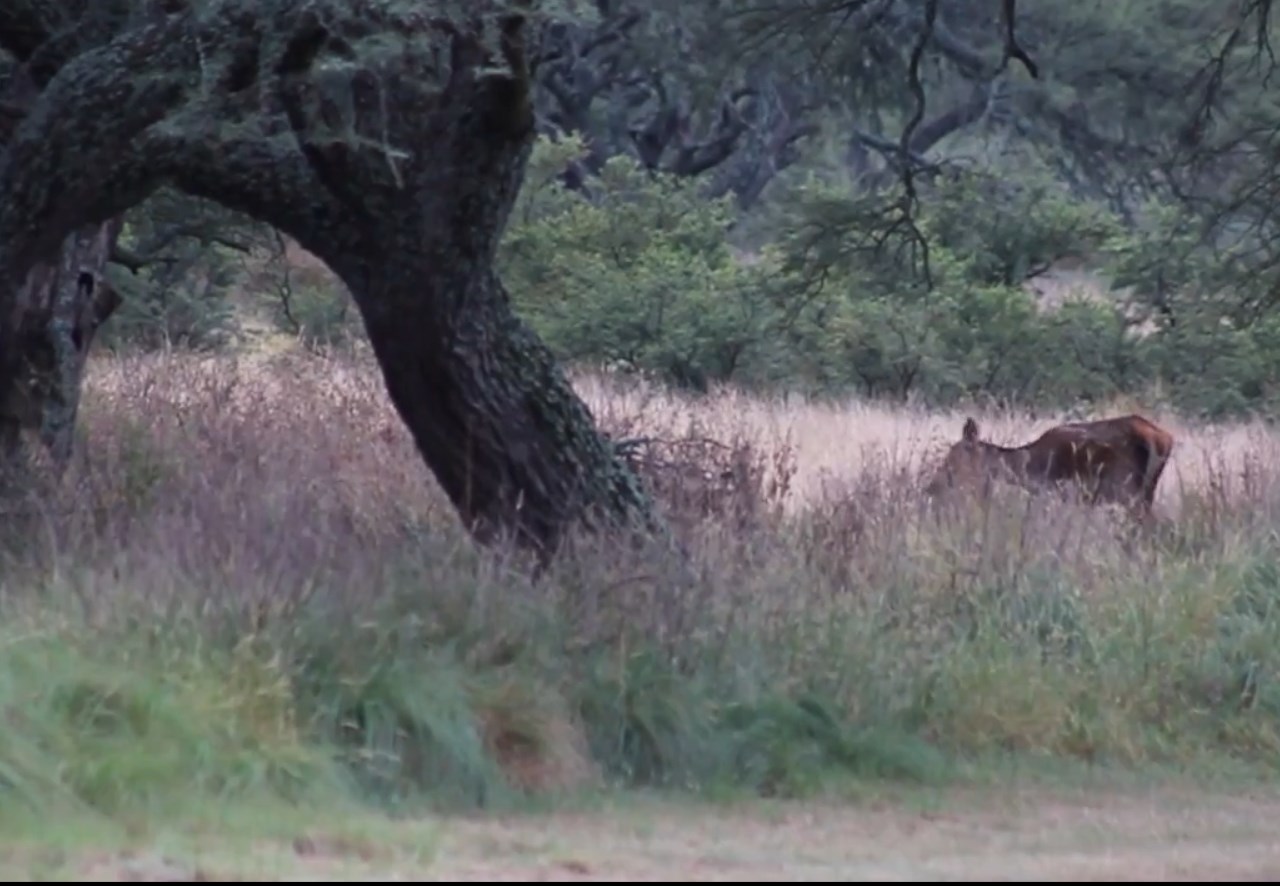
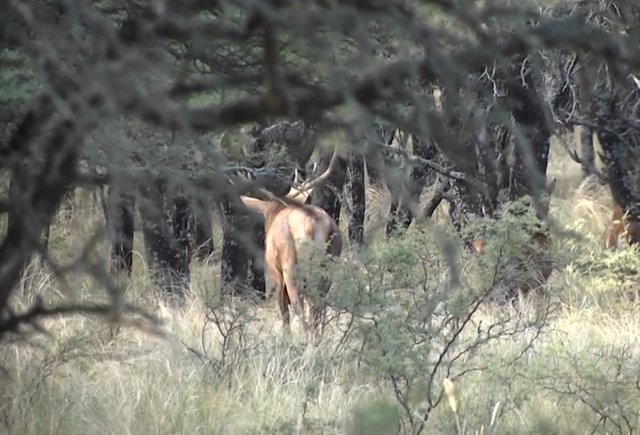
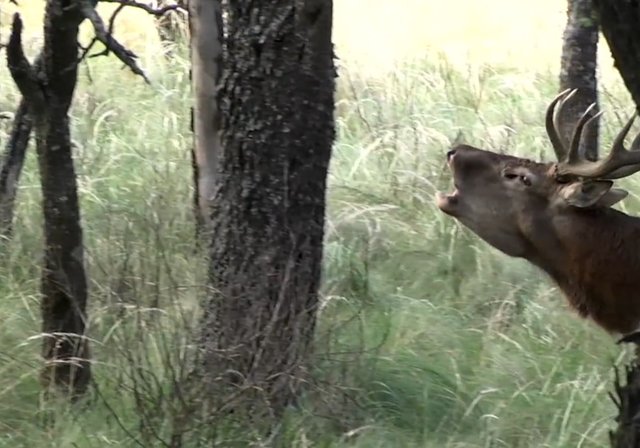
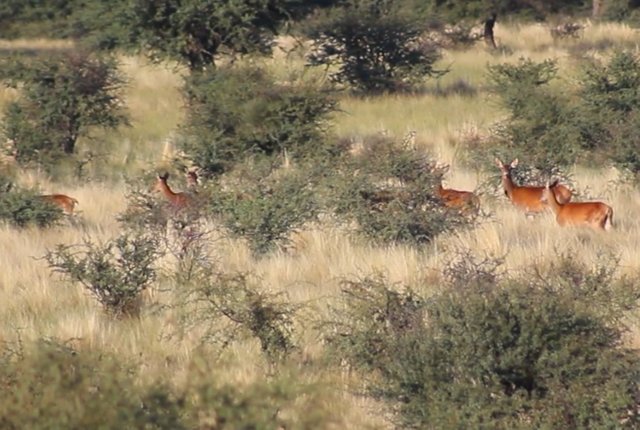
Today I am going to talk about one of the aspects that most attract attention (and concentrate the visit of numerous tourists) such as the deer bellow.
10.-La-brama-de-los-ciervos-colorados-15.jpg

What is the deer bellow?

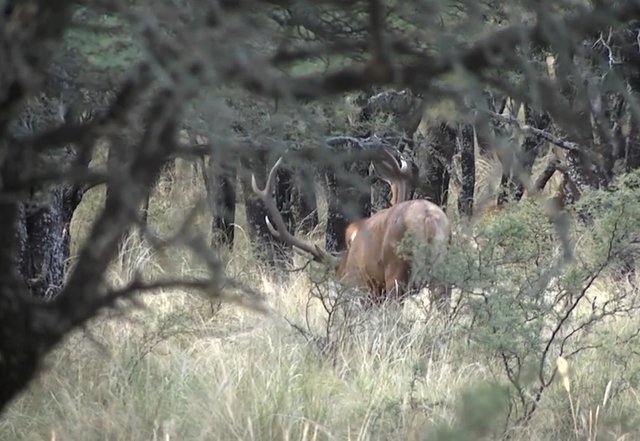
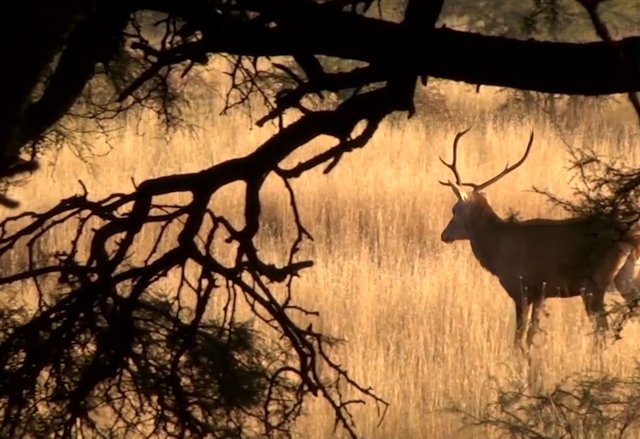
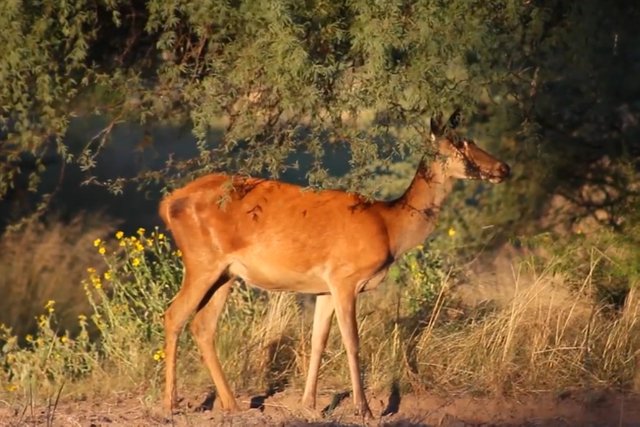
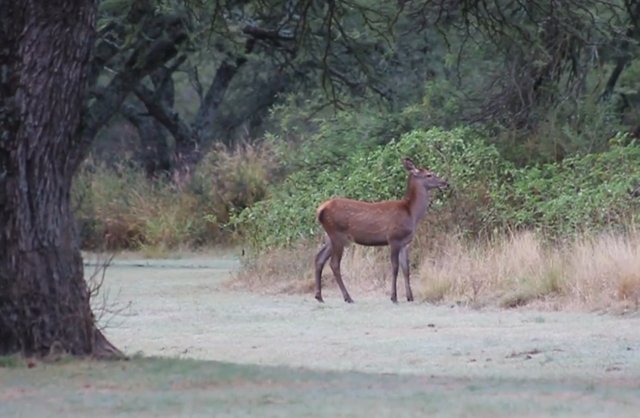
Around 1,500 red deer live in the Pedro Luro Provincial Park in the middle of the caldenes forest. The caldenal. The largest reserve of caldenes on the planet.

The bellow is the cry they emit calling the females to form their harem.

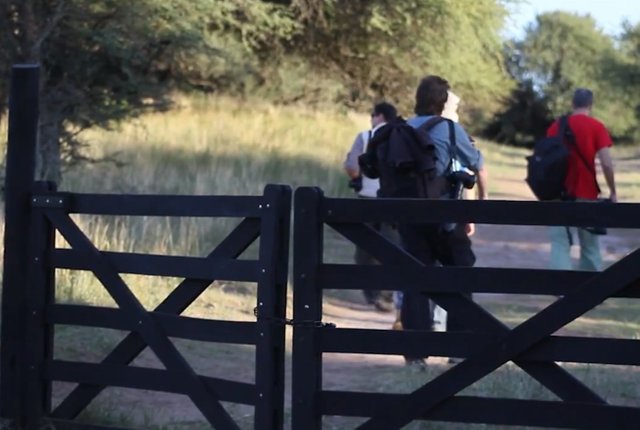
You have to be very cautious to observe this show. Because deer have a very fine nose. And if they detect the presence of intruders in the vicinity they do not gather. They don't bellow.

They are very respectful of your privacy.

Before seeing them the red deer sit down. Walking down a hill (an open path in the middle of the vegetation) suddenly you feel a scream, a very particular howl.

It is a red deer that is bellowing, that is calling the females to woo them.

The show is to see the entire herd bellowing. It is breathtaking and beautiful. It is like seeing nature reproducing itself.

The curious thing is that the concept of family as a group does not exist among red deer.

10.-La-brama-de-los-ciervos-colorados-7.jpg

A lonely life.


The male lives among males in a group of 2 or 3 maximum.

Only in the fall does he approach the females to breed them.

Between March and April a hormonal process is triggered in the females that takes them only at that time of the year to the heat period.

The bellows of the males echo in the 7,600 hectares of caldenes, piquillín, grasslands, in the caldenes forest, amid the almost 200 species of birds that inhabit the forest.

You can't sleep at night during the roar period, says one of the park rangers.

During this period, males hardly eat. They spend their days bellowing, copulating with the females they have earned and fighting among themselves.

Sometimes they become entangled in their own antlers and, unable to unlock them, die. Tired to infinity. Resigned to their own destiny.

Source: https://hive.blog/hive-169099/@belen0949/la-brama-del-ciervo-colorado-amo-y-senor-del-bosque-pampeano-the-bellow-of-the-red-deer-master-and-lord-of-the-pampas-forest-esp

 
Copyright © 2015 Argentina Photo Gallery
Distributed By Gooyaabi Templates
-->