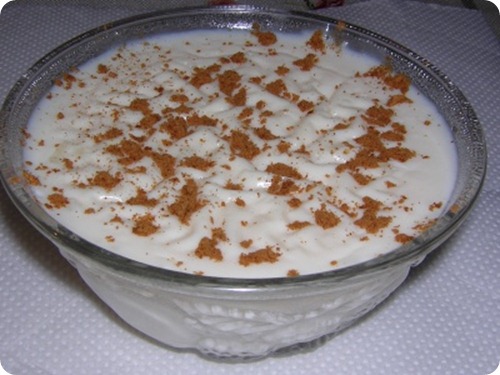
 Creamy Rice Pudding.
Cuyana Central
After soaking the rice for a few hours or overnight, it is cooked in milk, with vanilla, lemon peel and a pinch of salt. When cooked, the vanilla pod and lemon peel are removed; It can be served sprinkled with cinnamon.
Roasted with leather. In the
Buenos Aires campaign the uncooked pieces were cooked, directly on the coals, then using iron bars; in the
coast it was customary to skewer the meat on stakes of the thorny felling; in the
northern regions and of which it is cooked in earth ovens. It is eaten only with a knife. Sacrificed the beef, opened it, taking out the achuras and disposing of it on pallets, ribs and quarters. The fire was prepared with white bone (clean of meat or tendons to avoid producing smoke). The meat was thrown on the live coals, so that it was roasting. When it was ready after long hours, the burned or charred pieces were scraped off with the knife and ready to serve. He preferably ate cold or as cold cuts.
 Snack.
It is made with flour, egg and milk, adding to this dough chopped vegetables, anchovy, meat, etc. In the form of a candy, pieces of fruit are added to the dough.
Carbonated
Pampeana
Sauté in a saucepan with fat or oil, onion and diced meat. After sauteing, tomatoes, sugar, salt and condiments are added. Then the sliced choclos, the potatoes, the sweet potatoes (in small pieces), the pumpkin in slices, the zucchini in quarters and the peeled and whole peaches are added. Finally the rice, in handfuls.
Catamarca
It is washed and then the meat is minced put it in a pot that has fried or only hot chili pepper, stir a moment, then add enough boiling water, the less, the better; done this, let it boil again. During this operation a shredded or chopped pumpkin and sometimes rice is added. An aggregate of chopped onion, mashed tomato and various vegetables can be made. In some cases the potato can substitute the squash and the same as the sweet potato. It is very common to call this preparation broth.

Other.
Brown onion and garlic in oil; then add the diced meat and sauté over high heat; chopped tomatoes, parsley, bay leaf and oregano are added, seasoning with salt and pepper; let it boil for a moment and add butter, sliced carrot; cover and simmer slowly; then sweet potato, pumpkin and peeled and diced potatoes are added, boiling for a moment until cooked; add rice, corn (sliced), peas and peach syrup to the natural; Let it boil for a few minutes and then add peaches to the natural, cover and let it boil until the rice is ready. It should be thick but juicy.
Dried meat. Thin strip of meat, dry, without salt. The correntinos and entrerrianos make a braid with it and fry it with the same pringue that releases the meat, what they call chicharrones. Boiled or simply cooked, it serves to make the chatasca.
 Clericó
Refreshing drink that is prepared with wine, to which are added fruit, sugar and - to give it spherical - soda.
Corunda
Yellow tamale, of Michoacan origin. It is made with corn, ash and salt.
Chancao
Northwest
Dish consisting of crushed corn to which pepper and sheep fat are added.
Chanfaina. Northwest
It is specially prepared with the small kid (kidneys, liver, heart and sweet gut) or lamb, which are fried with onion, chili, fat, pepper, tomatoes and wine or vinegar. The santiagueña and the tucumana are famous.
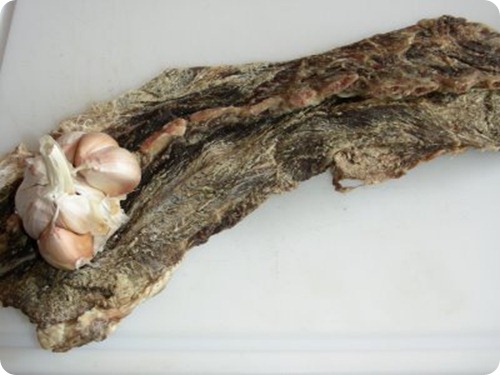 Charqui
Slice of meat that is salted to consume after it has dried in the sun and air. Dead the animal, is deposited in large blankets; then they are carried under the ramada where they are crammed with layers of salt and taped well to extract blood and juices; After one or two days, they separate and tend to the sun until they dry and turn completely black. In this state they are conditioned in bundles, for consumption. It is very consumed by miners and sailors. It is eaten seasoning with chili pepper and put in hot water, making a kind of thick soup.
Chatasca
Food that is prepared by simply grilling or cooking the jerky, crushing it in a mortar until it is completely undone; chopped onion onion, brown the charqui, the broth and boil for a few minutes; then potatoes, beans, squash, etc. are added. Like a stew It is seasoned with salt and pepper. It is also called satasca and champagne.
 Pork rind.
Residue of fried fat in the same fatness. It contains some part of meat. Its best flavor is achieved by roasting it well. Chicharrón cheese is made with pig fat and is very widespread in Argentina.
Chicharrón with hat.
Santiago del Estero
It is prepared with squash and pork rinds.
Chichoca or eggplant pond.
Cuyana Central
Eggplants cut into slices and salted on both sides with coarse salt, which are allowed to dry in the sun and stored in cans until they are used, at which point they are soaked. They can be used replacing fungi, in different sauces or stews. They are also made with tomatoes and zucchini.
Chilcán
Food prepared with roasted cornmeal, to which water is added. Sometimes and especially among the Puno pastors, they add sugar, thus taking a more pleasant taste.
 Chipa.
 Currents
Bread made with cassava starch. Baked with grated fresh cassava starch dough, milk, eggs, salt, melted fat and some cheese. There is a lot of types. When there is no fresh starch or cassava for its elaboration, the tipirati is used, which is the bran of the grated cassava.
Chulingo
North
Dish that is prepared with roasted corn and flour.
Pacifier or Chupi.
Pampeana
Stew prepared with milk, corn, rice, potatoes and minced meat.
 Empanadas
In general they are qualified as Creole empanadas and are prepared with both sweet and meat; in the latter case they are usually added onion, raisins, olives, chopped egg. The filling is contained by a thin mass cut into discs, which contains different fillings, depending on the area in which they are prepared.
Fried Creoles: In a pan add to the fat chopped onion, let cook and add chili, carnaza, sauté a moment, add paprika, remove from heat, put hot pepper, raisins, olives, seasoning and add chopped hard-boiled egg.
Cordova.
Brown large chopped onions in cow fat, add chopped tomato and sweet paprika; Stir and remove from heat, add previously buttered and diced veal buttocks, ground cumin, diced potatoes, flour and broth; place again on the fire and let it boil slowly, stirring so that it does not burn; remove after the fire, add chopped hard boiled eggs, green olives without the stone and raisins without seed; season with salt and ground hot pepper.
Jump
Onions are fried in fat, adding hand-chopped veal. Boiled potatoes cut into small squares are added and seasoned, complete with the addition of hard-boiled egg pieces, olives and raisins.
Santiago del Estero.
Cook chopped onion in the fat and before it browns, add paprika, chili pepper, a stream of water and salt; boil for a minute, remove and let cool. Then cut into tender carnaza dices, without veins and once cut, quickly pass it through boiling water, then through a strainer and place it in a large, scattered dish, to cool. This done, it is seasoned with salt, ground cumin, vinegar and ground hot pepper. Prepare hard boiled eggs and raisins without seeds. Each pie is stuffed with meat, sprinkled with sauce.
Tucumán
The meat, cut into pieces by knife, is bleached with boiling water, in a colander. Once drained, season. The onion is fried, in fat, in a pan, adding broth and then the meat, which thus takes on the flavor of the condiments. Finally spicy ground pepper, chopped hard boiled eggs and raisins are added.
 Patty.
Northwest
Little masita; They are a variant of empanadas but their filling consists especially of sweet cayote or arrope.
Gualapo
Northwest
It is specially prepared with ground carob, corn and water.
Gualuncho
Jump
Soak some ground carob in water and strain and boil; After it is strained again, it is made in another pot where corn frangollo is cooked. It turns out a kind of sweet soup.
Guatia or Huatia.
North
Sacrificed a veal, it will be undressed, room and its horns are cut. Then it is sewn to look whole. Then it is thrown into a ditch where there were only embers of wood that was burned two hours before. He puts a large can on top and covers it with it, throwing ash on it first and then dirt. After one hour the fully roasted animal is removed.
 Stew.
Stew. Currents
Tropero: It is prepared with charqui, cassava, etc. accompanied by gallet.
Northwest
Guaicurú: It is prepared with charqui and mandioca base.
Huascha Locro. Simple dish that replaces the locro. It is prepared only with corn (which was previously soaked one day) boiled in water to which only salt and fat is added.
Huchillico
North
It is prepared with potatoes and meat.
Humita
Central and Northwest
It is shredded corn, mixed with milk and with a tomato preparation (peeled and seeded), onion and chopped chili previously fried. It is formed with a whole paste that finishes cooking in the oven. It can also be wrapped in the leaves of the cob (chala), so that it is tightly closed, so that the wrappings are not undone.The portions thus prepared are cooked in a water bath.
Ilunchao
Stgo del Estero and neighboring
It is prepared with roasted cornmeal, to which chili, onion, pepper and salt are added.
Lampreado.
Jump
It is prepared with cooked meat that is wrapped in flour and egg.
 Locro.
Northwest
It is prepared with white or yellow corn or wheat (if white it should be left to soak one day). It is ground in the mortar and after the detachment of the cuticle is soaked for approximately ten hours. Then it is boiled in water and salt, adding sweet potatoes, sausages, chunks of beef, gut, cabbage, charqui, etc. After about four hours can be considered cooked. As a last seasoning, paprika, chili and fried fat are added.
In Cordoba, together with corn, beans are soaked. When cooked in water, add chicken and squash cut into squares. To serve they are sprinkled with a sauce made with onion, tomato, peppers and parsley fried in fat.
Matahambre or slaughterhouse.
Slice of meat that is extracted between the leather and the ribs of the cattle. The most common way to prepare it is to spread the meat and on it place chopped parsley, carrot pieces, ground chili pepper, hard boiled eggs and season with a little oil and salt. Then it curls up and ties tightly. It is cooked by boiling it, although it can also be cooked in the oven.
Porridge.
It is prepared with cornmeal or simply broken corn (previously left to soak one day), with sugar and honey. Sometimes it is cooked with milk, boiled with sugar and vanilla (central-Cuyana region). In the northwest and especially in Santiago del Estero, it is also called api.
Mbaipi or Mbauipi. Currents
It is prepared with choclos, fresh meat or charqui, fat and pepper. It can also be made only with grated choclos, cheese, garlic and onion, as a complement to the roast. After browning the onion in the fat, the other ingredients are added.
Mbeyú
Currents
It is prepared with cassava starch and water, although you can also add milk, egg and cheese to form the dough, which forms cakes that are cooked in a very hot oven.
 Tripe.
Broth and stomach stew of beef cattle. Onions, chopped garlic, tomatoes and the boiled mondongo are fried and cut into squares; Cut carrots, water and beans are added half-cooked, seasoning with salt, parsley, bay leaf and oregano. Let it boil and after the mondongo and beans are cooked, cheese is added, continuing to boil until a thick broth is achieved.
Morons
Santgo del Estero
It is prepared with wheat flour base (sometimes mixed with corn flour) to which sugar, cinnamon, cloves and fat are added.
Child wrapped.
Pampeana
Dish made with meat turned on itself in a rolled or simply folded form, inside which a filling of chopped hard-boiled egg, garlic, onion, parsley and some more and variable ingredient is placed. To prevent it from unrolling, it is usually sewn.
Pirón or fariña.
Corrientes and Entre Ríos
Pirón or fariña: From Corrientes and Entre Ríos. It is prepared with the fat broth, onion and fariña. To the chopped onion and gilded in oil, the fariña is added, then soaking with broth until everything is cooked.
 Soup.
Soup.
In the past it was also called boiled. In a pot filled with water, with onions, squash slices and choclos, a piece of pulp (tail or tail, chest grain, spine or needle or breast) is put in, boiling all until they are tender Season with mustard, salt and pepper.
Polish
Northwest
It is prepared with cornmeal and honey.
Quisadilla
Santiago del Estero and neighbors.
It is prepared in the form of alfajor, a paste made with wheat flour kneaded with fat and dried in the oven. Between two tapas honey, flour and cinnamon are added.
Sanco Northwest
It is prepared exclusively with cornmeal or thickened wheat and blood of meat animals.
Sasta Jump
The charqui is cut into pieces and ground; then mixed with pork rinds, also ground. Fry it all together in the pan, with scallions, oregano, salt and chili. Then add a ladle of broth and let it boil a little; In the end, a whole egg is added.
Soocui
Currents
It is prepared with charqui and rice.
 Paraguayan soup.
Chaco, Currents and Missions
It is prepared with cornmeal, eggs, cheese, milk and onion. Bake in oven approximately 45 minutes.
Suli
Northwest
It is made with white carob, which is boiled. In that water the corn is cooked as for mazamorra.
 Mendoza tablets.
They carry flour, cornstarch, egg, brandy, grain anise and ammonia carbonate. Powdered carbonate, flour, cornstarch and salt are made dough with beaten egg, brandy and anise, adding fat or margarine. With the dough bars are made that are then stretched to form the tablets.
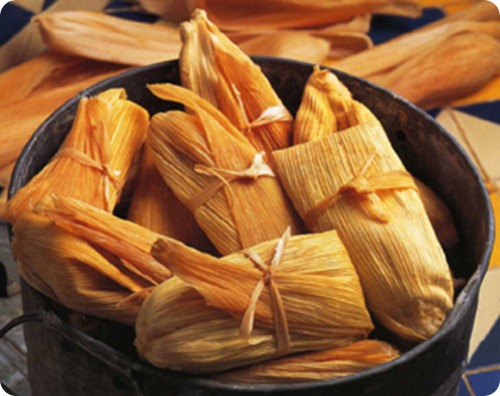
Tamale.
Northwest
It is prepared in various ways. In Catamarca: the corn is moistened until it can be broken in the mortar, leaving the closest thing to flour. It is moistened with enough water and salt, kneading it with the necessary amount of fat; You can add squash undone to the dough. In this the shredded meat (or charqui, if there was no meat) of cow or other animal is wrapped. This wrapping is placed on corn husks, fresh or dried or on ahira leaves, after which it is boiled.
 Tistincho
Jump
Special meal that is prepared on the eve of the festival of San Santiago, with legs of lamb or cow, belly, corn on the cob, ripe beans, cabbage, cabbage, lamb head, etc.
The Pomas.
The cobs are removed with a row of grain so that the rest swell well when boiled until the space left is covered.
Cachi
So that they do not burn, since they are cooked all night, they put the pots on slabs and arrange the embers around them, a little far away. So that the tistinchos are cooked well, the mouths of the pots are tied with a rag and mainly with a roasted lamb lamb. When the tistinchos are prepared, some special and separate pots are destined for the ears.
Palermo
It is prepared with choclos only; On that occasion, dried beans are also cooked, but separately.
 Fried cakes.
Central and Whose
The discs that are fried, are made with a dough made with wheat flour, milk and fat. They are served sprinkled with sugar.
Tortilla.
This is what the unleavened bread is called in the campaign, cooked on the embers.
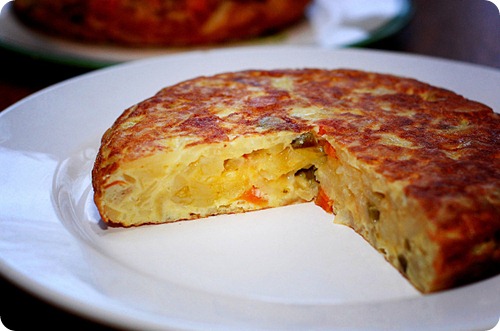
Catamarca
The one with olive oil, apart from salt, has ground pork and fat; that of flour, salt and sufficient fat, the flour can be moistened with beaten egg. It is fried in fat or roasted on the grill or on the back.
Tulpo
From the northwest region. It is made with cornmeal base cooked in water, to which is added sheep fat (tallow) and salt. It is usually improved by adding chalona or charqui of sheep or goat meat. Season with ground pepper.
Tushpo
North and northwest
Fish soup mixed with wheat flour.
 I for.
Currents
It is prepared with corn, charqui, cassava, sweet potato and beans. These, after soaking overnight, together with the corn, are cooked without salt. You add a sauce that is prepared by frying the onion with fat to which the sweet potato and cassava are incorporated into pieces and the shredded charqui. This sauce ends up cooking with corn and beans.
Stilt or Sanco.
It is prepared with roasted cornmeal to which "fat catfish", salt, cumin and onion are added.
Chipa. Currents
Bread made with cassava starch. Baked with grated fresh cassava starch dough, milk, eggs, salt, melted fat and some cheese. There is a lot of types. When there is no fresh starch or cassava for its elaboration, the tipirati is used, which is the bran of the grated cassava.
Chulingo
North
Dish that is prepared with roasted corn and flour.
Pacifier or Chupi.
Pampeana
Stew prepared with milk, corn, rice, potatoes and minced meat.
Empanadas
In general they are qualified as Creole empanadas and are prepared with both sweet and meat; in the latter case they are usually added onion, raisins, olives, chopped egg. The filling is contained by a thin mass cut into discs, which contains different fillings, depending on the area in which they are prepared.
Fried Creoles: In a pan add to the fat chopped onion, let cook and add chili, carnaza, sauté a moment, add paprika, remove from heat, put hot pepper, raisins, olives, seasoning and add chopped hard-boiled egg.
Cordova.
Brown large chopped onions in cow fat, add chopped tomato and sweet paprika; Stir and remove from heat, add previously buttered and diced veal buttocks, ground cumin, diced potatoes, flour and broth; place again on the fire and let it boil slowly, stirring so that it does not burn; remove after the fire, add chopped hard boiled eggs, green olives without the stone and raisins without seed; season with salt and ground hot pepper.
Jump
Onions are fried in fat, adding hand-chopped veal. Boiled potatoes cut into small squares are added and seasoned, complete with the addition of hard-boiled egg pieces, olives and raisins.
Santiago del Estero.
Cook chopped onion in the fat and before it browns, add paprika, chili pepper, a stream of water and salt; boil for a minute, remove and let cool. Then cut into tender carnaza dices, without veins and once cut, quickly pass it through boiling water, then through a strainer and place it in a large, scattered dish, to cool. This done, it is seasoned with salt, ground cumin, vinegar and ground hot pepper. Prepare hard boiled eggs and raisins without seeds. Each pie is stuffed with meat, sprinkled with sauce.
Tucumán
The meat, cut into pieces by knife, is bleached with boiling water, in a colander. Once drained, season. The onion is fried, in fat, in a pan, adding broth and then the meat, which thus takes on the flavor of the condiments. Finally spicy ground pepper, chopped hard boiled eggs and raisins are added.
Patty.
Northwest
Little masita; They are a variant of empanadas but their filling consists especially of sweet cayote or arrope.
Gualapo
Northwest
It is specially prepared with ground carob, corn and water.
Gualuncho
Jump
Soak some ground carob in water and strain and boil; After it is strained again, it is made in another pot where corn frangollo is cooked. It turns out a kind of sweet soup.
Guatia or Huatia.
North
Sacrificed a veal, it will be undressed, room and its horns are cut. Then it is sewn to look whole. Then it is thrown into a ditch where there were only embers of wood that was burned two hours before. He puts a large can on top and covers it with it, throwing ash on it first and then dirt. After one hour the fully roasted animal is removed.
Stew. Currents
Tropero: It is prepared with charqui, cassava, etc. accompanied by gallet.
Northwest
Guaicurú: It is prepared with charqui and mandioca base.
Huascha Locro. Simple dish that replaces the locro. It is prepared only with corn (which was previously soaked one day) boiled in water to which only salt and fat is added.
Huchillico
North
It is prepared with potatoes and meat.
Humita
Central and Northwest
It is shredded corn, mixed with milk and with a tomato preparation (peeled and seeded), onion and chopped chili previously fried. It is formed with a whole paste that finishes cooking in the oven. It can also be wrapped in the leaves of the cob (chala), so that it is tightly closed, so that the wrappings are not undone.The portions thus prepared are cooked in a water bath.
Ilunchao
Stgo del Estero and neighboring
It is prepared with roasted cornmeal, to which chili, onion, pepper and salt are added.
Lampreado.
Jump
It is prepared with cooked meat that is wrapped in flour and egg.
Locro.
Northwest
It is prepared with white or yellow corn or wheat (if white it should be left to soak one day). It is ground in the mortar and after the detachment of the cuticle is soaked for approximately ten hours. Then it is boiled in water and salt, adding sweet potatoes, sausages, chunks of beef, gut, cabbage, charqui, etc. After about four hours can be considered cooked. As a last seasoning, paprika, chili and fried fat are added.
In Cordoba, together with corn, beans are soaked. When cooked in water, add chicken and squash cut into squares. To serve they are sprinkled with a sauce made with onion, tomato, peppers and parsley fried in fat.
Matahambre or slaughterhouse.
Slice of meat that is extracted between the leather and the ribs of the cattle. The most common way to prepare it is to spread the meat and on it place chopped parsley, carrot pieces, ground chili pepper, hard boiled eggs and season with a little oil and salt. Then it curls up and ties tightly. It is cooked by boiling it, although it can also be cooked in the oven.
Porridge.
It is prepared with cornmeal or simply broken corn (previously left to soak one day), with sugar and honey. Sometimes it is cooked with milk, boiled with sugar and vanilla (central-Cuyana region). In the northwest and especially in Santiago del Estero, it is also called api.
Mbaipi or Mbauipi. Currents
It is prepared with choclos, fresh meat or charqui, fat and pepper. It can also be made only with grated choclos, cheese, garlic and onion, as a complement to the roast. After browning the onion in the fat, the other ingredients are added.
Mbeyú
Currents
It is prepared with cassava starch and water, although you can also add milk, egg and cheese to form the dough, which forms cakes that are cooked in a very hot oven.
Tripe.
Broth and stomach stew of beef cattle. Onions, chopped garlic, tomatoes and the boiled mondongo are fried and cut into squares; Cut carrots, water and beans are added half-cooked, seasoning with salt, parsley, bay leaf and oregano. Let it boil and after the mondongo and beans are cooked, cheese is added, continuing to boil until a thick broth is achieved.
Morons
Santgo del Estero
It is prepared with wheat flour base (sometimes mixed with corn flour) to which sugar, cinnamon, cloves and fat are added.
Child wrapped.
Pampeana
Dish made with meat turned on itself in a rolled or simply folded form, inside which a filling of chopped hard-boiled egg, garlic, onion, parsley and some more and variable ingredient is placed. To prevent it from unrolling, it is usually sewn.
Pirón or fariña.
Corrientes and Entre Ríos
Pirón or fariña: From Corrientes and Entre Ríos. It is prepared with the fat broth, onion and fariña. To the chopped onion and gilded in oil, the fariña is added, then soaking with broth until everything is cooked.
Soup.
In the past it was also called boiled. In a pot filled with water, with onions, squash slices and choclos, a piece of pulp (tail or tail, chest grain, spine or needle or breast) is put in, boiling all until they are tender Season with mustard, salt and pepper.
Polish
Northwest
It is prepared with cornmeal and honey.
Quisadilla
Santiago del Estero and neighbors.
It is prepared in the form of alfajor, a paste made with wheat flour kneaded with fat and dried in the oven. Between two tapas honey, flour and cinnamon are added.
Sanco Northwest
It is prepared exclusively with cornmeal or thickened wheat and blood of meat animals.
Sasta Jump
The charqui is cut into pieces and ground; then mixed with pork rinds, also ground. Fry it all together in the pan, with scallions, oregano, salt and chili. Then add a ladle of broth and let it boil a little; In the end, a whole egg is added.
Soocui
Currents
It is prepared with charqui and rice.
Paraguayan soup.
Chaco, Currents and Missions
It is prepared with cornmeal, eggs, cheese, milk and onion. Bake in oven approximately 45 minutes.
Suli
Northwest
It is made with white carob, which is boiled. In that water the corn is cooked as for mazamorra.