F
Showing posts with label Ancient Ruins. Show all posts
The most read articles in Argentina Photo Gallery during 2018.

The unfathomable mysteries of Patragonia with its lakes and glaciers of supernatural beauty and its endless steppes, the main popular festivals in Argentina among which the colorful Corrientes Carnival stands out, Argentine birds in danger of extinction, the main National Parks many they are Unesco World Heritage Sites and the secrets that Buenos Aires, the metropolis par excellence, reveals to us around every corner.

Top 10 Most Popular Blog Posts Of 2018 on The Argentina Photo Gallery.

Top 10 Most Popular Blog Posts Of 2018 on The Argentina Photo Gallery.


THE PATAGONIAN STEPPE IS A MYSTICAL JOURNEY INTO THE PAST, FULL OF STORIES, MEMORIES AND MYSTERY.

The wind that sweeps an endless space. Where the train tracks meet, the sun falls on the horizon, with the silence of the afternoon. The p...

BIRDS OF ARGENTINA OF STABLE OR ACCIDENTAL PRESENCE IN DANGER: THE BLACK REMOLINERA.

Until recently, the Black Remolinera (Cinclodes antarcticus) was considered as a species that inhabited the Falkland Islands, Tierra del Fu...

GUALEGUAYCHÚ CARNIVAL THE CARNIVAL OF THE COUNTRY.

As in previous years, during the next 2014 Summer months, on Saturdays (from January 4th to March 1st, and this Summer will also include Mar...

THE "CAÑADÓN DE PROFUNDIDAD" PROVINCIAL PARK AND THE CAPTIVATING ATMOSPHERE OF THE JUNGLES OF URUNDAY.

The "Cañadón de Profundidad", located about 30 kilometers from the capital of the province of Misiones, the city of Posadas, P...

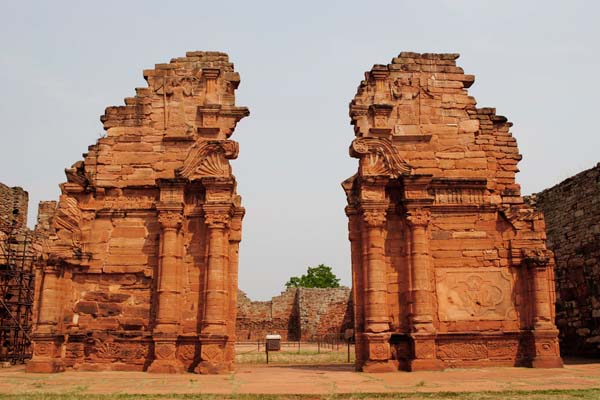
THE RUINS OF QUILMES ARE A TRUE CULTURAL HERITAGE OF INDIGENOUS CULTURE.

The ruins of Quilmes can be reached from Cafayate (Salta) or from Tafi del Valle (Tucumán). This location is just stunning, unique and ma...

THE LIHUE CALEL NATURE RESERVE IS AN AUTHENTIC OASIS THAT HOLDS MANY SURPRISES IN TERMS OF FAUNA.

Lihué Calel means ‘mountain range of life’ in the Araucano tongue and it is the name of the mountain range system located in the center-sout...

ARGENTINEAN PATAGONIA IS WIND SWEPT SCRUB, WITH HUGE ROCK TOWERS AND GLACIERS THAT FALL MAJESTICALLY INTO THE HUGE LAKES THAT DRAIN THE WINTER SNOWS.

Argentine Patagonia is for the most part a region of steppelike plains, rising in a succession of 13 abrupt terraces about 100 metres (330 f...

BUENOS AIRES STREET ART, DISCOVER THE BEST MURALS IN THE CITY.

Buenos Aires is renowned for its vibrant street art culture, with both Fodor's and the Huffington Post listing it as one of the top cit...

THE ANDES MOUNTAIN RANGE SHOWS ITS BEAUTY IN THE PATAGONIAN PROVINCES.

The Andes mountain range shows its beauty in the Patagonian provinces. Millennial silent forests with native vegetable species are extended ...

The avifauna of Argentina include a total of 1026 species, of which 19 are endemic, 7 have been introduced by humans, and 70 are rare or ac...

On a slope of the Sierra de Velasco, north of the province, there is a stone city, more than a thousand years old. Its walls treasure the memory of the Hualco culture. Tourists, scientists and archaeologists travel today.

The excursion to the ruins of Hualco begins directly on route 40, which serves as the main street of the handful of small towns scattered along the route and the Los Sauces river. This crystal clear river is used by farmers to plant the surrounding land with fruit and vegetables.

During the trip, the local guide Fabián Yapura takes tourists to see the different villages in the area, their picturesque churches and their adobe houses in complete harmony with nature.

In Alpasinche, one of those small towns, your old vineyards attract attention, whose fruits are ground in the family wineries where the Patero wine is made.

When you reach the town of San Blas you can see the homonymous church -data from 1732-, where every February 3 the patron saint of the gorges is worshiped in a religious festival that is a true festival of song.

Less than a kilometer the route forks and you have to leave the national route 40 to take the left and go into the mountainous landscape and the Hualco streams.

The wild road that leads to the ravines, contrasts with the dense vegetation that is seen in the valley that sleeps at your feet. The greenery gave the name to the area known as Valle Fertil or Valle Vicioso.
Trio of gorges. Further ahead is the El Rincón stream, the first of a triad that includes Hualco, where the archaeological site is located, and Andolucas.

The Andolucas stream is famous for the deep backwaters that form with the fresh waters that come down from the mountain and fall with force in the form of a jet in a great natural piletón called the Olla de Andolucas.

It also has camping and infrastructure to stay several days, like El Rincon. Three other streams complete the natural mosaic, but the access to its water pools are exclusive for adventurers who dare to climb giant rocks surrounded by flowering cacti. The postcard is worth it.

Interpretation Center. The Interpretation Center was inaugurated on January 30. It is built with materials from the area such as adobe, wood and cane.
It is the starting point where the circuit begins towards the ruins themselves.

In this place many of the objects found during the excavations are exhibited: vessels, earthen pots, arrowheads, ornaments and even a funerary urn approximately 50 centimeters in diameter with bones inside.

In addition there are gigantografías that explain from the discovery of the place in the decade of 1950 by the priest Martín Gómez until the last works of restoration.

You’ve had a curious year in 2017 at least, those of you who read us at Argentina Photo Gallery.

You and your fellow readers have explored a wide range of research-based political science analyses of everything from populism to pop culture.

To no one’s surprise, you were especially interested in analyses of the economy, politic and the nature.

We thank you for your curiosity and hope to have you along in the coming year.
Until then, here are our 10 most widely read posts of the year:


Annuary 2017.

ARGENTINA WAS BORN AS AN OPEN LAND TO IMMIGRANTS WHO CAME FROM ALL OVER THE PLANET.


THE RUINS OF QUILMES ARE A TRUE CULTURALHERITAGE OF INDIGENOUS CULTURE.


THE NATIONAL PARK LAGO PUELO IS ONE OF THE MOST BEAUTIFUL AND UNIQUE RESERVES OF PATAGONIA.


THE BEST HIKING IN PATAGONIA AND TIERRA DEL FUEGO: EL CHALTÉN.


Read more
Annuary 2017 these were our 10 most popular posts in Argentina Photo Gallery.Twitta

THE 8000-YEAR-OLD INTIHUASI CAVES ARE THE OLDEST IN THE REGION.


GUIDE OF SPAS AND STREAMS IN MERLO, SUN AND BEAUTIFUL LANDSCAPES.


Read more


THE REPUBLIC OF ARGENTINA HAS 23 PROVINCES AND AN AUTONOMOUS CITY.


ARGENTINA IS COMPOSED OF NINE GEOGRAPHIC REGIONS.


AUTUMN ON THE VERGE OF PARANÁ: RUMBO AL PREDELTA NATIONAL PARK.


THE PILTRIQUITRON IS CONSIDERED A RESERVOIR OF POSITIVE ENERGY.


If you liked this article, subscribe to the feed by clicking the image below to keep informed about new contents of the blog:
rss-icon-feed1
 

The Homeland of the Tango.

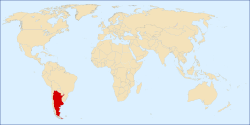
Comprising almost the entire southern half of South America, Argentina is the world's eighth largest country, covering an area of 2.8 million square km. Argentina possesses some of the world's tallest mountains, expansive deserts, and impressive waterfalls, with the diversity of the land ranging from wild, remote areas in southern Patagonia to the bustling metropolis of Buenos Aires in the north. 
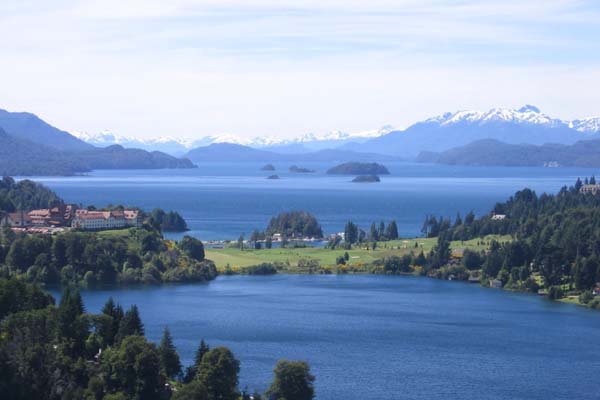
Lake and mountain scene
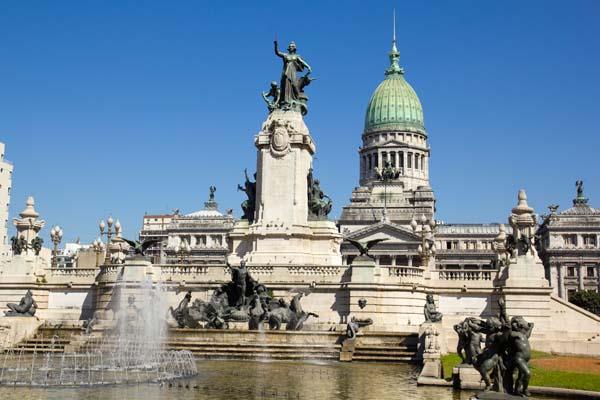
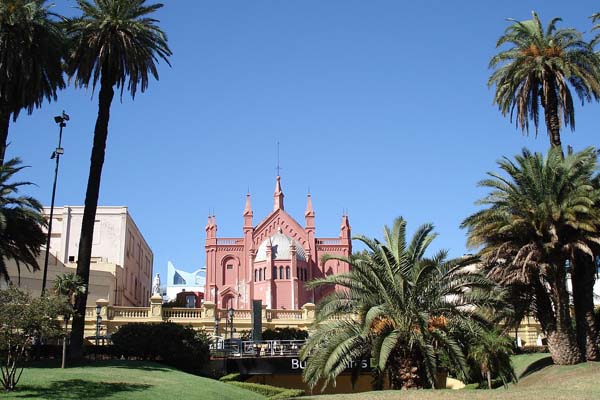
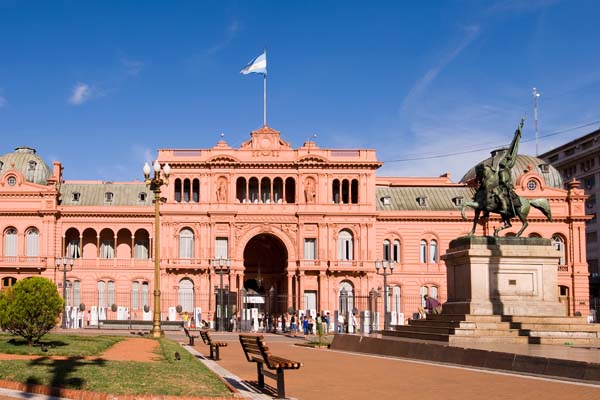
Buenos Aires, known as “The Paris of South America”, is a great metropolis with eleven million inhabitants and one of the largest in the world. It is also the most elegant and busy city in South America and is in some way the essence of the variety of the Argentinean.

Buenos Aires is a city that is open 24 hours a day.

Whilst of modern construction and dynamic activity, it has managed to preserve old traditions and charming corners. One is fascinated by the atmosphere, the individual personality of each of its neighbourhoods, the cordiality of its people and the wide selection of its cultural and commercial opportunities. This complex, energetic, and seductive port city, close to the splendid countryside surrounding it, is the great cosmopolitan doorway to South America.
Tango in Buenos Aires
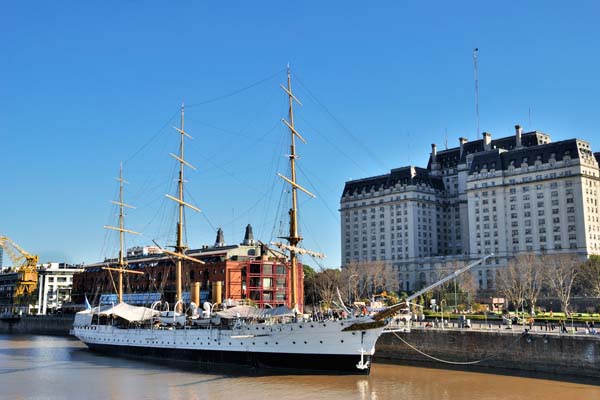
With its wide boulevards, ornate architecture and love of statues, squares and gardens it is a delightful city for walking in and observing. From the old port to the chic boutiques of Florida with the outdoor cafes there is a sophisticated lifestyle which is famous throughout Latin America.

Buenos Aires is a city that is open 24 hours a day with some of the best restaurants and bars in the world and its own special “New World “ dynamism which has developed with the great mix of European and South American cultures all in one city.

 For all its diversity, the elusive spirit of Argentina as a country is present everywhere in Buenos Aires. The national dance, the tango, is perhaps the best expression of that spirit - practiced in dance halls, parks, open plazas, and ballrooms, it is a dance of intimate separation and common rhythm, combining both an elegant reserve and an exuberant passion. A deliciously typical Argentine dinner followed by a traditional tango show will be one of your highlights when in Buenos Aires.

A visit to one of Argentina's ranches.


A visit to one of Argentina's ranches provides you with a perfect experience of stepping back in time to a bygone era of rich traditions and being at one with nature.  Located amidst 350 hectares of beautiful and unspoilt age-old landscape for as far as the eye can see. Relax and enjoy the gentle heat of the sun on your cheeks, the warm breeze blow through your hair and take a deep breath of the pure and fresh air, this is the best that Argentina's countryside has to offer.  The ranch is self-sufficient and boasts a full organic orchard were produce is grown and then used in the restaurant. Even the bread is made in traditional mud ovens at the ranches own bakery each day.  

For relaxation the ranch offers a swimming pool set in its tranquil surroundings, a coffee house, where once the farm workers used to meet up after a hard days work and enjoy some traditional beverages.  There is also a stage where some exciting and colourful entertainment will be shown a museum which houses a fine collection of antiques, carriages and farming machinery, and there is even a Souvenir Shop where you can purchase traditional produce like honey and cheeses to traditional handicrafts like the colourful ponchos.  
Asado with achuras (offal)
Asado is cuts of meat, usually beef, which are cooked on a grill (parrilla) or open fire. Asado is quite popular in the Pampa region of South America, and it is the traditional dish of Argentina, Paraguay, Uruguay, Chile and the Southern States of Brazil. Asado is also a dish in the Philippines and it differs from the Latin American version because instead of grilling, the beef is cooked in a sweet tomato-based stew that is usually accompanied by potatoes, carrots and other vegetables.  In Brazil, asado is called churrasco, and although the method of cooking is similar, it is seasoned with Brazilian spices. Charcoal is predominantly used instead of embers of wood, and Brazilians tend to cook the meat on skewers. In some places, the meat is seasoned with salt and a bit of sugar.

An Argentine asado typically has a sequence of meats presented by the asador (the cooker). 

First are the chorizos, morcillas, chinchulines (chitterlings), mollejasprovoleta, a grilled cheese dish. Sometimes these are served on a coal-heated brasero. Then costillas or asado de tira (ribs) are served. Next comes vacío (flank steak), matambre and possibly chicken and chivito (baby goat). Dishes such as the Uruguayan Pamplona, pork and Patagonian lamb are becoming more frequent, particularly in restaurants. 

An asado also includes bread, a simple mixed salad of, for instance, lettuce, tomato and onions, or it could be accompanied with verdurajo (grilled vegetables), a mixture made of potatoes, corn, onion and eggplant cooked on the parrilla and seasoned with olive oil and salt. Beer, wine, soda and other beverages are common. 
Read also: The Ruins of Quilmes are a true cultural heritage of indigenous culture.

An asado can be made al asador or a la parrilla. In the first case a fire is made on the ground or in a fire pit and surrounded by metal crosses (asadores) that hold the entire carcass of an animal splayed open to receive the heat from the fire. In the second case, a fire is made and after the coals have formed, a grill (parrilla) is placed over with the meat to be cooked. 
http://www.sanpedroex.co.cl/foto/asado.jpg
Another traditional form to mainly roast the meat, used in the Argentine and Chilean Patagonias, is with the whole animal (specially lamb and pork) in a wood stick nailed in the ground and exposed to the heat of live coals, called asado al palo.  

The meat for an asado is not marinated, the only preparation being the application of salt before and/or during the cooking period. Also, the heat and distance from the coals are controlled to provide a slow cooking; it usually takes around 2 hours to cook an asado. Further, grease from the meat is not encouraged to fall on the coals and create smoke which would adversely flavor the meat, indeed in some asados the area directly under the meat is kept clear of coals.

The asado is usually placed in a tray to be immediately served, but it can also be placed on a brasero right on the table to keep the meat warm. Chimichurri, a sauce of tomato, bell pepper, garlic, parsley, lemon, oil and vinegar, or salsa criolla, a sauce of tomato and onion in vinegar, are common accompaniments to an asado, where they are traditionally used on the offal, but not the steaks. In Chile it is usually accompanied with pebre, a local condiment made from pureed herbs, garlic and hot peppers.

Perito Moreno Glacier.

Perito Moreno Glacier is a glacier located in the Los Glaciares National Park in the south west of Santa Cruz province, Argentina. It is one of the most important tourist attractions in the Argentine Patagonia. The Perito Moreno Glacier is one of only three Patagonian glaciers that are not retreating. Periodically the glacier advances over the L-shaped "Lago Argentino" ("Argentine Lake") forming a natural dam which separates the two halves of the lake when it reaches the opposite shore. With no escape route, the water-level on the Brazo Rico side of the lake can rise by up to 30 meters above the level of the main lake. The enormous pressure produced by this mass of waters finally breaks the ice barrier holding it back, in a spectacular rupture event. This dam/rupture cycle is not regular and it naturally recurs at any frequency between once a year to less than once a decade. 


The terminus of the Perito Moreno Glacier is 5 km wide, with an average height of 60 meters above the surface of the water, with a total ice depth of 170 meters. It advances at a speed of up to 2 m per day (around 700 m per year), although it loses mass at approximately the same rate, meaning that aside from small variations, its terminus has not advanced or receded in the past 90 years. At its deepest part, the glacier has a depth of approximately 700 m. The glacier first ruptured in 1917, taking with it an ancient forest of arrayán (Luma apiculata) trees. The last rupture occurred in March 2006, and previously in 2004, 1988, 1984, 1980, 1977, 1975, 1972, 1970, 1966, 1963, 1960, 1956, 1953, 1952, 1947, 1940, 1934 and 1917. It ruptures, on average, about every four to five years.

The Perito Moreno glacier, located 78 km from El Calafate, was named after the explorer Francisco Moreno, a pioneer who studied the region in the 19th century and played a major role in defending the territory of Argentina in the conflict surrounding the international border dispute with Chile.


Argentina was born as an open land to immigrants who came from all over the planet.Click to Tweet

Images Photo Gallery.


Copyright © 2015 Argentina Photo Gallery
Distributed By Gooyaabi Templates
-->