F

289.-Ruta-40-3a-etapa.png

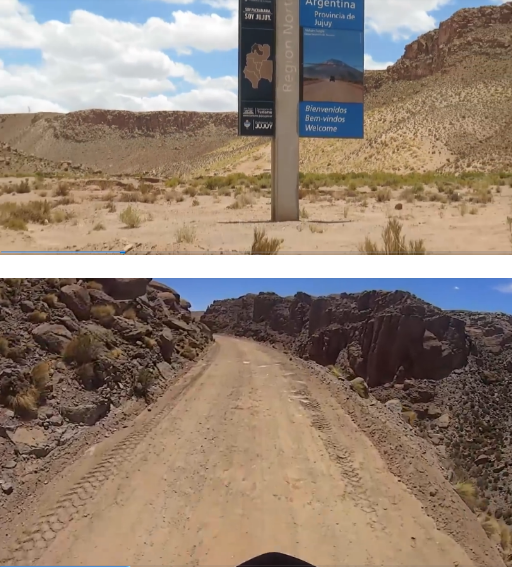
After having completed the first stage without problems

Luego de haber completado la primera etapa sin problemas

and the second contemplating the wonders of the puna landscape

y el segundo contemplando las maravillas del paisaje puneño

The would encounter the first (mechanical) difficulties in the course of the third stage.

Las primeras dificultades (mecánicas) las encontraría en el transcurso de la tercera etapa.

Roll and roll. It goes up and down the hill. With all senses alert.

Rueda y rueda. Sube y baja la colina. Con todos los sentidos alerta.

A distraction, speeding means losing control of the bike and ruining the trip. And perhaps with more serious consequences.

Una distracción, el exceso de velocidad supone perder el control de la moto y arruinar el viaje. Y quizás con consecuencias más graves.

And in the middle of this spectacular landscape, a true phenomenon: the beauty of a rainbow in the middle of the Puna.

Y en medio de este espectacular paisaje, un verdadero fenómeno: la belleza de un arcoíris en plena Puna.

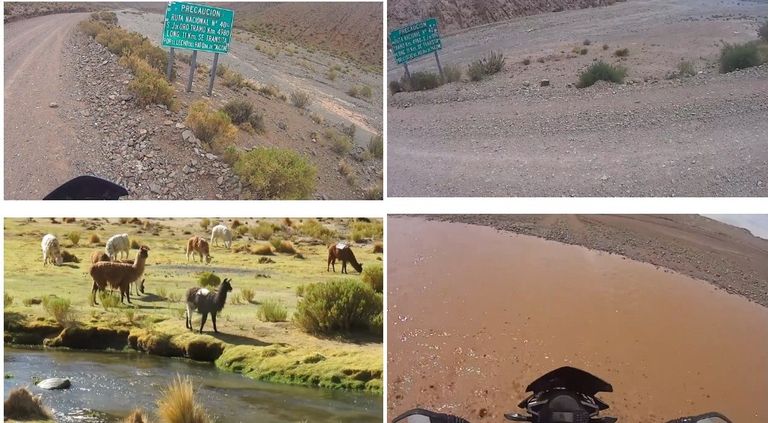
And suddenly again in the middle of the aridity of the terrain, characteristic of the Puna, the water in our journey.

Y de repente nuevamente en medio de la aridez del terreno, característica de la Puna, el agua en nuestro recorrido.

Water that steadily descends from the mountains and seeps through the terrain on each decline it encounters.

Agua que desciende constantemente de las montañas y se filtra por el terreno en cada descenso que encuentra.

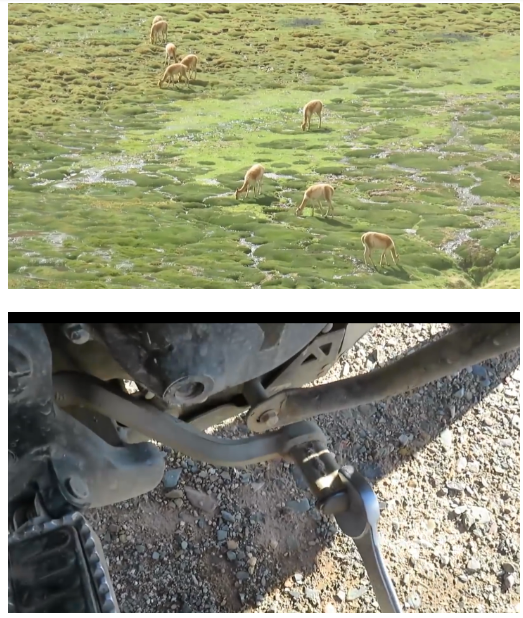
And suddenly the inevitable. I let myself be carried away by the enthusiasm and observe that endless landscape, I got distracted, I slipped and I went with the motorcycle to the ground.

Y de repente lo inevitable. Me dejé llevar por el entusiasmo y observé ese paisaje interminable, me distraí, resbalé y me fui con la moto al suelo.
ruta40.png

I manage to repair it and continue.

Logro repararla y sigo.

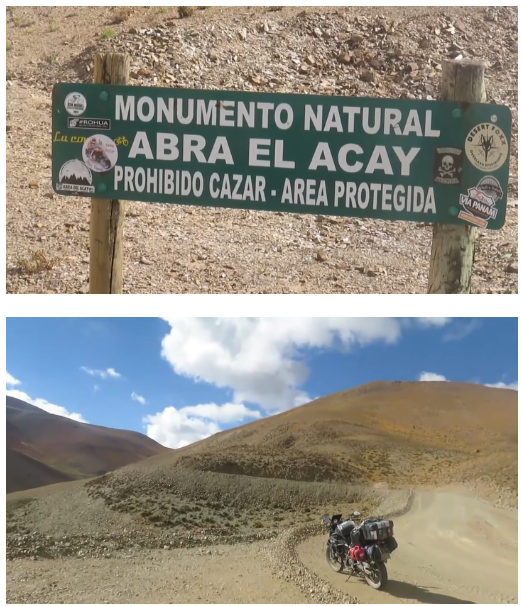
Finally I get to Abra del Acay.

Finalmente llego al Abra del Acay.

The highest place on Route 40 at more than 4800 meters above sea level.

El lugar más alto de la Ruta 40 a más de 4800 metros sobre el nivel del mar.

The old, long-suffering and beloved motorcycle, faithful companion of so many adventures, resists.

La vieja, sufrida y querida moto, fiel compañera de tantas aventuras, resiste.

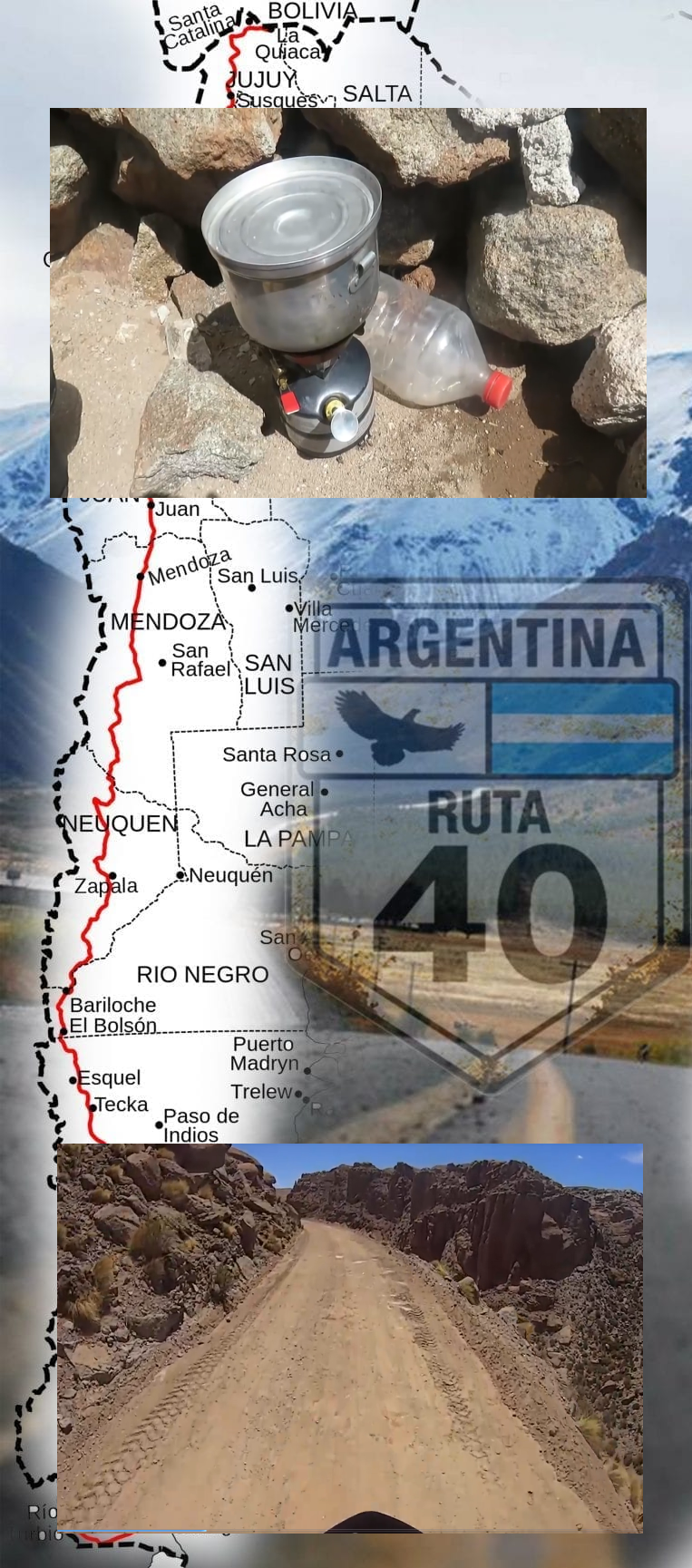
Upon reaching the top I make myself a coffee. Cafe in the clouds.

Al llegar arriba me preparo un café. Café en las nubes.

Thank you for reading!

¡Gracias por leer!
ruta40-1.png

Posteo cruzado / Crossposting.

Source image map / Fuente imagen mapa.

Source: https://blurtlatam.intinte.org/travel/@argenvista/4zwh2d-the-great-journey-of-route-40-in-argentina-from-north-to-south-the-third-stage-a-coffee-in-the-middle-of-the-clouds-or-eng-esp

It is one of the little explored places in the country, but it is worth knowing. The new park, of 128 thousand hectares, now represents the largest reserve in northern Argentina.

It is very difficult to find a degree of biodiversity as pure as that seen in El Impenetrable National Park.

The national park is part of what Estancia La Fidelidad used to be and extends between the provinces of Chaco and Formosa, covering an area of ​​250,000 hectares, divided by the Bermejo river.

The origin of its name lies in the difficulty of entering the area. Nature is diverse.

Lush forests. Ancient trees and mammals of exuberant beauty form the recent El Impenetrable National Park, the largest in northern Argentina.
Its 128,000 hectares make it the largest national park in northern Argentina.

The Impenetrable is a must-see for lovers of hiking and nature.

Under the premise of preserving the Chaco forest and the diverse species of flora and fauna that inhabit it, National Parks protects its 130,000 hectares from times prior to its creation, in 2017.

Why should we know this place?

The Impenetrable today constitutes one of the few, best preserved and largest green lungs in Latin America.
For many years, the site was used as a sports hunting ground. Domestic animals, indiscriminate logging and hunting put their biodiversity and ecological sustainability in check, causing the extinction of many species and the decrease of others, such as the jaguar, anteater, tapir and crowned eagle, among others.

Entering the park implies observing the life of the forest and the interaction between its inhabitants, as well as finding out about the importance of its preservation, both for the species and for the health of the planet.

Location.

The Impenetrable is located within the Gran Chaco ecoregion, which also extends to the Northwest of Córdoba and in the countries of Bolivia and Paraguay.
It is the third largest forest area in South America, after the Amazon and the Cerrado, in Brazil.
The brand new National Park protects the last redoubt of virgin forest, the third in importance in South America.
Tourist promotion of the park is presented as an alternative to traditional economic activities in the area. An example is the replacement of livestock with the sustainable creation of non-wood products, such as bush honey, carob flour and crafts in chaguar.
It is very clear that preserving and producing is possible.

The National Parks constitute the most important protected natural areas in Argentina.

They conserve biodiversity and ecosystems; they protect paleontological and archaeological sites; they promote environmental education, scientific research and nature tourism.
We start touring the El Impenetrable National Park.

Fauna.

The Impenetrable, thanks to its recovery, became the ideal habitat for many critically endangered species and others threatened with extinction, such as the yaguareté, the carreta tatú, three types of peccaries, the anteater, the crowned eagle and the boa rainbow.
The yarará is a poisonous snake native to South America.
The high biodiversity and native forest of this nature reserve, which is in a very good state of conservation, is home to hundreds of species of birds, including the yabiré, the talking parrot, the black woodpecker, the charata, the rayador and the espinero fron reddish.
The Impenetrable houses endangered fauna such as the jaguar, the anteater, the tapir.

Flora.

In the El Impenetrable National Park there are carob forests. The quebrachos white and red from Santiago stand out.

Other species of the tree canopy are the palo santo, mistol, viraró, itín, moradillo, saucillo, molle, talas, chañar, Capparis, the drunk palo de flor blanca or yuchán and large cactus.
A specimen of drunk stick round tree top and beautiful flowers.
The albardones that border the Bermejo river abound with forests of river alder, Creole willow, and yellowwood. Somewhat farther from the river there are examples of soap stick and stone stick.
The carob tree is the most widespread tree in El Impenetrable and the most subject to illegal logging.
The quimilero peccary is the largest in the country and an exclusive species in the Chaco region that is in serious danger of extinction, mainly due to hunting and the disappearance of its habitat.
The Chaco land tortoise inhabits semi-arid chaco forests.
The Chaco region is the second largest block of forests in South America after the best-known Amazon region.
Snakes, tapirs, peccaries, corzuelas (fawns), rheas and all kinds of animals walk in herds still elusive
The trips to the center of the Argentine jungle were the inspiration for the famous storyteller Horacio Quiroga to write his successful anthology "Tales from the jungle", a work that realistically shows the variety of animals that populate the impenetrable missionary and Chaco forest.
There are around 40 national parks, and there are hundreds of protected properties, at least in theory, under provincial, municipal and even privately managed jurisdictions.

277.-Ruta-40-2a-etapa.png

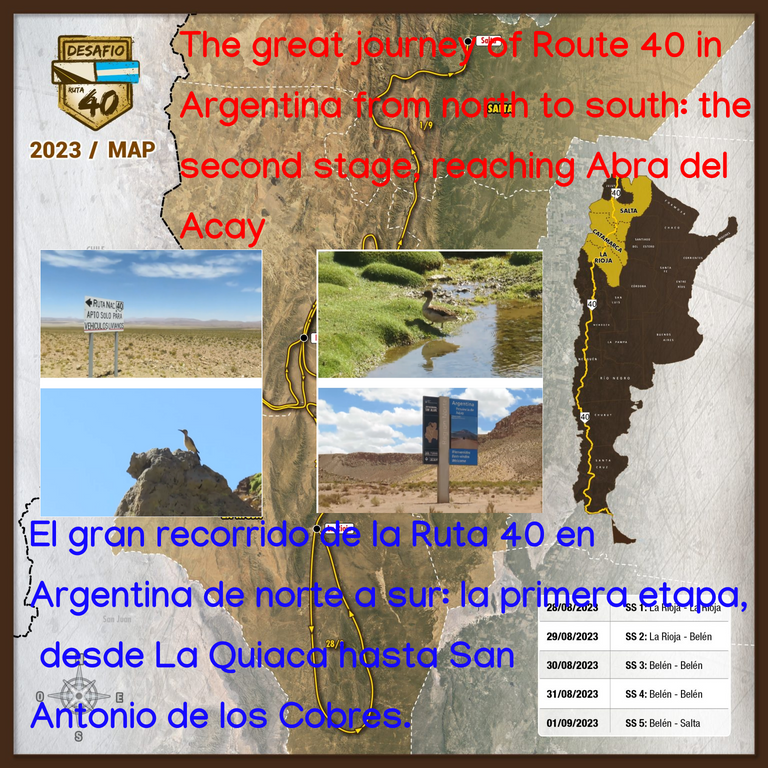
I already told you about my tour in the first stage through more than 400 kms of Puna in this post.

The great journey of Route 40 in Argentina from north to south: the first stage, from La Quiaca to San Antonio de los Cobres.

and of all my illusions when embarking on this journey.

The great journey of Route 40 in Argentina from north to south: before leaving.
I get up early after sleeping in a school and continue my way through the gravel, the dirt and some strange and inconsistent landscapes for most of the people who believe that Route 40 is just dirt and gravel and roads in poor condition.

ruta40.png

Sometimes the adventure happens to observe the beauty that nature offers us and not to suffer the inhospitable conditions of a route.

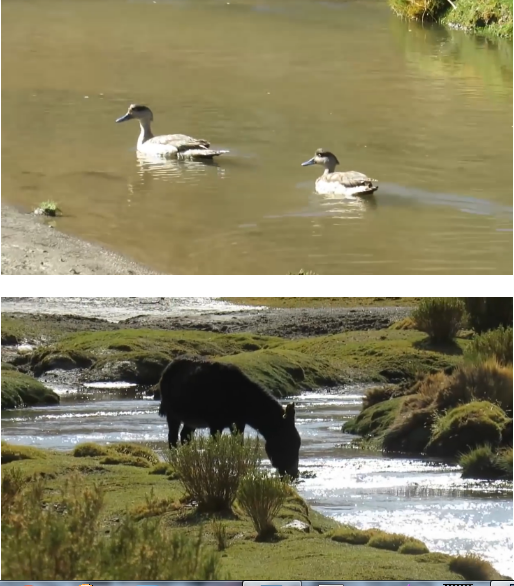
Rivers and lagoons along our route. The water runs and the clouds pass.

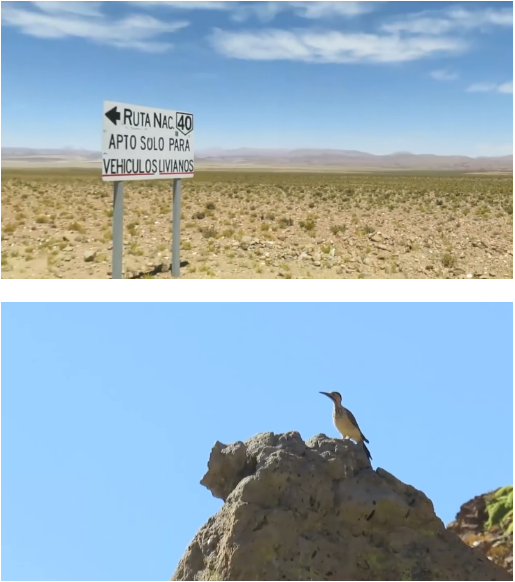
And signs warning that the road is not always advisable for any type of vehicle.

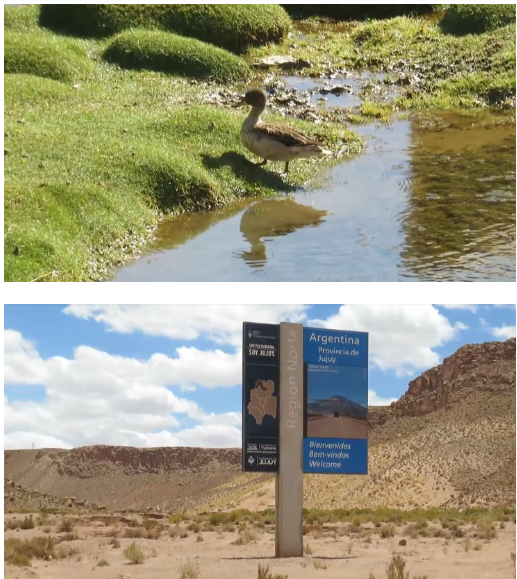
Purple mountains, yellow stones, chestnut grass and birds that curiously observe the passage of travelers.

ruta40-1.png

While others enjoy the disinterested water of the rest of the world.

Very few vehicles in transit. Some shepherd houses and some new friends we make during the trip. The landscape is quite bleak. Lunch and continue.

I fill the tank of the bike and continue.

The ledge path is narrow and dangerous. You have to be very careful. I come to a place of abandoned houses. I try to stay the night but there is a lot of dirt. I get to the police station and they give me a hand allowing me to camp.

My thanks to them. In these places the police perform a different function, more humanitarian if you want. Stripped of those basic principles of her profession that are preventing crime and sometimes excessive repression. Here they are reserved. And when they can help the traveler they do it.

Divider-Line Big Blurt Pink.png

Ya les hablé de mi recorrido en la primera etapa por más de 400 kms de Puna en este post.

El gran recorrido de la Ruta 40 en Argentina de norte a sur: la primera etapa, desde La Quiaca hasta San Antonio de los Cobres.

y de todas mis ilusiones al emprender este viaje.

El gran recorrido de la Ruta 40 en Argentina de norte a sur: antes de partir.

Me levanto temprano después de dormir en una escuela y sigo mi camino entre la grava, la tierra y algunos paisajes extraños e inconsistentes para la mayoría de las personas que creen que la Ruta 40 es solo tierra y grava y caminos en mal estado.

ruta40-2.png

En ocasiones la aventura pasa por observar la belleza que nos ofrece la naturaleza y no sufrir las condiciones inhóspitas de una ruta.

Ríos y lagunas a lo largo de nuestro recorrido. El agua corre y las nubes pasan.

Y señales que advierten que el camino no siempre es aconsejable para cualquier tipo de vehículo.

Montañas moradas, piedras amarillas, pastos castaños y pájaros que observan con curiosidad el paso de los viajeros.

ruta40-3.png

Mientras otros disfrutan del agua desinteresada del resto del mundo.

Muy pocos vehículos en tránsito. Algunas casas de pastores y algunos nuevos amigos que hacemos durante el viaje. El panorama es bastante desolador. Almuerzo y continuación.

Lleno el depósito de la moto y sigo.

El camino de la cornisa es estrecho y peligroso. Tienes que ser muy cuidadoso. Llego a un lugar de casas abandonadas. Intento pasar la noche pero hay mucha suciedad. Llego a la comisaría y me echan una mano permitiéndome acampar.

Mi agradecimiento a ellos. En estos lugares la policía cumple una función diferente, más humanitaria si se quiere. Despojada de esos principios básicos de su profesión que son prevenir la delincuencia y en ocasiones la represión excesiva. Aquí están reservados. Y cuando pueden ayudar al viajero lo hacen.

Crossposting/Posteo cruzado.

Source initial image / Fuente imagen inicial: Ruta 40.

275.-Ruta40-1a-etapa-collage1.jpg

Source: https://blurtlatam.intinte.org/travel/@argenvista/nkmko-the-great-journey-of-route-40-in-argentina-from-north-to-south-the-second-stage-reaching-abra-del-acay-eng-esp

 
Copyright © 2015 Argentina Photo Gallery
Distributed By Gooyaabi Templates
-->