F
The National Park Monte León is situated in the southeast side of Santa Cruz, over the National Route Nº 3, 210 kilometres far from the north side of Rio Gallegos.

The reason was that this area constitutes a representative sample of the patagonic coast in good state of conservation, with paleontological value places.

A 60.000 penguin's colony lives in PN Monte León (Monte León National Park).
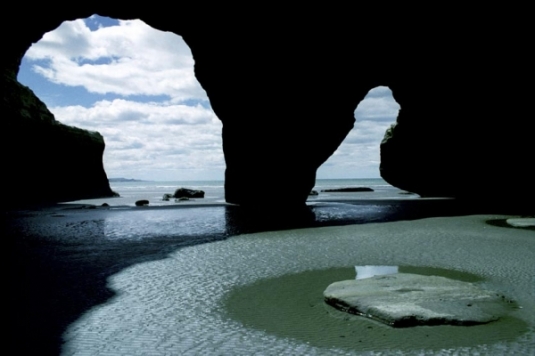


The National Park Monte León.

It is the fourth colony in the world. It is situated in the southeast side of Santa Cruz, over the National Route Nº 3, 210 kilometres far from the north side of Rio Gallegos.

Surface.

The approximately surface of the area is 61.700 hectares. The Administración de Parques Nacionales have incorporated this region as an equivalent area of the Argentino Sea, so that it is the first continental coast's national park.
Read also: Jaramillo Petrified Forest.

Caves.

These caves disseminated near Monte León give shelter to colonies of sea birds and mammals, which search for places like this one to mate and breed their offsprings.


There are Imperial and Rock Cormorants, Seagulls, Black Oyster Catchers and Biguaes among other species.

Images Gallery.

The National Park Monte León is a representative sample of the patagonic coast.Click To Tweet
If you liked this article, subscribe to the feed by clicking the image below to keep informed about new contents of the blog:
rss-icon-feed
With its rough profile crossed by torrential streams in the southern hemisphere summer season, green and diverse vegetation and assorted fauna, the Parque Nacional Baritú National Park is a truly natural world with its deep smell of leaves and wet soil.

An almost secluded place to the sunlight and man as well that reaches unknown magnitudes.

This is the Baritú Nacional Park, where the tropical forest goes all the way up to its highest peaks, and untouched nature rejoices itself in its unique specimens.


Baritù National Park.

In order to preserve an area were the Cloud Forest has remained practically virgin, due to its inaccessibility and uneven terrain, the National Park was created in the year 1974, and its difficult terrain has been the main motive to prevent wood extraction from that area.
Read also: 5 best places for rafting in Argentina.

Location.

With an area of 72 thousand hectares, Baritú is located in the Northwest of the Province of Salta, in the Departments of Orán and Santa Victoria, on the border to Bolivia.

Images Gallery.


Baritú National Park, the protected area belongs to the Yungas ecosystem.Click To Tweet

If you liked this article, subscribe to the feed by clicking the image below to keep informed about new contents of the blog:
rss-icon-feed
Calilegua National Park is located in the province of Jujuy. It comprises an area of 76.306 hectares, on the west slope of Calilegua Mountain range, with a very steep mountain relief.

The economical activities of the first inhabitants of this area, the San Francisco aboriginal group, were hunting and collecting fruit.

During the spanish occupation, the main activities were minng and cattle raising.

In 1979, the Ledesma sugar company donated land for the creation of Calilegua National Park.

Read also: A 1,300 km from Buenos Aires tourism is doing the first tests.


Sugar industry started at the begining of this century, turning the transition jungles in the flatlands into crop field.

Calilegua National Park.

Biodiversity.

The purpose of this Park is to protect a representative sample of the Mountain Jungle or Yunga, and to preserve an important river basin which supplies water to the agricultural areas and populations nearby.

Mountains.

The Park has a great difference in height due to is location on the mountain slope. This causes a great difference in rainfalls: around 800 mm. at the lowest areas, up to 1800 mm. in the high mountain jungles.

The winters are dry and mild, with an average temperature of 17º C. It often snows on the hilltops between june and september. The summers are hot, with maximum temperatures above 40º c. The rain season is fron November to April.

Jungle.

This jungle goes from the mountain base, at 450 m. above sea level, to the mountain tops, above 3600 m.high. This difference in height produces great variety in the types of vegetation, which grow in noticeably different communities, although the transition from one to the other is gradual.

Calilegua offers a an only environment of tropical rain forest with the largest biodiversity in Argentina.

Calilegua National Park, offers a an only environment of tropical rain forest with the largest biodiversity in Argentina.Click To Tweet

DISTANCES TO:
Libertador 10 Km.
Calilegua 15 Km.
San Francisco 20 Km.
Valle Grande 70 Km.
San S. de Jujuy 130 Km.
Orán 150 Km.
Salta 170 Km.
Buenos Aires 1650 km.

Images Gallery.

If you liked this article, subscribe to the feed by clicking the image below to keep informed about new contents of the blog:
rss-icon-feed
 
Copyright © 2015 Argentina Photo Gallery
Distributed By Gooyaabi Templates
-->