F
Argentina has a system of national parks designed to protect the country's natural and cultural heritage throughout the length and breadth of the territory.

I have visited some of them several years ago.

I have visited others more recently.
The Calilegua National Park was created in 1979 in order to preserve a representative area of ​​the Tucuman-Oranense jungle.

Calilegua National Park is one of the most important yunga reservoirs in the entire country.

The Calilegua National Park was created in 1979 in order to preserve a representative area of ​​the Tucuman-Oranense jungle, also known as "yungas". It constitutes the most biodiverse environment in the country along with the Parana jungle, in Misiones.

Calilegua is the only national park in the province of Jujuy and its area of ​​76306 hectares makes it the largest protected area in our country dedicated to the conservation of mountain rain forests. Access is free.

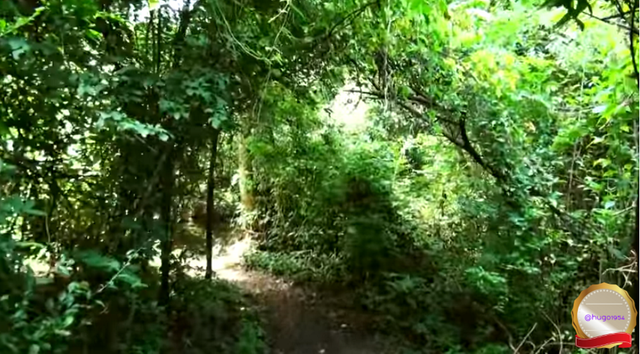
The park has a great scenic beauty that can be appreciated in all its splendor when traveling along Provincial Route No. 83 that runs through it. Along the way, three distinct environments can be identified: the Pedemontana jungle, the montana jungle and the montane forest.
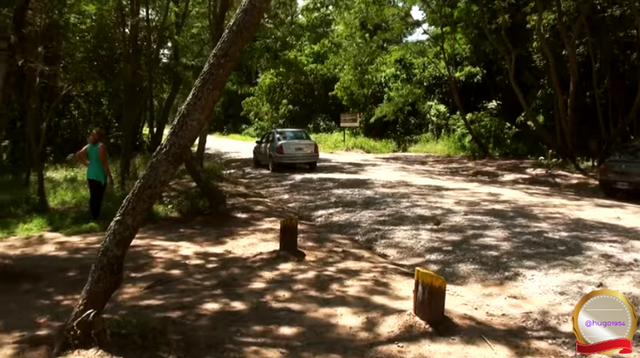
It is possible to carry the equipment, or if it is not available, it is possible to take a full-day or half-day tour, where bicycles, security elements and a qualified guide are provided who accompany and interpret the places visited.

Birds and mammals in Calilegua park.

Each one of them presents a characteristic vegetation and it is possible to see certain species of birds and mammals in particular, which makes this site an ideal place for wildlife observation, especially birds, since 270 species have been surveyed and it is estimated that they could inhabit the park about 230 more, which would make Calilegua home to 50% of the bird species that inhabit our country.
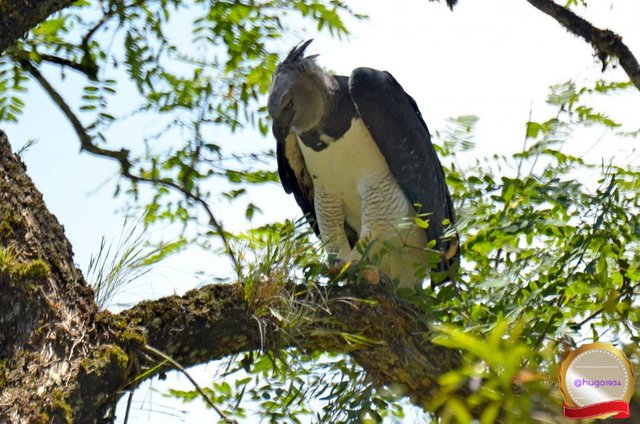
The harpia stands out for its beauty, a particular crest and long and muscular claws (its legs can be larger than the human hand) and its beak that has a curved termination with a sharp point.
As for mammals, the presence of the largest predator in America, the Yaguareté, also known as "the tiger", should be highlighted. Other cats such as the yaguarundí, the ocelot, the pajonal cat and the puma inhabit these forests.

The tapir or anta is the largest of the yungas mammals and it is possible to observe its imprints imprinted in the mud of the banks of rivers and lagoons.
Read also: A virtual journey through the national parks of Argentina (#2): Baritú, protected natural area.
The observation of footprints is a way of verifying the presence of the fauna of the park, being recommended the identification of the same with park guides.
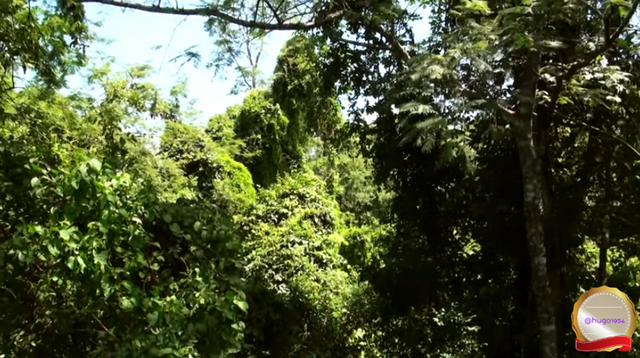
Passing the fifteen hundred meters of height, the vegetation acquires forested characteristics. Lapachos and walnut trees predominate in the area, accompanied by cedars and many small species that cover a large area of ​​the national park.

One of the most varied and important ecosystems northwest Argentina.

Close to the entrance access, is the rugged Aguas Negras campsite. It is possible to camp there, after registering with the park ranger section near it.

There are toilets but the facilities lack hot water and it is also recommended to bring a supply of water, since that obtained from the taps is not drinkable.
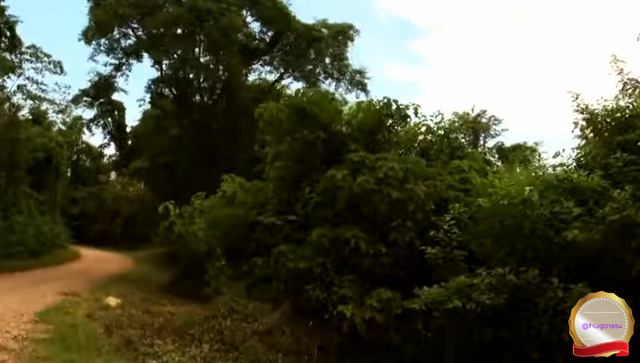
 The Calilegua National Park has different trails, which are the routes that must be followed for the enjoyment and exploration of the national reserve. These trails start on Provincial Route 83 and differ from each other due to the difficulty each one has of being traveled.

Yungas landscape.

A wide network of trails offers different alternatives to appreciate the beauties of the yungas landscape and offer the possibility of entering the depth of the jungles, being able to spot birds and with luck some of the elusive mammals, such is the case of monkeys, acuties , washing bear or mayuato, river wolves and peccaries.
As it is an area characterized by the presence of mountainous reliefs influenced by the proximity of the Andean mountain range, the natural resources that can be found in the Calilegua National Park are usually variants as well as abundant.
Although the signage is good, it is always highly recommended to walk the trails with guides authorized by the National Parks Administration, since frequent fogs and the absence of clear references in a fairly homogeneous landscape can make orientation difficult.

There is also a circuit enabled for cycling, making it an unforgettable experience.
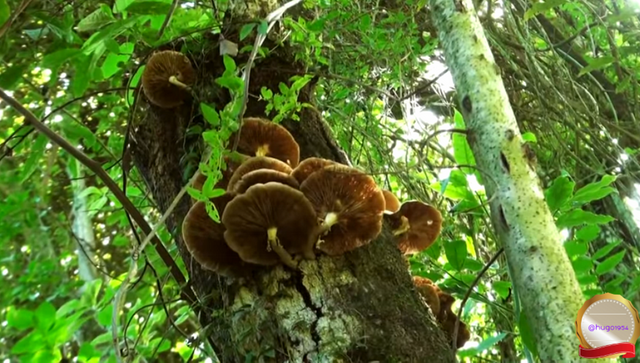
Passing the fifteen hundred meters of height, the vegetation acquires forested characteristics. Lapachos and walnut trees predominate in the area, accompanied by cedars and many small species that cover a large area of ​​the national park.

Papyrus_PNG_Clipart_Image-1000x737.png
The Argentine Republic has a rich biodiversity that manifests itself in 18 varied ecoregions.
Biodiversity is the degree of variation of life forms within a given species, ecosystem, biome, or planet.

Terrestrial biodiversity tends to be highest at low latitudes near the equator,which seems to be the result of the warm climate and high primary productivity.

Marine biodiversity tends to be highest along coasts in the Western Pacific, where sea surface temperature is highest and in mid-latitudinal band in all oceans.
The cougar, mountain lion or lion is a feline that lives in more places than any other land mammal in the Americas.


The Argentine Republic has a rich biodiversity that manifests itself in 18 varied ecoregions.


Biodiversity generally tends to cluster in hotspots, and has been increasing through time but will be likely to slow in the future.

The loss of biodiversity generates negative consequences.

Rapid environmental changes typically cause mass extinctions.One estimate is that <1%-3% of the species that have existed on Earth are extant.

Since life began on Earth, five major mass extinctions and several minor events have led to large and sudden drops in biodiversity.

Evolution and History.

The Phanerozoic eon (the last 540 million years) marked a rapid growth in biodiversity via the Cambrian explosion—a period during which the majority of multicellular phyla first appeared.
The next 400 million years included repeated, massive biodiversity losses classified as mass extinction events.
Read also: A virtual journey through the national parks of Argentina: Calilegua yungas biosphere reserve.
In the Carboniferous, rainforest collapse led to a great loss of plant and animal life. The Permian–Triassic extinction event, 251 million years ago, was the worst; vertebrate recovery took 30 million years.

The most recent, the Cretaceous–Paleogene extinction event, occurred 65 million years ago and has often attracted more attention than others because it resulted in the extinction of the dinosaurs.
The period since the emergence of humans has displayed an ongoing biodiversity reduction and an accompanying loss of genetic diversity.
The coati, endowed with an extraordinary ability to adapt, live indifferently in the low tropical regions and in the arid wooded plateaus, in the oak groves, in the plains rich in mesquite or on the edges of the deserts; however, they prefer plains covered with woods.


Named the Holocene extinction, the reduction is caused primarily by human impacts, particularly habitat destruction. Conversely, biodiversity impacts human health in a number of ways, both positively and negatively.

The United Nations designated 2011-2020 as the United Nations Decade on Biodiversity.

With an area of 2,791,810 square kilometres, Argentina is the second largest country in South America. Due to its extension in latitude --from 22 to 56 º SL-- its territory encompasses a variety of climates, landscapes, flora and fauna. Argentina is included in the group of the 25 most biodiverse countries in the world in terms of sheer numbers of species present.

The several types of native forests to be found in that country are strongly linked to such biodiversity levels.

Nevertheless, they have been disappearing at an alarming rate. At the beginning of the 20th century, the country had more than 100 million hectares of forests, which at present are reduced to less than 20 million hectares, half of them suffering an accelerated process of degradation.

Those supposedly responsible for their conservation have reacted with complete indifference and in some cases even promoting such destruction.The causes of the present situation are historical.
The Punta Tombo penguin colony is the largest continental colony of Magellanic Penguins in the world.

Evolutionary Diversification.


Coinciding with the conquest of the country's interior by the Buenos Aires centralized government that took place during the second half of the 19th century in the name of modernization, forests in different regions of the country entered a period of decline which has continued and worsened in the last decades.

Logging by foreign and national companies, infrastructure projects and more recently the establishment of pulpwood and carbon-sink monoculture tree plantations have been some of the major causes of forest loss.


The British forestry company La Forestal.


Cases of deforestation have been reported all over the country. During the 19th century, in the northern province of Santiago del Estero a severe process of deforestation occured, which devastated the forests to the detriment of a local population formed by people of Quichua and Spanish descent.

Responsible for it were powerful European logging companies --stimulated by the government-- which once the resource was exhausted left the country leaving a landscape of devastation and poverty behind.

A similar case is that of the Province of Santa Fé, where forest cover decreased in nearly 4.6 millionhectares over the last 80 years, with a deforestation rate reaching 121,500 hectares per year between 1970 and 1984.

The British forestry company La Forestal, which began to operate in the region in 1880 owning nearly one third of the Province's area to exploit "quebracho" (Schinopsis balansae) forests, was the direct responsible for this depletion.

Social unrest caused by the exploitation of nature and people and violent repression that followed constitute one of the most serious cases of environmental conflicts in Latin America.

San Luis and La Pampa.


In central San Luis Province, the last 200,000 hectares of "caldén" (Prosopis caldenia) forests are threatened by a project to be implemented by Orinco Argentina S.A. to produce parquet flooring and charcoal for export.
The caldenal pampeano managed to strengthen itself in recent decades over the native species of the area thanks to the action of livestock activity.

This is a unique open forest in a semiarid climate, where several tree species coexist with the dominant Prosopis caldenia, such as Geoffroea decorticans, Iodina rhombifolia, Schinus fasciculatus and Prosopis nigra.

Misiones, Corrientes and Chaco.


The subtropical Province of Misiones, at the border with Brazil and Paraguay, is also undergoing a process of forest loss.

At the beginning of the 20th century 90% of its area was covered by a dense subtropical forest, but nowadays there are only 1,500,000 hectares left. Instead, large areas of the province are now covered by monoculture pine tree plantations mostly aimed at pulp production.

Tierra del Fuego and Patagonia.


Last February the government of Tierra del Fuego Province, in the extreme south of the country, authorized the logging of 130,000 hectares of "lenga" (Nothofagus pumilio) native forests, with complete disregard of the opinion of civil society and academic circles.
Lenga, Tierra del Fuego oak, southern beech or white oak, is a tree of the Nothofagaceae family (or of the Fagaceae family according to another classification). It is a representative species of the Andean Patagonian forest of southern Argentina and Chile.

The beneficiary is the US-based company Trillium, which has already created environmental conflicts for its devastating activities in southern Chile.

Entre Rios.


Infrastructure works are also a direct cause of deforestation and biodiversity loss.

The palm grove of Entre Rios at sunset.
The NGO Vida Silvestre has recently denounced the destruction of the riverine forests in the hydrologic system of the Uruguay River in the eastern province of Entre Ríos because of this reason.

Jujuy and Salta.


In the northern Provinces of Jujuy and Salta, the Kolla indigenous people have been defending the "yungas" --one of the last remaining mountain forests in Argentina, that is the habitat of the endangered jaguar "yaguareté"-- against a pipeline project that would transport natural gas from eastern Salta to northern Chile's copper mines. Greenpeace Argentina has had an active participation in this conflict.
Yungas or yunga are regions or ecoregions of Andean forest and mountain jungle along the eastern flank of the central Andes.
Last but not least, tree plantations with fast-growing species are posing a major threat to biodiversity in Argentina.

Carbon sink plantations --together with the more traditional pulpwood and timber plantations-- are increasingly being promoted as a "solution" to climate change and could result in further forest loss.

Rio Negro and Neuquén.


In May 2000 the company El Foyel S.A, in an area located near the Nahuel Huapí National Park, in the southern Province of Río Negro, began to log 300 hectareas of native forest to substitute them with oregon and radiata pine plantations for a carbon sink project.

Native cypress trees, as well as "ñire" (Nothofagus antartica) and "maitén" (Maytenus boaria) were cut down. The quick and strong reaction of local dwellers and the environmental NGO "Comunidad de Limay" prevented the project to continue.

Principles and Basis of the Process of Preparation of the National Biodiversity Strategy.

A document titled "Principles and Basis of the Process of Preparation of the National Biodiversity Strategy" states: "The Government and the People of the Argentine Nation know that it is vital to maintain an environment rich in species and ecosystems. They are concerned about the loss of the values and ancient knowledge kept through the years by different cultures and communities that live in the country.

Sources.
Wikipedia
Argentina Live

Papyrus_PNG_Clipart_Image-1000x737.png
Moreno lake is a glacial lake.

What makes this lake so special is that it's divided in two similarly-sized portions called Moreno

Oeste and Moreno Este.

Its waters are warmer than the other lakes in the area.

Enjoy the forest in an entertaining walk to the Mirador del Lago Moreno in the Llao Llao area.

It is a lake of glacial origin that is divided into two parts: west and east.

The charm of Moreno Lake.


The lake has a large number of beaches, but the most accessible and visited are those adjacent to the two bridges of the Circuito Chico: the one that overcomes the short Arroyo Angostura, which drains the lake in neighboring Nahuel Huapi, and the one that overcomes the channel that divides both halves of the lake.

These beaches are located in the northern part of the lake.

It is visited while the Circuito Chico is being carried out from where you get beautiful views from one of its viewpoints at the foot of the road.

Beaches.


Other of the closest beaches to the City of Bariloche, is the one known as Playa del Viento, at km 12 (Bustillo).

The lake is navigable, but with boats with outboard motors for tourist and sports reasons. It is also one of the preferred destinations for windsurfers and sailors. The name Playa del Viento, was given by the local neighborhood council, and I think everyone can imagine why.

It is the only lake that can be fished all year round, obviously with a fishing permit.

Read also: With different beaches and service areas, Lake Gutiérrez is a summer classic in Bariloche.

Most of its coasts are privately owned and correspond to tourist homes. Only the northern end of Lake Moreno Oeste belongs to the Llao Llao Municipal Park, detached in the 1980s from the Nahuel Huapi National Park.

Kayak tour. Starting from nearby Bariloche, this trip in the Nahuel Huapi National Park is suitable for both expert kayak enthusiasts and those who have never put a paddle in the water.

Points to visit.


Bahía Moreno Oeste
Costa Lago Moreno stone house and mouth stream stone house
Moreno Lake Cerro Capilla
Lake Moreno coast Llao Llao area
Arroyo Angostura
Papyrus_PNG_Clipart_Image-1000x737.png
 
Copyright © 2015 Argentina Photo Gallery
Distributed By Gooyaabi Templates
-->