F
Showing posts with label Churchs and Cathedrals. Show all posts
 

The Homeland of the Tango.

Comprising almost the entire southern half of South America, Argentina is the world's eighth largest country, covering an area of 2.8 million square km. Argentina possesses some of the world's tallest mountains, expansive deserts, and impressive waterfalls, with the diversity of the land ranging from wild, remote areas in southern Patagonia to the bustling metropolis of Buenos Aires in the north. 
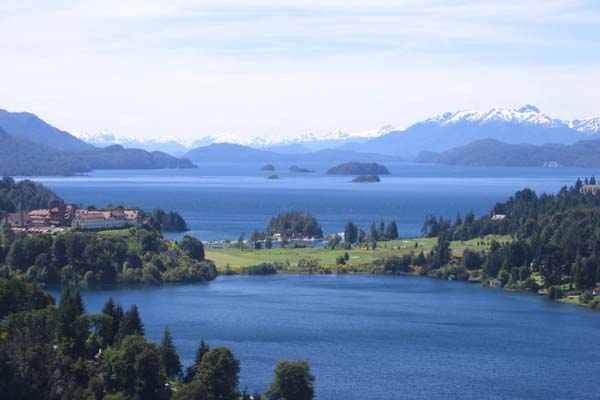
Lake and mountain scene
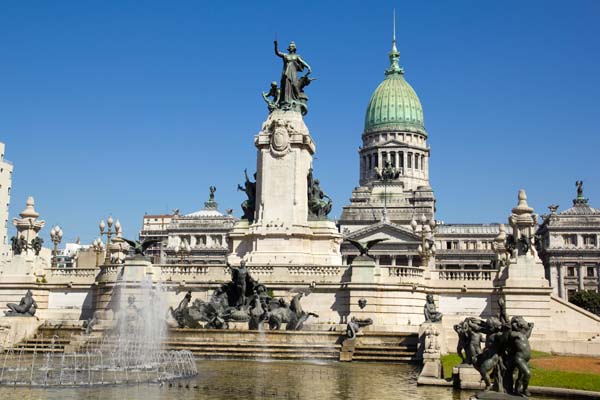
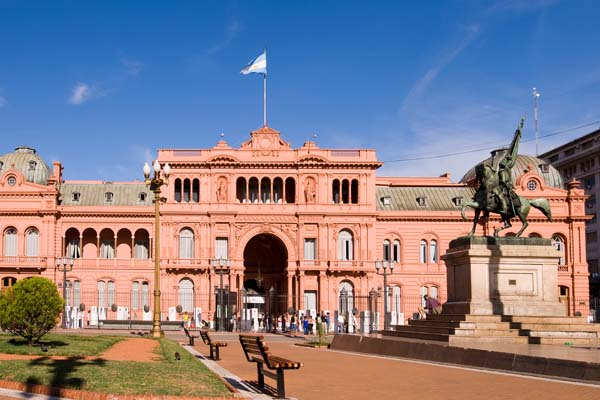
Buenos Aires, known as “The Paris of South America”, is a great metropolis with eleven million inhabitants and one of the largest in the world. It is also the most elegant and busy city in South America and is in some way the essence of the variety of the Argentinean.

Buenos Aires is a city that is open 24 hours a day.

Whilst of modern construction and dynamic activity, it has managed to preserve old traditions and charming corners. One is fascinated by the atmosphere, the individual personality of each of its neighbourhoods, the cordiality of its people and the wide selection of its cultural and commercial opportunities. This complex, energetic, and seductive port city, close to the splendid countryside surrounding it, is the great cosmopolitan doorway to South America.
Tango in Buenos Aires
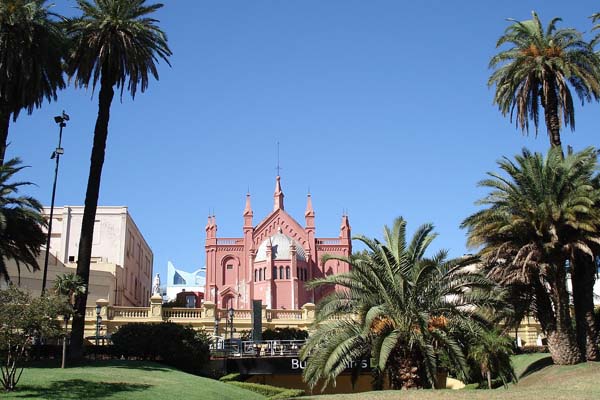
With its wide boulevards, ornate architecture and love of statues, squares and gardens it is a delightful city for walking in and observing. From the old port to the chic boutiques of Florida with the outdoor cafes there is a sophisticated lifestyle which is famous throughout Latin America.

Buenos Aires is a city that is open 24 hours a day with some of the best restaurants and bars in the world and its own special “New World “ dynamism which has developed with the great mix of European and South American cultures all in one city.

 For all its diversity, the elusive spirit of Argentina as a country is present everywhere in Buenos Aires. The national dance, the tango, is perhaps the best expression of that spirit - practiced in dance halls, parks, open plazas, and ballrooms, it is a dance of intimate separation and common rhythm, combining both an elegant reserve and an exuberant passion. A deliciously typical Argentine dinner followed by a traditional tango show will be one of your highlights when in Buenos Aires.

A visit to one of Argentina's ranches.


A visit to one of Argentina's ranches provides you with a perfect experience of stepping back in time to a bygone era of rich traditions and being at one with nature.  Located amidst 350 hectares of beautiful and unspoilt age-old landscape for as far as the eye can see. Relax and enjoy the gentle heat of the sun on your cheeks, the warm breeze blow through your hair and take a deep breath of the pure and fresh air, this is the best that Argentina's countryside has to offer.  The ranch is self-sufficient and boasts a full organic orchard were produce is grown and then used in the restaurant. Even the bread is made in traditional mud ovens at the ranches own bakery each day.  

For relaxation the ranch offers a swimming pool set in its tranquil surroundings, a coffee house, where once the farm workers used to meet up after a hard days work and enjoy some traditional beverages.  There is also a stage where some exciting and colourful entertainment will be shown a museum which houses a fine collection of antiques, carriages and farming machinery, and there is even a Souvenir Shop where you can purchase traditional produce like honey and cheeses to traditional handicrafts like the colourful ponchos.  
Asado with achuras (offal)
Asado is cuts of meat, usually beef, which are cooked on a grill (parrilla) or open fire. Asado is quite popular in the Pampa region of South America, and it is the traditional dish of Argentina, Paraguay, Uruguay, Chile and the Southern States of Brazil. Asado is also a dish in the Philippines and it differs from the Latin American version because instead of grilling, the beef is cooked in a sweet tomato-based stew that is usually accompanied by potatoes, carrots and other vegetables.  In Brazil, asado is called churrasco, and although the method of cooking is similar, it is seasoned with Brazilian spices. Charcoal is predominantly used instead of embers of wood, and Brazilians tend to cook the meat on skewers. In some places, the meat is seasoned with salt and a bit of sugar.

An Argentine asado typically has a sequence of meats presented by the asador (the cooker). 

First are the chorizosmorcillas, chinchulines (chitterlings), mollejasprovoleta, a grilled cheese dish. Sometimes these are served on a coal-heated brasero. Then costillas or asado de tira (ribs) are served. Next comes vacío (flank steak), matambre and possibly chicken and chivito (baby goat). Dishes such as the Uruguayan Pamplona, pork and Patagonian lamb are becoming more frequent, particularly in restaurants. 

An asado also includes bread, a simple mixed salad of, for instance, lettuce, tomato and onions, or it could be accompanied with verdurajo (grilled vegetables), a mixture made of potatoes, corn, onion and eggplant cooked on the parrilla and seasoned with olive oil and salt. Beer, wine, soda and other beverages are common. 
Read also: The Ruins of Quilmes are a true cultural heritage of indigenous culture.

An asado can be made al asador or a la parrilla. In the first case a fire is made on the ground or in a fire pit and surrounded by metal crosses (asadores) that hold the entire carcass of an animal splayed open to receive the heat from the fire. In the second case, a fire is made and after the coals have formed, a grill (parrilla) is placed over with the meat to be cooked. 
http://www.sanpedroex.co.cl/foto/asado.jpg
Another traditional form to mainly roast the meat, used in the Argentine and Chilean Patagonias, is with the whole animal (specially lamb and pork) in a wood stick nailed in the ground and exposed to the heat of live coals, called asado al palo.  

The meat for an asado is not marinated, the only preparation being the application of salt before and/or during the cooking period. Also, the heat and distance from the coals are controlled to provide a slow cooking; it usually takes around 2 hours to cook an asado. Further, grease from the meat is not encouraged to fall on the coals and create smoke which would adversely flavor the meat, indeed in some asados the area directly under the meat is kept clear of coals.

The asado is usually placed in a tray to be immediately served, but it can also be placed on a brasero right on the table to keep the meat warm. Chimichurri, a sauce of tomato, bell pepper, garlic, parsley, lemon, oil and vinegar, or salsa criolla, a sauce of tomato and onion in vinegar, are common accompaniments to an asado, where they are traditionally used on the offal, but not the steaks. In Chile it is usually accompanied with pebre, a local condiment made from pureed herbs, garlic and hot peppers.

Perito Moreno Glacier.

Perito Moreno Glacier is a glacier located in the Los Glaciares National Park in the south west of Santa Cruz province, Argentina. It is one of the most important tourist attractions in the Argentine Patagonia. The Perito Moreno Glacier is one of only three Patagonian glaciers that are not retreating. Periodically the glacier advances over the L-shaped "Lago Argentino" ("Argentine Lake") forming a natural dam which separates the two halves of the lake when it reaches the opposite shore. With no escape route, the water-level on the Brazo Rico side of the lake can rise by up to 30 meters above the level of the main lake. The enormous pressure produced by this mass of waters finally breaks the ice barrier holding it back, in a spectacular rupture event. This dam/rupture cycle is not regular and it naturally recurs at any frequency between once a year to less than once a decade. 


The terminus of the Perito Moreno Glacier is 5 km wide, with an average height of 60 meters above the surface of the water, with a total ice depth of 170 meters. It advances at a speed of up to 2 m per day (around 700 m per year), although it loses mass at approximately the same rate, meaning that aside from small variations, its terminus has not advanced or receded in the past 90 years. At its deepest part, the glacier has a depth of approximately 700 m. The glacier first ruptured in 1917, taking with it an ancient forest of arrayán (Luma apiculata) trees. The last rupture occurred in March 2006, and previously in 2004, 1988, 1984, 1980, 1977, 1975, 1972, 1970, 1966, 1963, 1960, 1956, 1953, 1952, 1947, 1940, 1934 and 1917. It ruptures, on average, about every four to five years.

The Perito Moreno glacier, located 78 km from El Calafate, was named after the explorer Francisco Moreno, a pioneer who studied the region in the 19th century and played a major role in defending the territory of Argentina in the conflict surrounding the international border dispute with Chile.


Argentina was born as an open land to immigrants who came from all over the planet.Click to Tweet

Images Photo Gallery.


1.- A traditional tour of the city of Buenos Aires and Caminito Street Museum Quinquela Martin.
A traditional tour of the city of Buenos Aires and Caminito Street Museum Quinquela Martin.
The October 18, 1959 with the presence of Buenos Aires mayor Hernán Giralt, and other senior officials was officially opened Caminito Street, between the sound of the bombs and the wailing sirens of the boats. The noise of the Boca family was complete and the musician ovation. Since then the Caminito of La Boca became a meeting place for Argentines and foreigners included in the tourist guide

2.- Yabotí Biosphere Reserve, missionary natural heritage.
Yabotí Biosphere Reserve, missionary natural heritage.
The Biosphere Reserve Yabotí ("turtle" in Guarani) is located in the departments of San Pedro and Guaraní, the municipalities of San Pedro and the Magnificent (the center area of the province of Misiones, comprising Flag of Argentina.svg Argentina). There are clearly influenced by the towns of San Pedro, with 18,069 inhabitants, The Proud, with 15,109 hab., And San Vicente, with 27,693
3.- Recovery Center and Breeding Bird Endangered Guira Oga, in the heart of the missionary forest.
Recovery Center and Breeding Bird Endangered Guira Oga, in the heart of the missionary forest.
Guira Oga was built in the jungle using the spaces opened by the fall of large trees by the wind, storms and heavy rains, meaning that the construction was not removing a single tree, demonstrating that the man, when He proposes, can live in harmony and balance without modifying or destroying the ecosystem in which it occurs. In 1994, the Ornithological Association of the Silver (Aves
4.- The "Cañadón de Profundidad" Provincial Park and the captivating atmosphere of the jungles of Urunday.
The
The "Cañadón de Profundidad", located about 30 kilometers from the capital of the province of Misiones, the city of Posadas, Provincial Park was created in order to have an area for education and recreation, in the vicinity of the former city, and therefore only represents a small sample of beautiful and captivating environment Urunday jungles, although it has a total area of 19 hectares.
5.- The Yacuy Provincial Park is a protected natural area in the province of Misiones.
The Yacuy Provincial Park is a protected natural area in the province of Misiones.
The Yacuy Provincial Park is a protected area of the province of Misiones Argentina natural area. It is located in the General Manuel Belgrano Department and has an area of 347 hectares. It is an annex of the Iguazu National Park and its purpose is to protect the ecosystem of the river basin Yacuy. It was created in 1991 by Act No. 2876. Location: General Manuel Belgrano department,
6.- The 10 Most Popular Posts on Argentina Photo Gallery in July 2015.
The 10 Most Popular Posts on Argentina Photo Gallery in July 2015.
1.- The Chaco National Park is a national park of Argentina, located in the province of Chaco. The Chaco National Park is a national park of Argentina, located in the province of Chaco. It has an area of 150 km². It was created in 1954 in order to protect a sample of the Eastern Chaco, composed mainly of warm lowlands, with an annual summer rainfall between 750 and 1,300 mm. This park is a
7.- Science and technology in Argentina.
Science and technology in Argentina.
The history of science in Argentina describes the fate of researchers and scientific institutions of the country, often exposed to the elements of its economy and its politics, but able, nevertheless, to produce enduring works and useful to know and technology. The times of the governments of Bernardino Rivadavia and Domingo Faustino Sarmiento , or the generation of 1880 , or the luminous years
8.- The Chaco National Park is a national park of Argentina, located in the province of Chaco.
The Chaco National Park is a national park of Argentina, located in the province of Chaco.
The Chaco National Park is a national park of Argentina, located in the province of Chaco. It has an area of 150 km². It was created in 1954 in order to protect a sample of the Eastern Chaco, composed mainly of warm lowlands, with an annual summer rainfall between 750 and 1,300 mm. This park is a protected area for the quebracho trees. Forests of quebracho colorado chaqueño (Schinopsis
9.- Summer holiday destination for millions of Argentines, the Atlantic coast has some excellent beach resorts.
Summer holiday destination for millions of Argentines, the Atlantic coast has some excellent beach resorts.
Summer holiday destination for millions of Argentines, the Atlantic coast has some excellent beach resorts, while inland in the sierra there is fine countryside to explore. Atlantic coastline. Like most people, Argentines like to see the sea and will endure congested roads and standing-room-only beaches to do so. No sooner is the New Year’s celebration over than large swathes of the Buenos
10.- Jaramillo Petrified Forest.
Jaramillo Petrified Forest.
The logs and pine nuts found correspond to a monkey-puzzle tree species with similar features to those upholstering the mountains of Neuquén and they are the object of constant scientific research. At Puerto Deseado, it is possible to get away from the coast towards the mountain range area and set foot on the most important fossil site in Argentina: Jaramillo Petrified Forest. Several stops can
If you liked this article, subscribe to the feed by clicking the image below to keep informed about new contents of the blog:
rss-icon-feed
1.- The Los Alerces National Park boasts lovely and simultaneously protects forests of ancient larches.
The Los Alerces National Park boasts lovely and simultaneously protects forests of ancient larches.
The Los Alerces National Park is located in the west of the province of Chubut. It has an area of ​​259,570 hectares belonging to the Patagonian Forests ecoregion. Decree No. 1937 105 433 set for different areas in the Andean Patagonia status reserves bound for the subsequent creation of National Parks. One of these territories was the Reserve Larches. In April 1945, through Decree

1.- The Salto Encantado is one of the most impressive leaps in the province of Misiones.

The Salto Encantado is one of the most impressive leaps in the province of Misiones.

Cainguás Department in the Province of Misiones, is faithful representative of this region waterfalls combining with an exciting jungle environment. One of the most famous landmarks is the Salto Encantado Provincial Park, located 5 kilometers from the homonymous Villa and 8 kilometers from the city of Aristobulo del Valle. Tour Wedge Piru Creek, extends its 706 hectares sheltering numerous

Read More ... »

1.- The Salto Encantado is one of the most impressive leaps in the province of Misiones.

The Salto Encantado is one of the most impressive leaps in the province of Misiones.

Cainguás Department in the Province of Misiones, is faithful representative of this region waterfalls combining with an exciting jungle environment. One of the most famous landmarks is the Salto Encantado Provincial Park, located 5 kilometers from the homonymous Villa and 8 kilometers from the city of Aristobulo del Valle. Tour Wedge Piru Creek, extends its 706 hectares sheltering numerous

Read More ... »

1.- The Chaco National Park is a national park of Argentina, located in the province of Chaco.

The Chaco National Park is a national park of Argentina, located in the province of Chaco.

The Chaco National Park is a national park of Argentina, located in the province of Chaco. It has an area of 150 km². It was created in 1954 in order to protect a sample of the Eastern Chaco, composed mainly of warm lowlands, with an annual summer rainfall between 750 and 1,300 mm. This park is a protected area for the quebracho trees. Forests of quebracho colorado chaqueño (Schinopsis

Read More ... »

1.- The Chaco National Park is a national park of Argentina, located in the province of Chaco.

The Chaco National Park is a national park of Argentina, located in the province of Chaco.

The Chaco National Park is a national park of Argentina, located in the province of Chaco. It has an area of 150 km². It was created in 1954 in order to protect a sample of the Eastern Chaco, composed mainly of warm lowlands, with an annual summer rainfall between 750 and 1,300 mm. This park is a protected area for the quebracho trees. Forests of quebracho colorado chaqueño (Schinopsis

Read More ... »

1.- Buenos Aires: Vivid colors of an old city.
Buenos Aires: Vivid colors of an old city.
talian immigrants, the steak is one of the few indigenous art forms. Become a symbol of an era in which he won fame with popular sayings texts now demand and interest in this art travels the world. He was a stubborn Italian and as such refused to continue painting the cars municipal gray tones such as oppressed him. Vincent Brunetti is that he liked the colors. One day he came to the shop and

1.- The Fitz Roy is famous of impossible to huge rock walls covered with ice floes.

The Fitz Roy is famous of impossible to huge rock walls covered with ice floes.

The Fitz Roy is also called Chalten, Mount smoking. So they had baptized the Indians, believing a volcano because of the fog that envelops the top. High just over three thousand meters, the Fitz Roy is famous for the enormous impossible cliffs often covered by ice floes and the prohibitive weather conditions. The same weather conditions that did tell Lionel Terray, the legendary French

Read More ... »

1.- Cycling the Abra del Acay.

Cycling the Abra del Acay.

Weds 14 Nov: San Antonio de los Cobres – La Poma (c. 2830m) (92km, 1350m ascent). The big day. We set off early, retracing to Los Patos and turning right. The route follows a stream through a broad valley, with a few settlements off the road. At 18km is what looks to be a good campsite (presumably the one used by Stefan Roman). 7km later there is a sandy stretch with no habitation beyond.

Read More ... »

1.- Cycling the Abra del Acay.

Cycling the Abra del Acay.

Weds 14 Nov: San Antonio de los Cobres – La Poma (c. 2830m) (92km, 1350m ascent). The big day. We set off early, retracing to Los Patos and turning right. The route follows a stream through a broad valley, with a few settlements off the road. At 18km is what looks to be a good campsite (presumably the one used by Stefan Roman). 7km later there is a sandy stretch with no habitation beyond.

Read More ... »

1.- Walking the Black River Valley: National Apple Festival.

Walking the Black River Valley: National Apple Festival.

To celebrate the harvest, General Roca offers the National Apple Festival. It takes place over four days and includes a significant deployment of shows, competitions and fair zonal products. The National Apple Festival emerged in the Black River Legislature through Act 360, enacted on October 9, 1964, which did not determine location of your seat. Later officials enacted a new decree on

Read More ... »

 
Copyright © 2015 Argentina Photo Gallery
Distributed By Gooyaabi Templates
-->