F
Showing posts with label Sport. Show all posts
A V-shaped lake that is ideal for fishing and sailing. It is located within the Nahuel Huapi National Park and has a number of places around it where you can camp or have a picnic.

One of its branches runs north-south (the Catedral branch) while the other runs east-west (the Tronador branch).

The Corazón island is close to the vertex formed by both branches.

The shape of the lake is in L or V, it has two well-pronounced arms, the Cathedral Arm aligned in a North-South direction, and the one oriented in an east-west direction is the Thunderous Arm. It is navigable and is one of the most beautiful bodies of water in the province of Río Negro.
To get there you need to follow route 40 to the south, heading to El Bolsón for about 30 kilometers (18.5 miles). To your right you'll see the shore of lake Gutiérrez and then lake Mascardi.

On the north shore of the lake you'll find the Relmu Lafquen camp run by the Wiritray community. Access to this camp is through route 40 south, which runs along the Catedral branch of the lake.

Lake Mascardi beautiful mirror of water about 30 kilometers from Bariloche.


This beautiful mirror of water is about 30 kilometers from Bariloche to the south, along Route 40, it has numerous places to picnic and camp. It can be fished and is navigable.

If you exit route 40 to the right, across the entrance leading to Pampa Linda and Mount Tronador, you'll reach La Querencia campsite, at 4.5 kilometers (2.8 miles) along Route 81.

If you are on the road heading to Pampa Linda you'll find Los Rápidos campsite on the shore of the Tronador branch.

It is located within the Nahuel Huapi National Park, close to the city of Bariloche, with a maximum length of 23 km; a maximum width of 4 km, and a maximum depth of 218 meters. 

Name's origin.


The name of this lake is a tribute to Friar Nicolás Mascardi, one of the religious who came to the region with the intention of converting the inhabitants of the area to Catholicism.

This Jesuit also tried to discover the mythical city of Los Césares. He traveled the Patagonian region evangelizing and graphically recording what he discovered, until he was killed by indigenous people in 1673.
It is named after a tribute to Friar Nicolás Mascardi, one of the many religious who came to the region with the intention of converting the inhabitants of the area to Catholicism, who was the one who tried to discover the mythical city of Los Césares.

How to get.


You have to take route 40 south, heading towards the city of El Bolsón, and travel about 30 kilometers, on the right hand side you first pass by the side of Lake Gutiérrez and then you see the Mascardi.

Read also: Steffen Lake a paradisiacal place recommended in its passage through Patagonia.

Sport fishing.


Lake Mascardi is navigable, and you can practice sport fishing in its waters. This lake has several bays protected by reed beds that give food and shelter to a good population of salmonids. Among the species that can be fished are Fontinalis, Rainbow and Brown trout.

The Cathedral arm is completely transparent with a large number of accesses: by the western head of the lake towards the so-called Playa Leones, on the way we will cross three streams: the Fresco, the Tunqueco and the Tabuco.
Papyrus_PNG_Clipart_Image-1000x737.png
1.- The Los Alerces National Park boasts lovely and simultaneously protects forests of ancient larches.
The Los Alerces National Park boasts lovely and simultaneously protects forests of ancient larches.
The Los Alerces National Park is located in the west of the province of Chubut. It has an area of ​​259,570 hectares belonging to the Patagonian Forests ecoregion. Decree No. 1937 105 433 set for different areas in the Andean Patagonia status reserves bound for the subsequent creation of National Parks. One of these territories was the Reserve Larches.   In April 1945, through Decree

Weds 14 Nov: San Antonio de los Cobres – La Poma (c. 2830m) (92km, 1350m ascent).

The big day. We set off early, retracing to Los Patos and turning right. The route follows a stream through a broad valley, with a few settlements off the road. At 18km is what looks to be a good campsite (presumably the one used by Stefan Roman).

abra de acay1

The Larches The National Park, located in the mountainous region of the province of Chubut, has 14 lakes connected by rivers and hiking trails 28.

Owner of an ancient alerzal unique in the world, invites the traveler to enjoy unspoiled nature and discover the magic of glaciers, lakes and forests.

It was created in 1937 and covers an area of ​​259 570 ha. The foundation of his creation is the protection of lahuán or larch, one of the largest trees on the planet longevity, which became endangered.

Part of the North Patagonian Andean Biosphere Reserve since 2007.

Lontra_provocax

1.- Hiking trails in Argentina.

Hiking trails in Argentina.

High difficulty circuits which have very hilly with very steep and sustained increases are considered very dangerous descents, tight times for tours on the schedule indicated, orientation problems and poor cyclability. Argentina offers different type circuits for mountain bike enthusiasts: Road of the Seven Lakes: The most chosen by thousands of tourists option is this way, half gravel

Read More ... »

High difficulty circuits which have very hilly with very steep and sustained increases are considered very dangerous descents, tight times for tours on the schedule indicated, orientation problems and poor cyclability.

Argentina offers different type circuits for mountain bike enthusiasts:

mountain-bike2068x1437

The 5 best places for rafting in Argentina are: Oath Canyon River in Salta; Atuel River Canyon, just outside of San Rafael, Mendoza, the Aluminé River in Neuquén, Río Manso Bariloche and the Corcovado River in Chubut.

Rafting is a team sport where all the crew of the boat row and position your weight in a coordinated way along the river rapids and stay afloat.

rafting 2000x1335

The diving experience is ideal for travelers looking to add a fee of adventure on your trip to Argentina.

There are two environments for the practice of this activity: the Atlantic coast, perfect for its clear waters and abundant marine wildlife and areas of natural or artificial lakes (reservoirs) as seen in the map.

This is one of the most complete sensations that the human being can feel.zonas-buceo_thumb[2]

Argentina offers a variety of possibilities for adventure activities given its geography: glaciers, volcanoes, deserts, rivers, mountains.

From the top of the mountains to the flat plains; from the dense green forests and mountains to deserts and pale white of the salt; from the waters of seas, rivers and lakes to the extreme drought of barreales; citadina from modernity to the lost villages and island environment; Argentina accounts for tourism in all its edges.

parapente

1.- Copahue could be named World Natural Heritage by UNESCO (Part II).

Copahue could be named World Natural Heritage by UNESCO (Part II).

Itineraries: The main attraction of the park are its hot springs. In Copahue are domesticated, they put at the service of health. But in Las Maquinitas, the Amphitheatre and the volcano crater, destination rides and guided walks, wild look in all its splendor. Also reach the border pillar Step Copahue 2013 mts., Where the Mapuche Chilean valley Trapa Trapa arrive daily to sell their crafts.

More »

2.- Copahue could be named World Natural Heritage by UNESCO (Part I).

Copahue could be named World Natural Heritage by UNESCO (Part I).

Exceptional features, it is one of the country's thermal havens Copahue Provincial Park, located northwest of the province of Neuquén, Patagonia Argentina, meets two criteria proposed for the assessment of outstanding universal value and to be declared a World Natural Heritage by the United Nations Organization. On the one hand, represent natural phenomena or areas of exceptional natural beauty

More »

3.- The 10 Most Popular Posts on Argentina Photo Gallery in January 2014.

The 10 Most Popular Posts on Argentina Photo Gallery in January 2014.

1.- Gualeguaychú Carnival The Carnival of the Country. As in previous years, during the next 2014 Summer months, on Saturdays (from January 4th to March 1st, and this Summer will also include March 2nd and 3rd -Sunday and Monday-), the city of Gualeguaychú will dress up to present one of the most expected shows in the area: the Gualeguaychu 2014 Carnival, which summons thousands of enthusiasts

More »

4.- Gualeguaychú Carnival The Carnival of the Country.

Gualeguaychú Carnival The Carnival of the Country.

As in previous years, during the next 2014 Summer months, on Saturdays (from January 4th to March 1st, and this Summer will also include March 2nd and 3rd -Sunday and Monday-), the city of Gualeguaychú will dress up to present one of the most expected shows in the area: the Gualeguaychu 2014 Carnival, which summons thousands of enthusiasts that enjoy the brightness, the joy, the thrill and the

More »

5.- Lagunas de Yala, water mirrors in height with a stunning vegetation.

Lagunas de Yala, water mirrors in height with a stunning vegetation.

Surrounding environment, Lagoons and wing are located in the Capital Department, to 2.306msnm In total there are six access but this will only enable them to three bodies of water that are in high amid lush greenery and looks like a mirage in the mountains, a dream. They are known as: The Noques, Alizar, The Trough, Drainage, Rodeo, Long. The thick vegetation and flowers form in an attractive

More »

6.- The 10 Most Popular Posts on Argentina Photo Gallery in December 2013.

The 10 Most Popular Posts on Argentina Photo Gallery in December 2013.

1.- Progressive disappearance of missionary fauna. The fauna of the province of Misiones, notable for its wonderful variety, was highly assaulted: one by the irrational and uncontrolled hunting of species with economic value (for their fur or leather), on the other removing the forest as natural... More » 2.- Andresito Provincial Park great exponent of the missionary nature. Among extensive

More »

7.- Progressive disappearance of missionary fauna.

Progressive disappearance of missionary fauna.

The fauna of the province of Misiones, notable for its wonderful variety, was highly assaulted: one by the irrational and uncontrolled hunting of species with economic value (for their fur or leather), on the other removing the forest as natural habitat, which significantly decreased the chances of survival of the species. As a result several species at virtual extinction was implemented to

More »

8.- Andresito Provincial Park great exponent of the missionary nature.

Andresito Provincial Park great exponent of the missionary nature.

Among extensive plantations of yerba mate blend with the forest vegetation, Andresito is a quiet town in the Province of Misiones which is located 60 miles from Niagara Falls, in the Department of General Belgrano. Combining natural landscapes with activities for everyone but always retain the native environment, ecotourism is positioned as one of the best ways to immerse yourself in this

More »

9.- International Exhibition Fair of Buenos Aires, The Book - From Author to Reader.

International Exhibition Fair of Buenos Aires, The Book - From Author to Reader.

The International Fair Exhibition of Buenos Aires, The Book - From Author to Reader's creation and entrepreneurship of the Book Foundation, a nonprofit based in Hipólito Yrigoyen 1628, 5th Floor, (C1089AAF) Buenos Aires. The Foundation is made up of the Argentina Society of Writers (SADE), the Argentina Book Chamber (CAL), the Argentina Chamber of Publishing, Industry Books and Magazines Spanish

More »

10.- The 10 Most Popular Posts on Argentina Photo Gallery in November 2013.

The 10 Most Popular Posts on Argentina Photo Gallery in November 2013.

1.- Teyú Cuaré Provincial Park (Misiones), inspirational writer Horacio Quiroga. Teyú Cuaré Provincial Park (in Guarani: Teju lizard kuaré, cave, ie: Cave lizard) is a protected area of Argentina province of Misiones. It covers a coastal area on the Paraná River located in the department of San Ignacio. It has an area of ​​78 ha. The place has inspired the Uruguayan writer Horacio Quiroga, who

More »

If you liked this article, subscribe to the feed by clicking the image below to keep informed about new contents of the blog:

1.- The Andes mountain range shows its beauty in the Patagonian provinces.


The Andes mountain range shows its beauty in the Patagonian provinces. Millennial silent forests with native vegetable species are extended along the shores of glistening waters.
On top of the mountains, nature overflows with granite peaks and ice fields spreading their glacier tongues into lakes of unsurpassable beauty.
Imposing mammals and sea birds, half-way between real life and fantasy, spend certain seasons on the rough coasts of Patagonia where they complete part of their life cycle. Seals colonies play on the islets and sandbanks.
The world’s most important southern elephant seal continental colony is located in Peninsula Valdés.
Every year, southern right whales come to Nuevo and San José gulfs to breed.

2.-The nine sites of memory.

nunca mas From now until Tuesday, the Human Rights Secretariat ran signaled spaces where detention and torture during the dictatorship, in Buenos Aires, Córdoba, Santa Fe, San Juan, and Mendoza Misiones.
The Federal Network of Sites of Memory signaled from today until next Tuesday nine former clandestine detention centers in the provinces of Buenos Aires, Córdoba, Santa Fe, Mission, San Juan and Mendoza. Coordinated by the National Archive of Memory (ANM) and under the aegis of the Ministry of Human Rights of the Nation, the network reported that the signs "include information on the operation of each site under the repressive system and expressed in the public space of the democratic state committed to publicize and condemn these heinous acts, so they never happen again. "

3.- Cartoon (Comic) in Argentina: Patoruzú, one of the great milestones rioplatense humor.

Patoruzú Patoruzú, created by Dante Quinterno in 1928, is one of the most important and influential cartoon Argentina.
Born as a secondary character in two short-lived comic strip, the chief Patoruzú-the last of the tehuelches, which the Spanish conquerors had seen at the time as giants endowed with prodigious strength-soon got his own comic, which would origin to the early sixties, one of the great landmarks of humor in Argentina.
Quinterno drew original stories intermittently for nearly forty years, and reprints were numerous. From the 40s and 50s of the twentieth century became one of the icons of popular culture Argentina.
The identity of Patoruzú underwent several alterations in the early years.

4.- Nahuel Huapi National Park is the oldest Argentine national park, in Patagonia in the foothills of the Andes mountains.

Nahuel Huapi National Park is the oldest Argentine national park, in Patagonia in the foothills of the Andes mountains. It was established in 1934, but the nucleus of the park is the land donated to the federal government by Perito Moreno in 1903.
The park covers approximately 7050 km² and is located in the southwest of the Neuquén and northwest of the Río Negro provinces bordering with Chile. The largest city within the park and a base for tourism is the city of San Carlos de Bariloche. Villa La Angostura is another lakeside resort also within the boundaries of the park.

5.- The Giant Armadillo (Priodontes maximus), colloquially Tatou, Ocarro, Tatu-canastra or Tatú Carreta, is the largest living species of armadillo.

The Giant Armadillo (Priodontes maximus), colloquially Tatou, Ocarro, Tatu-canastra or Tatú Carreta, is the largest living species of armadillo.
It was once found widely throughout the tropical forests of eastern South America and now ranges throughout varied habitat as far south as northern Argentina.
This species is considered vulnerable to extinction.
These armadillos typically weigh around 28 kilograms (62 lb) when fully grown, but a 32 kilograms (71 lb) specimen has been weighed in the wild. A typical length is 89 cm (35 in), of which a third to two-fifths is likely to be accounted for by the tail.
 

6.- Cerro Aconcagua is the highest peak of the Americas and the highest peak in the world outside of Asia.


Cerro Aconcagua, often referred to as the "Stone Sentinel" ("Centinela de Piedra"), with its 6,962 meters (22,841 feet) is the highest peak of the Americas and the highest peak in the world outside of Asia. This giant towers all the neighboring five thousand meters peaks.
Some of the various challenges to climb the summit are : fog, altitude, cold and winds, especially the "Viento Blanco"; those very cold winds can blow at 180 kph (110 mph) and the temperature can drop down to -45°C (-50°F). The normal route is a non-technical climb, the main and only difficulty lies 350 meters below the summit, the «Canaleta» is a rocky couloir with an elevation gain of more than 350 meters (1,200 feet) and nearly 50% slope. Depending on the season you can have some compact snow neve making the ascent harder in some places; crampons, ice axes and ropes are then mandatory.

7.-  The most common birds in parks and gardens in and around Buenos Aires.

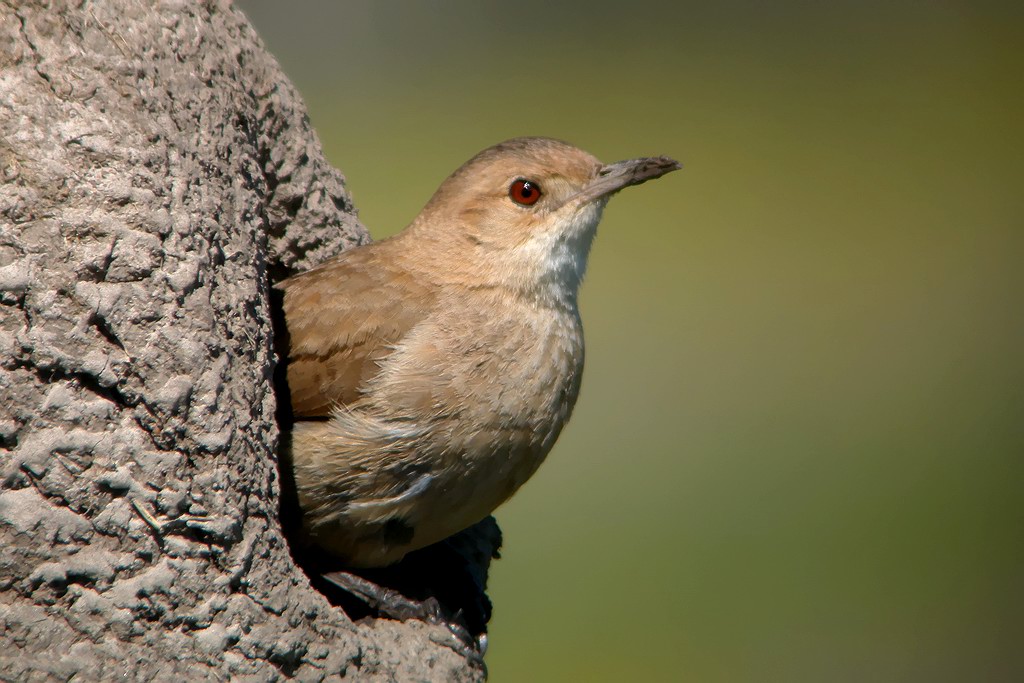
Hornero.
Abundant. It is seen in open areas, parks, fields and gardens of the suburbs, and various natural environments such as forests, etc.
She is seen on the ground, on poles and tree branches. Sing to pair. Build this amazing nest of mud.
It is the national bird of Argentina.

Chingolo.
Abundant. It is seen in all types of environments: squares, parks, forests, gardens, and all kinds of natural environments in the country, from Tierra del Fuego to the northern end.
It even abundant in the heart

8.- Argentine gastronomic dictionary.


comidas criollas
Aji de Chicha. Northwest
Food that is prepared with broth, tummy, peppers and potatoes
Alcuco.
Central and northwest
Made from wheat trodden without cuticle, boiled in salted water, to which is added onion, squash, diced goat meat and finish seasoning with saffron, and chili fried fat.
Alfajor. Candy consisting of two small pieces of dough more or less circular, joined together with different types of sweets.
Alfeñiques.
Pampeana
Dessert consists of spheres of a thick syrup with lemon juice or mint or anise
Aloja.
Beer of the white locust. Grind the beans and put in a ferment with water Noque (lagarcillo leather) or bilqui (large jar cut in half). To shorten the operation often held up as a little yeast and dregs hosts concho made. A few hours is a cool drink and pleasant, after which acquired a strong taste

9.- Rafting, Kayaking & Sailing in the Andean rivers of Andean rivers Neuquén.

neuquen kayak1The Neuquén Andean rivers offer an exciting experience that allows tourists to visit places inaccessible and admire unique landscapes transparent descending by meltwater.
Whitewater rivers have all degrees of difficulty for those who want to practice: from the novice to the most discerning and intrepid visitors. The river forms an unrivaled Aluminé for this activity.
Also performed at the Hua Hum between Valdivian rainforest that straddles the river banks.
The kayaking is an activity that can be practiced on lakes, rivers and dams across the province.

10.- The "El Impenetrable" forest, four million hectares in northern Argentina.

The Humid Chaco stretches across the myriad landscapes of southeastern South America, creating a transition zone between the Arid Chaco ecoregion to the west and the humid tropical forests to the east.
Parts of this ecoregion are so thick with vegetation that locals have dubbed it El Impenetrable.
The region encompasses the northern Paraná River and its Flooded Savannas ecoregion and extends north into central Paraguay.


If you liked this article, subscribe to the feed by clicking the image below to keep informed about new contents of the blog:
neuquen kayak1
The Neuquén Andean rivers offer an exciting experience that allows tourists to visit places inaccessible and admire unique landscapes transparent descending by meltwater.

Whitewater rivers have all degrees of difficulty for those who want to practice: from the novice to the most discerning and intrepid visitors. The river forms an unrivaled Aluminé for this activity.

neuquen mapAlso performed at the Hua Hum between Valdivian rainforest that straddles the river banks.

The kayaking is an activity that can be practiced on lakes, rivers and dams across the province.

The Limay River is ideal for beginners and Ruca Choroy River, is one of the best Patagonia offers for this sport, especially for those who like strong emotions.

Pulmarí Rivers, Hua Hum, Quillen Litrán Traful and south of the province, have very good conditions for practicing kayaking.
 
neuquen kayak
neuquen kayak1
neuquen kayak2
neuquen kayak3
neuquen kayak4
neuquen kayak5
neuquen kayak6
neuquen kayak7
neuquen rafting
neuquen rafting1
neuquen rafting2
neuquen rafting-in-alumine

 
If you liked this article, subscribe to the feed by clicking the image below to keep informed about new contents of the blog:
 
Copyright © 2015 Argentina Photo Gallery
Distributed By Gooyaabi Templates
-->